
A physical AI spinout from Imperial College London has secured record-breaking seed funding to develop a new kind of robot foundation model building on the founders’ research at Imperial.
Machenta has raised $40 million in the largest ever seed raise by a UK robotics startup. The funding round led by Creandum and Union Square Ventures will help the company scale an AI model that enables robots to learn new tasks instantly from a single demonstration.
“Machenta’s early success signals an opportunity for the UK to become a global leader in AI-enabled robotics, drawing on the specialist capabilities of universities like Imperial – and you can expect to see a growing stream of game-changing technologies from Imperial and our collaborators in this space.” Professor Mary Ryan Vice Provost (Research and Enterprise) at Imperial College London
Today’s AI-powered robots typically need to be trained through humans demonstrating individual tasks many times, often taking days. This yields robots capable of certain tasks but which cannot gain new skills without laborious model updates by developers.
Using a breakthrough AI model developed by Machenta, robots can now learn new tasks from just a single demonstration. The company’s technology could eventually give robots a human-like ability to learn new tasks on-the-fly with guidance only from their end users.
“Intelligence is not so much about what you can already do, it’s about how quickly you can learn to do something new,” said Professor Edward Johns, Co-Founder and CEO of Machenta, and Professor of Robot Learning in the Department of Computing at Imperial College London.
“Humans don’t need to see the same thing over and over before they can do it. If you take some objects, and show somebody what to do with them, they’ll probably then be able to do the same task immediately. We’ve spent years trying to understand what it would take for robots to learn at the speed of a human. That is what instant robot learning is about.”
Machenta’s approach is also designed to make the pre-training process much more scalable. While the AI models that power robots at present are often pre-trained with huge datasets taken from the real world, particularly from human demonstrations, Machenta’s model is pre-trained entirely on simulated data. This means that future developers may no longer face the practical and privacy constraints of acquiring large volumes of human data.
The work behind Machenta began six years ago at Imperial College London, where Professor Johns and his team at the Robot Learning Lab began investigating whether a robot could one day learn new physical skills as quickly as a human. After the techniques developed in his lab began to show strong potential, Professor Johns and his PhD student Vitalis Vosylius founded Machenta with colleagues from their lab to scale this work.
The team has recently shown how a single model can instantly learn diverse tasks such as packing and tidying, across any robot including humanoid robots.
“Very few teams in robotics can point to a body of work like this, which has repeatedly changed what people thought was possible,” said Kathi Wilhelm, Partner at Creandum. “The team at Machenta has spent years breaking through this extremely hard problem, long before there was a company around it. They’re not starting with just a theory of how robots can learn like humans; they’re building on years of experience actually making it happen.”
Senior leaders at Imperial College London say that the UK has potential to become a pioneer in AI-powered robotics bringing the expertise and infrastructure provided by universities together with the deployment pathways provided by industry.
Professor Mary Ryan, Vice-Provost (Research and Enterprise) at Imperial College London, said: “Machenta’s technology, and the vote of confidence it has received from investors, is testament to the quality of the research by Ed and his Robot Learning Lab. Machenta’s early success signals an opportunity for the UK to become a global leader in AI-enabled robotics, drawing on the specialist capabilities of universities like Imperial – and you can expect to see a growing stream of game-changing technologies from Imperial and our collaborators in this space.”
Machenta will use the new funding to scale its instant learning model, and expand its team at its new office and lab in King’s Cross, London.
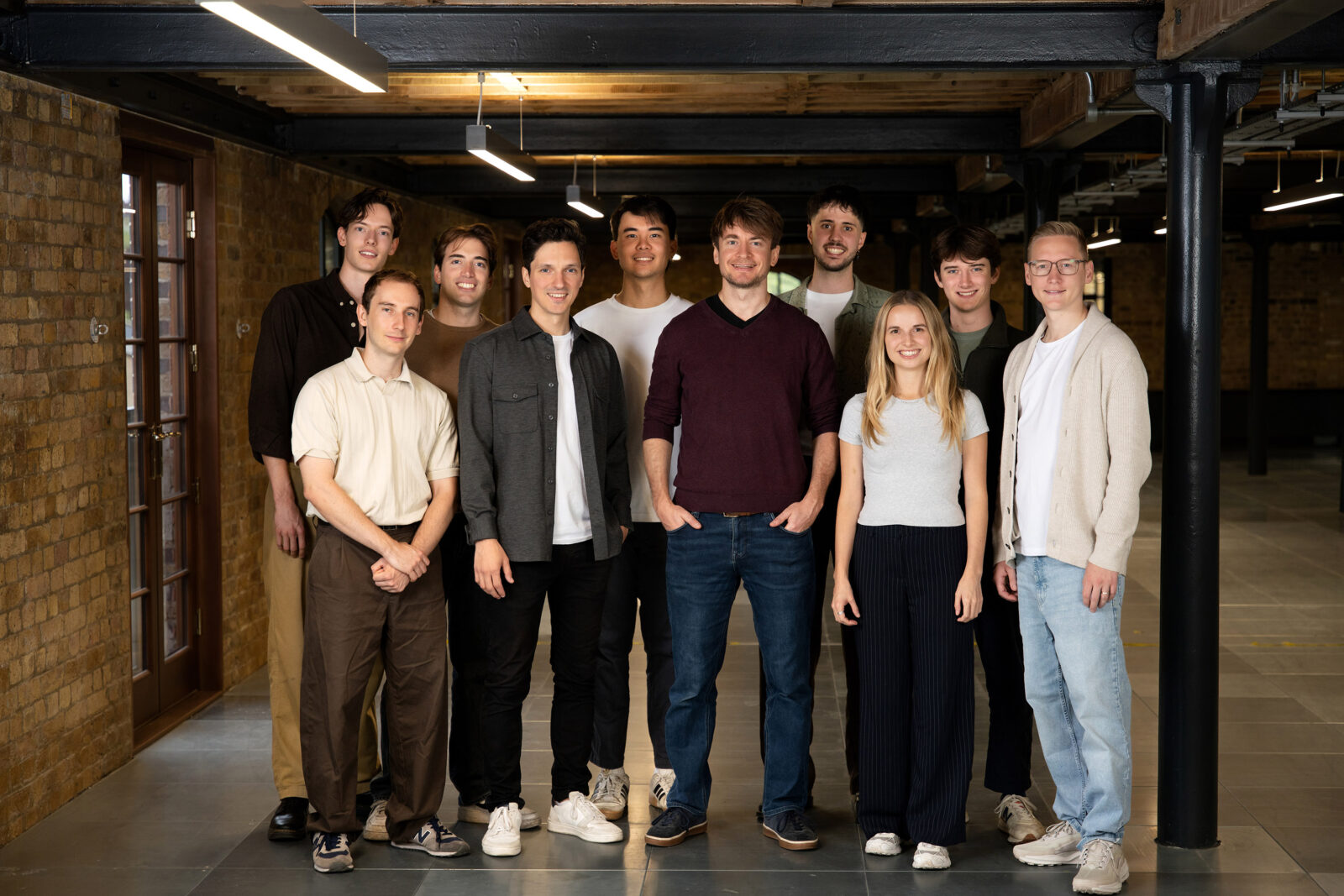
Main article image shows the Professor Ed Johns, Vitalis Vosylius and other members of the Machenta team. Photo: Oscar May














Leave a comment