
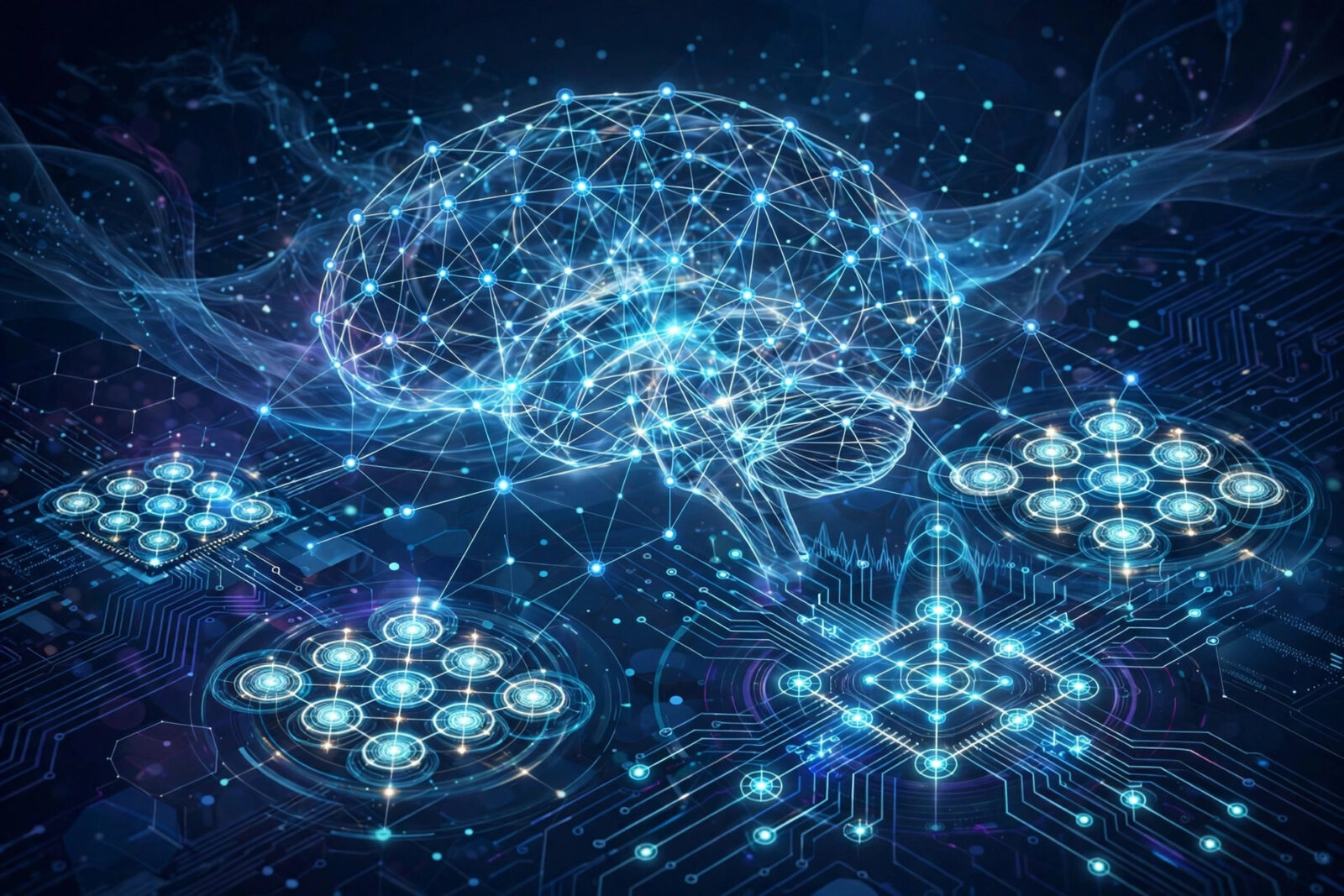
Technology is evolving rapidly, transforming how businesses operate, process information, and solve complex problems. Artificial intelligence (AI), machine learning, and quantum computing are among the major technologies driving this transformation. These innovations are helping organizations automate operations, improve decision-making, and develop more advanced digital solutions. As industries continue adopting intelligent technologies, understanding their capabilities and applications is becoming increasingly important for professionals and businesses.
Understanding the Evolution of Intelligent Systems
Intelligent systems are technologies designed to process information, identify patterns, and perform tasks that traditionally require human intelligence. Unlike conventional software that follows predefined instructions, modern intelligent systems can learn from data, adapt to changing conditions, and support complex decision-making.
Developments in artificial intelligence, machine learning, and advanced computing are making these systems more capable. From automated customer support to predictive analytics, intelligent technologies are transforming industries such as healthcare, finance, education, and manufacturing. Their continued development is also creating opportunities for more efficient workflows and innovative digital applications.
How Agentic AI Is Transforming Modern Technology
Agentic AI represents an emerging development in artificial intelligence that allows systems to plan tasks, make decisions, and execute multiple actions toward achieving specific objectives. Unlike traditional AI applications that primarily respond to individual instructions, AI agents can break complex objectives into smaller activities, interact with digital tools, and evaluate their progress.
For example, businesses can use agentic AI to support market research, organize customer information, manage repetitive workflows, and prepare reports. In healthcare, these systems may assist with appointment coordination and administrative processes, while software development teams can use them for code analysis and testing support. Human supervision remains important, particularly when systems handle sensitive information or business-critical decisions.
Professionals interested in understanding autonomous AI technologies can explore the IIT Delhi Executive Certificate in Agentic AI Systems to develop knowledge of intelligent agents, their applications, and emerging approaches to AI-powered automation.
Machine Learning: The Foundation of Data-Driven Intelligence
Machine learning is a branch of artificial intelligence that enables computer systems to learn from data and improve their performance without requiring explicit instructions for every task. By analyzing large datasets, machine learning algorithms identify patterns and relationships that help generate predictions, classify information, and support decision-making.
There are three major approaches to machine learning. Supervised learning uses labelled datasets to make predictions, such as identifying fraudulent financial transactions. Unsupervised learning discovers hidden patterns in unlabelled information and is commonly used for customer segmentation. Reinforcement learning allows systems to improve decisions through rewards and feedback while interacting with an environment.
Machine learning has practical applications across multiple industries. Healthcare organizations use it to support medical image analysis and research, while financial institutions apply it to fraud detection and risk assessment. Retail businesses use machine learning to understand customer preferences, recommend products, and forecast demand. These applications demonstrate how data-driven intelligence can improve operational efficiency and business performance.

Quantum Computing: A New Approach to Complex Problems
Quantum computing is an advanced field that uses principles of quantum mechanics to process information. Unlike traditional computers, which use bits represented as either zero or one, quantum computers use quantum bits, known as qubits. These qubits can demonstrate properties such as superposition and entanglement, allowing quantum systems to approach certain computational problems differently.
Quantum computing is being researched for applications involving drug discovery, financial modelling, cybersecurity, and material science. For example, researchers are exploring how quantum systems could simulate complex molecular interactions and support the discovery of advanced materials. Financial institutions are also investigating potential applications in optimization and complex modelling.
Although quantum computing offers promising possibilities, the technology is still developing. Hardware stability, error correction, and scalability remain significant challenges. Therefore, quantum computers are currently better understood as specialized computing systems rather than replacements for conventional computers.
The Connection Between Quantum Computing and Machine Learning
Quantum computing and machine learning represent two important areas of technological research. Their combination, commonly known as quantum machine learning, explores how quantum algorithms could contribute to selected machine learning processes.
Traditional machine learning relies on classical computers to train models, analyze datasets, and generate predictions. Quantum machine learning investigates whether quantum-based approaches can improve particular optimization, pattern recognition, and computational tasks. Researchers are also exploring quantum neural networks and other algorithms that combine quantum principles with machine learning techniques.
Professionals interested in these emerging technologies can explore the IIT Delhi Quantum Computing and Machine Learning Certification to understand the fundamentals of quantum computing and its relationship with modern machine learning. These concepts provide valuable insight into the future possibilities of advanced computational systems.
Why Intelligent Technologies Matter for Future Careers
The growing adoption of intelligent technologies is increasing the demand for professionals with knowledge of artificial intelligence, machine learning, automation, and advanced computing. Organizations need individuals who can understand data, develop intelligent applications, and identify practical opportunities for technological improvement.
Building expertise in these areas can create opportunities in data science, AI development, software engineering, research, and technology consulting. Understanding programming, analytical methods, machine learning algorithms, and emerging AI applications can help professionals prepare for changing industry requirements. Continuous learning is particularly important because these technologies are evolving rapidly.
Challenges in the Adoption of Intelligent Systems
Despite their advantages, intelligent technologies also introduce challenges that organizations must address. Data privacy and security are important because AI systems often process large amounts of sensitive information. Organizations must establish appropriate security measures and data protection policies to prevent unauthorized access and misuse.
Another challenge involves computational limitations, particularly in quantum computing, where hardware stability and scalability remain ongoing research concerns. Ethical considerations are equally important because AI-generated decisions may contain biases or inaccuracies. Organizations must also address skill gaps by developing teams with the technical knowledge required to implement and manage advanced systems responsibly.
Conclusion
The future of intelligent systems will be shaped by advancements in agentic AI, machine learning, and quantum computing. While each technology offers different capabilities, their continued development is creating new opportunities for automation, research, and intelligent decision-making. Understanding these technologies and their practical applications can help professionals and organizations prepare for future developments in the digital landscape.















Leave a comment