
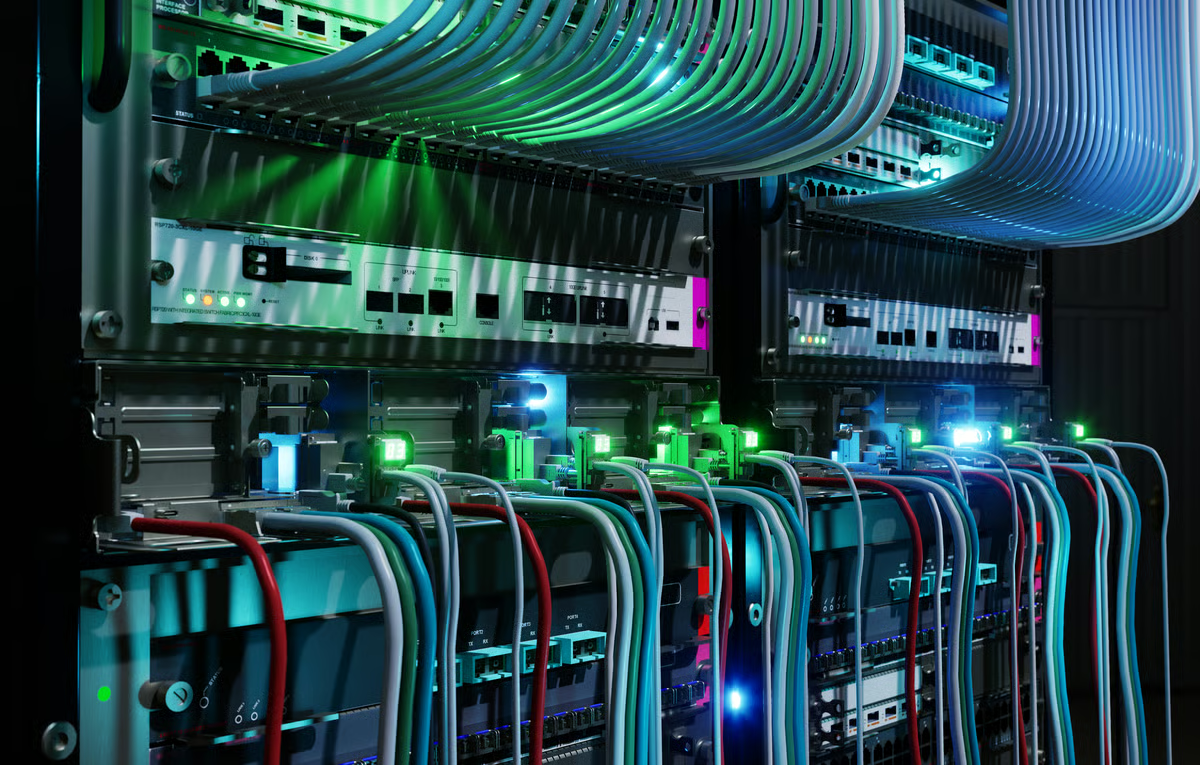
There’s a version of artificial intelligence (AI) investing that has been popular over the last few years and that I feel is talked about constantly: buy Nvidia, hold it forever, done. That’s not bad advice. But the next decade of AI won’t be won entirely in the chip stack. It’s going to be won in the wires, the racks, and the optical infrastructure that no one on CNBC is interrupting their broadcast to scream about.
Two companies have become foundational to AI infrastructure in a way that could make patient investors very wealthy. Both are very quickly becoming household names, and both are doing the work.
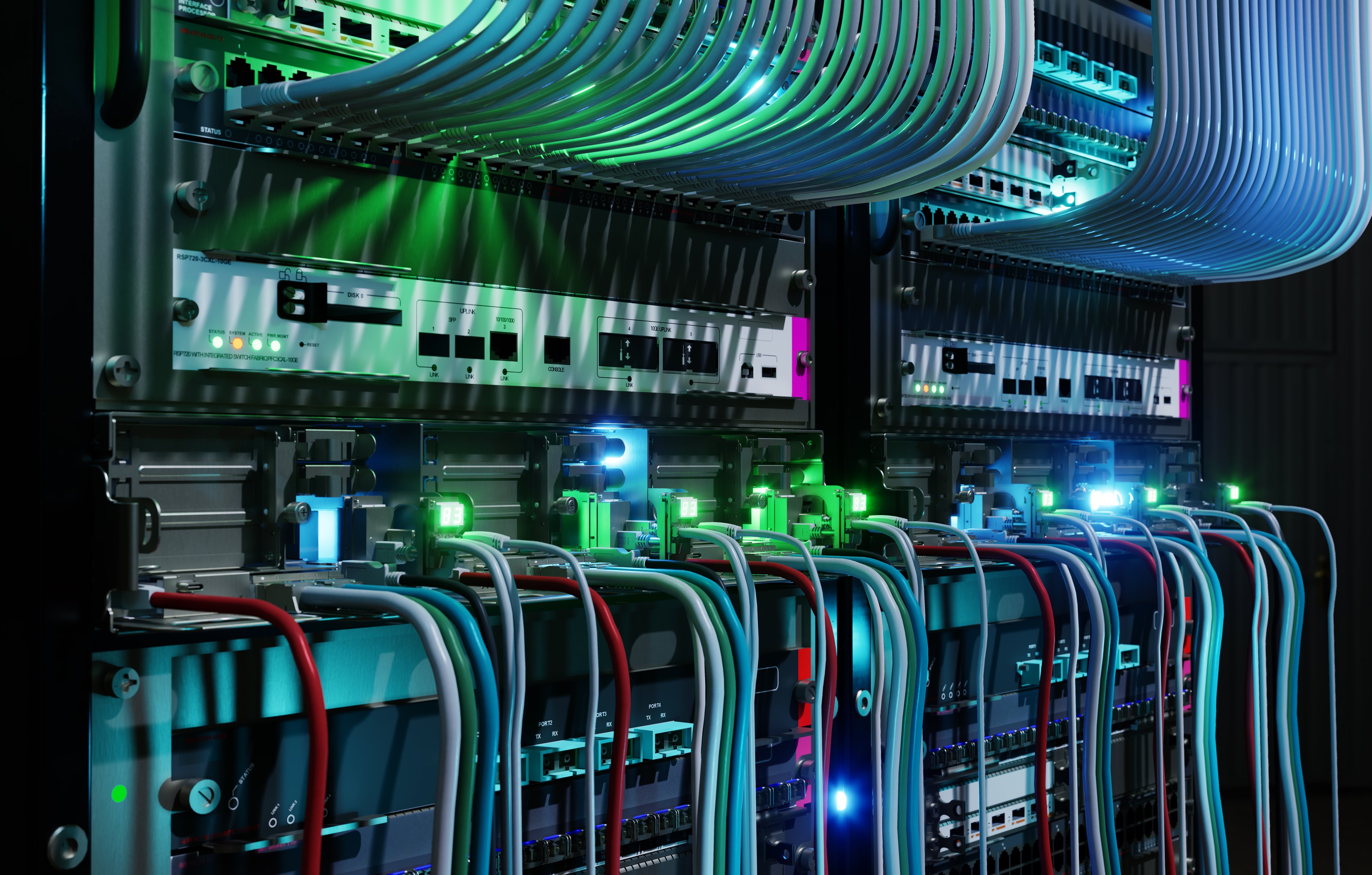
Image source: Getty Images.
1. Credo Technology
Credo Technology Group (CRDO 4.58%) makes what are known internally as “purple cables” — Active Electrical Cables (AECs) that connect the graphics processing units (GPUs) inside an AI data center cluster. The cables are proprietary, recognizable by color, and increasingly everywhere.
The reason AECs matter is simple physics. As AI clusters scale to hundreds of thousands of GPUs running in parallel, the links between those chips become a chokepoint. Credo’s AECs handle that connection at lower power and higher reliability than the alternatives — and as data center density increases, the demand for them does too.
What’s worth paying attention to beyond revenue is who is buying. The company has confirmed Microsoft, Amazon, and xAI as customers, with each representing a significant share of revenue. A fourth hyperscaler was ramping toward the 10% revenue threshold heading into fiscal 2026. When the largest technology companies on earth are buying your cables in bulk and asking for more, that’s an embedded infrastructure position.
The board made something clear recently, too. Credo’s CEO was just granted a performance stock award with revenue milestones ranging from $2.5 billion to $7.5 billion, and stock price hurdles of $244.70 to $489.40 — vesting through 2031. That’s the board locking the person responsible to a very specific future. They believe the growth trajectory is real.
The risk worth naming with Credo is customer concentration. A shift in data center architecture, or a hyperscaler deciding to build AEC technology in-house, could disrupt the business. That’s a real possibility in a market moving this fast. But Credo’s head start, design wins at every major optical module manufacturer, and proprietary signal integrity know-how make displacement harder than it sounds on paper.
Credo has had a remarkable mid-year, trading up by more than 100% from its early April prices. This stock is an easy one to dollar-cost-average and forget about for decades. This ticker could make you a millionaire.

Today’s Change
(-4.58%) $-9.96
Current Price
$207.54
Key Data Points
Market Cap
$38B
Day’s Range
$202.90 – $234.01
52wk Range
$66.75 – $245.95
Volume
735.8K
Avg Vol
7.3M
Gross Margin
69.43%
2. Marvell Technology
Marvell Technology (MRVL 15.74%) spent years as the quietly capable company underneath the loud ones. That changed on March 31, 2026, when Nvidia announced a $2 billion investment in Marvell and folded it into its NVLink Fusion ecosystem — a rack-scale platform that lets custom accelerator chips connect directly into Nvidia’s proprietary interconnect fabric.
Marvell’s stock is up over 50% in the last week because Nvidia CEO Jensen Huang recently declared Marvell Technology to be “the next trillion-dollar company.”
This is worth noting — and maybe worth buying some shares quickly. Hyperscalers have been designing their own AI chips to reduce dependence on Nvidia. They hire Marvell to build those chips. The Nvidia-Marvell deal means that even when a hyperscaler commissions custom silicon to get away from Nvidia GPUs, every rack still needs Nvidia components to run the NVLink Fusion stack. Marvell sits at the center of both paths.
The company’s custom silicon pipeline now includes 18 XPU and XPU-attach sockets, with more than 50 new pipeline opportunities representing an estimated $75 billion in lifetime revenue potential. Silicon photonics — using light instead of copper to move data between chips — is the second act here, and Marvell is embedded in that transition as well.

Today’s Change
(-15.74%) $-49.80
Current Price
$266.63
Key Data Points
Market Cap
$230B
Day’s Range
$266.35 – $300.60
52wk Range
$61.44 – $324.20
Volume
4.1M
Avg Vol
32.4M
Gross Margin
50.64%
Dividend Yield
0.09%
To me, both companies represent something rare: They are genuinely hard to replace, embedded in infrastructure that the AI economy cannot run without, and operating in segments where tailwinds are structural rather than cyclical. A decade is a long time. But so is a GPU cluster build-out.















Leave a comment