

Anand Kashyap is CEO and cofounder of Fortanix, a global leader in data security and a pioneer of confidential computing.

Over the past decade, hyperscale cloud platforms have become the default environment for enterprise computing. They offer flexibility, speed and a way to avoid building everything yourself. For most apps and use cases, the model worked well.
However, as organizations go from experimenting with AI to running it continuously and at scale, tech and business leaders are discovering that the infrastructure that worked for general-purpose computing doesn’t always translate well to AI workloads. This realization has given rise to a new concept: the AI factory or AI data center.
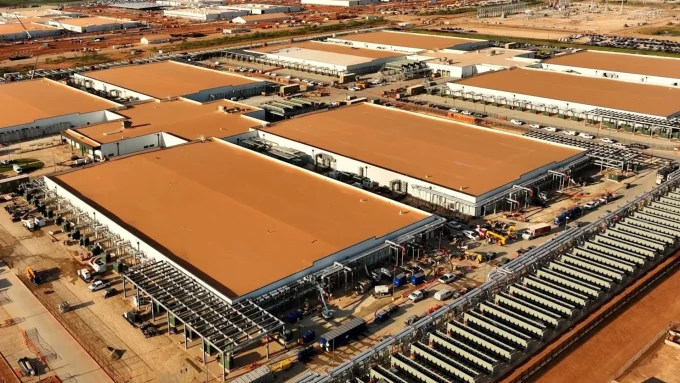
An AI factory isn’t just a data center with the latest GPUs. It’s a purpose-built environment designed to produce intelligence reliably, securely and at scale. Understanding how it differs from a traditional hyperscaler is becoming an important strategic decision for executives.
AI Factories Vs. Hyperscalers: The New GPUs Vs. CPUs
One way I like to explain the difference is with an analogy from computing itself.
CPUs are designed for general-purpose computing. They’re flexible, versatile and good at a wide range of tasks. Meanwhile, GPUs are purpose-built and optimized for highly parallel workloads. That’s why they power modern AI.
In essence, you can think of hyperscalers as the CPUs of infrastructure, while AI factories are the GPUs. Hyperscalers are great at hosting many different workloads at once, whether it’s web apps, databases or enterprise software. AI factories are optimized for one thing: running AI workloads continuously and efficiently.
Just as computing has shifted from CPU-centric to GPU-centric for AI, we’re now seeing a similar shift at the infrastructure level. The most important AI workloads, such as those involving sensitive data, proprietary models or national-scale systems, are increasingly moving toward AI factories.
Why AI Workloads Are Leaving General-Purpose Clouds
Hyperscalers will continue to play a critical role, but AI has needs and requirements that general-purpose environments weren’t designed for.
For starters, AI workloads are continuous, not episodic. They’re also data-intensive and highly parallel rather than sequential. Further, these workloads are increasingly centralized so that teams can optimize performance.
As AI systems mature, organizations are looking for predictable performance, tighter control over data and models and, frankly, fewer surprises. This is why many are gravitating toward more structured, purpose-built infrastructure.
For executives, it’s simple: Infrastructure strategy is a part of your overall AI strategy. You’re likely not treating AI as “just another workload,” and your planning and dedicated resources should reflect that.
The AI Factory Stack: A Primer
One misconception I often hear is that AI factories are more complex than traditional environments. In reality, the opposite is often true. The components of an AI factory stack tend to be relatively straightforward:
• Accelerated compute optimized for AI
• High-speed networking to move data efficiently
• A small number of well-defined AI platforms for training and inference
• Centralized data pipelines
• Strong isolation and governance
Because the architecture is purpose-built for AI, there’s less need for the tool sprawl that can quickly get out of control in general-purpose environments. You’re also not trying to secure hundreds of unrelated applications or support every possible workload.
This simplicity isn’t accidental. It’s the product of designing around a single outcome: reliably producing AI.
All of that said, AI factories also often contain an organization’s most sensitive data, along with the models that encode valuable institutional knowledge. When data, models and compute live in the same environment, the stakes become higher.
Next-gen architecture requires next-gen security controls. AI workloads need access to decrypted data and model weights to function. Protecting data while it’s at rest or in transit isn’t enough.
At the same time, it’s important to separate infrastructure security from AI application security. AI factories benefit most from data-centric, infrastructure-level protection such as confidential computing rather than relying solely on perimeter defenses. Higher up the stack, AI-specific controls such as guardrails, prompt-injection mitigation and hallucination management address model behavior and usage, not infrastructure trust.
Instead, AI factories benefit from designs where:
• Data must be protected while it’s actively being processed.
• Access to models should be tightly controlled and verifiable.
• Infrastructure operators shouldn’t be automatically trusted with sensitive workloads.
This is especially important for regulated industries and governments, but it increasingly applies to any organization that relies on AI as a core capability.
No Need For Layers Of Perimeter Tools
AI factories and AI data centers reduce the need for sprawling security and observability tooling. They’re well-contained and structured, so they don’t require the same level of perimeter complexity as open-ended cloud environments. You’re not securing an endless variety of applications with constantly changing network paths. Instead, securing AI is more about:
• Verifying workloads
• Enforcing strict boundaries around execution
• Protecting data and models at the point of use
For executives, this might require a mindset shift. Strong security doesn’t always mean more tools. In well-designed AI factories, it often means fewer moving parts and clearer trust assumptions.
The Executive View: AI Infrastructure As Strategy
If you’re leading an organization investing heavily in AI, you should be asking a few questions now:
• Which AI workloads matter most to our business or mission?
• Do those workloads require tighter control over data and models?
• Are we optimizing infrastructure for convenience or AI outcomes?
• Where does data sovereignty (legal, operational or strategic) matter most?
AI factories won’t replace hyperscalers overnight, but for high-value, high-risk AI systems, they’re quickly becoming the preferred model.
The shift that’s happening is similar to other transitions we’ve seen in computing. Purpose-built systems emerge when general-purpose ones reach their limits, and AI is pushing current-gen infrastructure to that breaking point.
Those who recognize this early set themselves up to scale AI responsibly, securely and competitively for the foreseeable future.
Forbes Technology Council is an invitation-only community for world-class CIOs, CTOs and technology executives. Do I qualify?















Leave a comment