

But another part of AI sovereignty risks being overlooked: the content that makes the technology useful in the first place.
The UK possesses an asset in its books, journalism, academic research and wider creative output. AI gives us an opportunity to turn that work into a valuable UK export, but only if we build the market to allow that to happen.
As digital advertising rose, content produced in this country helped fuel the growth of predominantly overseas technology businesses, while many of the industries that created it struggled to capture their share of the economic value generated. We need to ensure we don’t make the same mistake with AI.
The sovereignty debate can’t stop at computing power, data centres, and models. It must extend to the high-quality, human-created content those models and AI products depend on. That means we also need sovereign data.
That doesn’t mean putting up walls around UK content or preventing AI companies from using it. I actually mean the opposite. We have an opportunity to create a thriving market for trusted content, enabling AI developers to access it legitimately and at scale while ensuring value flows back to the people and businesses who create it. Copyright is sometimes presented as an obstacle to AI innovation. Therefore, licensing should be seen as part of the infrastructure that supports it.
Take the role Getty Images has played in photography. This is a straightforward way for businesses to access an enormous range of high-quality content, with clear permissions attached and value flowing back to its owners. The precise model for AI will be different, of course. And this is about much more than training models. AI systems increasingly need access to trusted, current information to ground their answers, power products and services, and support tools that are used by businesses and consumers.
Instead of technology businesses negotiating individually with thousands of authors, publishers, visual artists, photographers, and creators, collective licensing offers a straightforward route to high-quality content at scale. Technology businesses get simpler access to the material they need, while, crucially, creators are rewarded for providing it. This is a significant commercial opportunity for the UK.
The UK has spent generations building an international cultural reputation through its writers, musicians, filmmakers, artists, researchers, and journalists. We can’t take that for granted. Our creative output isn’t just part of our identity; it is extremely valuable economically.
AI, therefore, should become another tool to help that creativity flourish. New technologies have enabled new forms of expression, from sampling to digital photography and filmmaking. But there is an important distinction between creators using technology to produce something new and technology businesses using creators’ work without their permission or reward to generate approximations of what already exists.
This is why the commercial value of licensing is so important. Because it protects the human value. A market for high-quality content gives people and businesses an incentive to keep investing time and money in creating original work, and it sustains the pipeline of new human knowledge and creativity that future generations of AI will depend on.
The stakes are higher as AI moves into healthcare, financial services, education, and government. When an AI system informs a medical or financial decision, or helps a child learn, the provenance and quality of the information underpinning its answers matter enormously. These are what I call ‘your money or your life decisions’. Those questions aren’t just arguments about copyright. They impact the quality and trustworthiness of the AI product itself.
The UK has an opportunity to think more broadly about what AI sovereignty really means. Granted, we need computing power, energy, infrastructure, and domestic capability. But we also need a market where AI businesses can access trusted content, where creators and publishers have an incentive to keep producing it, and where the UK retains more of the economic value generated by one of its greatest strategic assets. AI shouldn’t diminish our cultural and creative industries. Instead, let’s create a market that allows the world’s leading technology companies to access UK knowledge and creativity easily and legitimately.
Investing £20 billion in sovereign AI infrastructure may help ensure the UK controls the machines. But we should be equally ambitious about the human knowledge and creativity that makes those machines worth having in the first place.
____________________
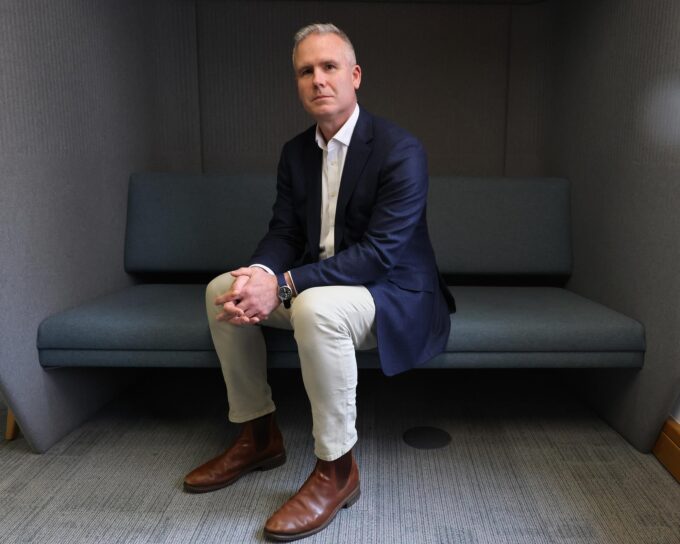
Simon Hutson is CEO at the Copyright Licensing Agency.
LBC Opinion provides a platform for diverse opinions on current affairs and matters of public interest.
The views expressed are those of the authors and do not necessarily reflect the official LBC position.
To contact us email opinion@lbc.co.uk














Leave a comment