
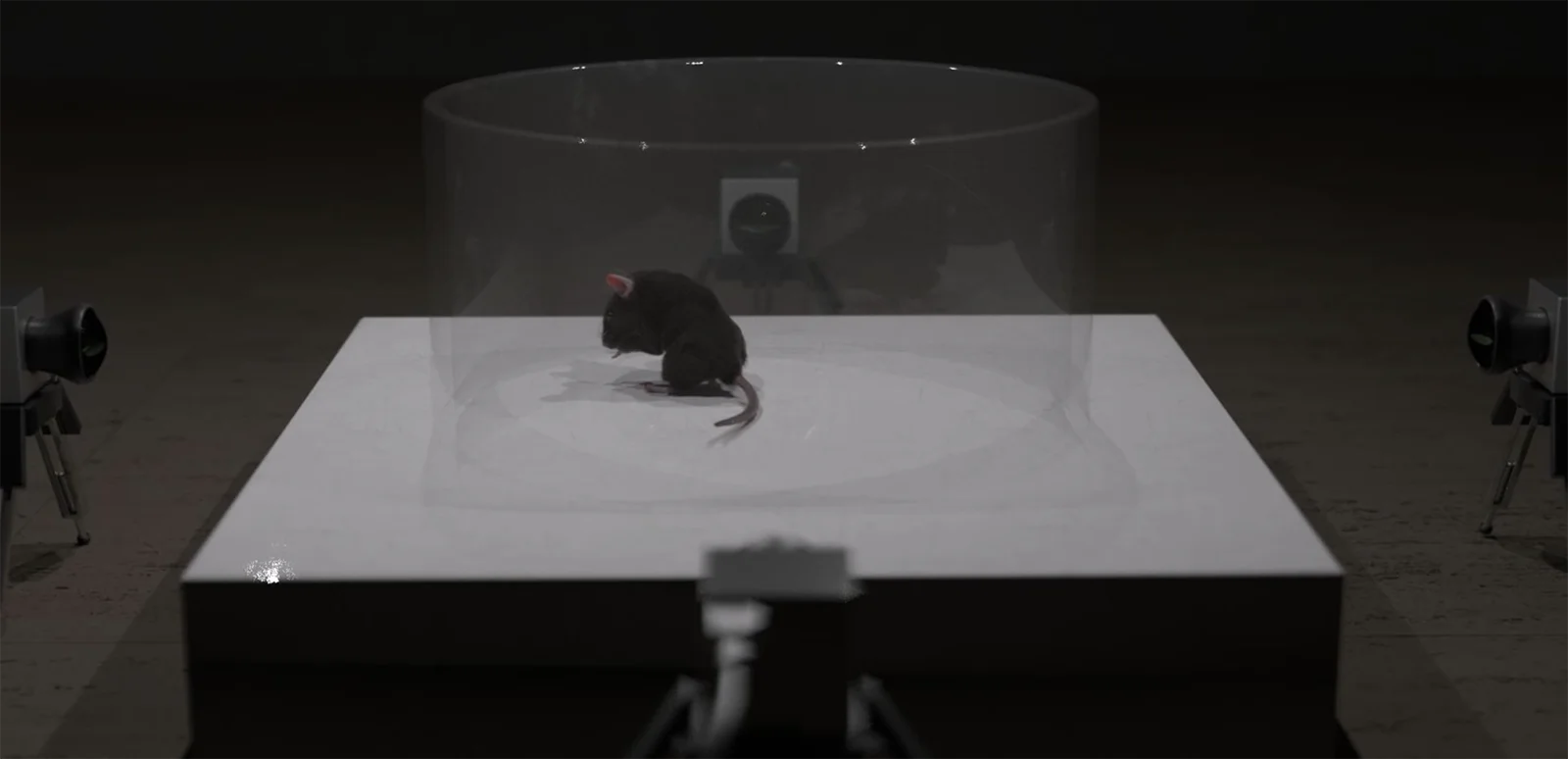
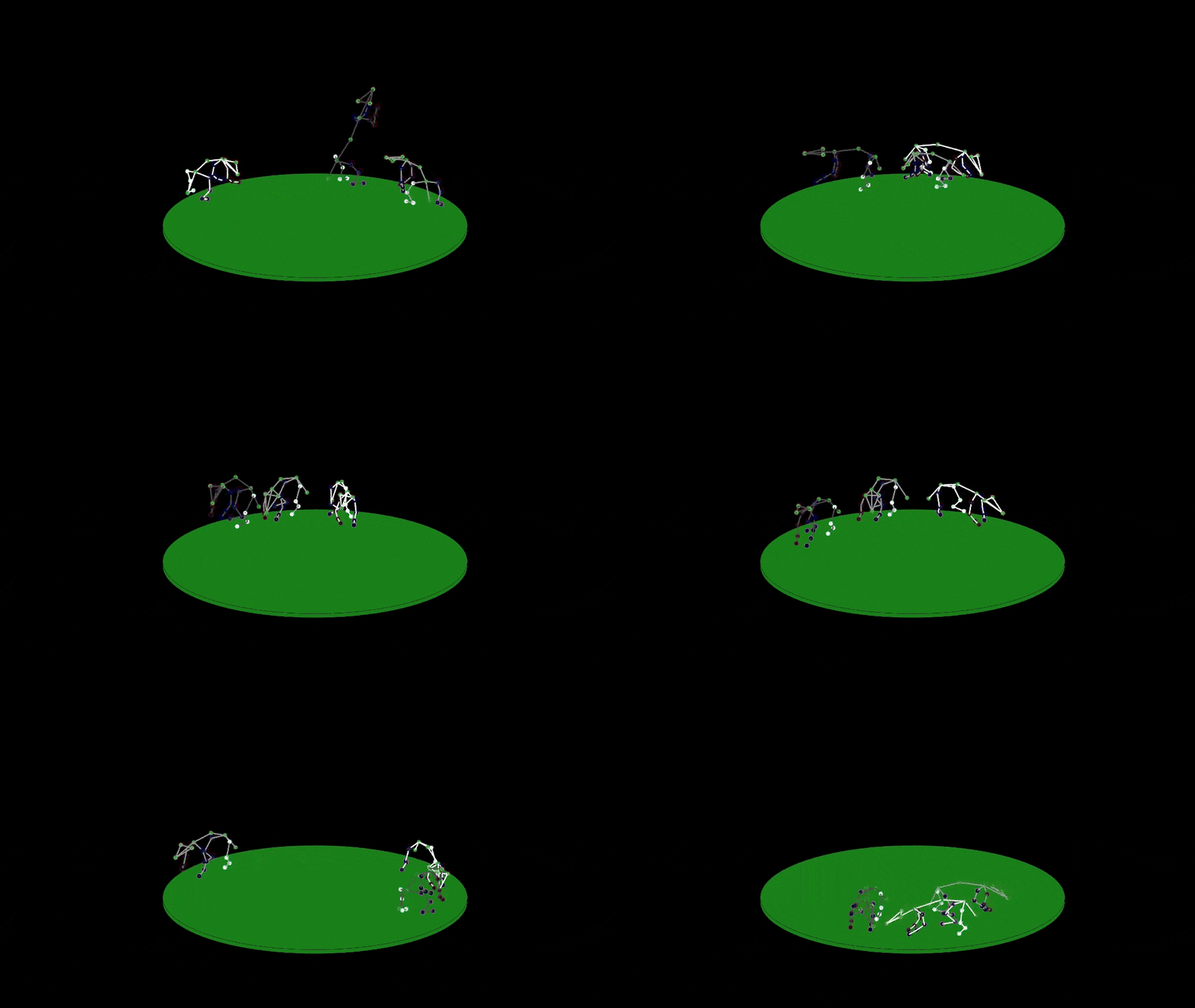
According to Dunn, this knowledge gap has made it even more difficult to crack the mysteries of devastating motor disorders, like Parkinson’s disease, or neuropsychiatric disorders, like autism spectrum disorders or schizophrenia, that affect behavior.
“Many areas of neuroscience have been hamstrung by the lack of precise, objective, and reproducible descriptions of social behaviors, and DANNCE helps provide a solution to this longstanding problem,” said Dunn. “My team is excited to use tools like machine learning and neural networks to help learn more about these disorders.”
From Coding to the Clinic
Although Dunn’s primary collaborators are neuroscientists, engineers and clinicians at the Duke University Medical Center, he wasn’t always interested in studying biomedical problems.
“I loved computers and engineering, but I also didn’t want to be in a dark basement programming for the rest of my life,” he said. “I’d developed an interest in biology in high school, and after a year of undergrad I decided to explore more of the biology curriculum to see if it was something I could actually pursue.”
As an undergraduate at the University of California, Berkeley, Dunn took courses in neuroscience, neurobiology, neurochemistry and pharmacology and joined a neuroscience lab, which led him to switch his major from electrical engineering and computer science to biology, with specialties in neuroscience and biophysics. While he credits this change for inspiring him to pursue research, he also remembers that he didn’t feel confident bench-top work was his passion either.
“I was young and doubting my trajectory,” he explained. So, like so many uncertain students before him, Dunn started applying to graduate schools.
“I ended up getting accepted at Harvard, where I did a rotation in a lab with zebrafish and whole organism behavior rather than looking at individual neuron channels, which was all I’d up to that point,” said Dunn. “I can trace a lot of my work and interests today back to that lab and that experience. I was writing software, we were using high-speed cameras to collect real-time measurements of the animal’s movements and using deep learning to relate them to neural activity. It was exactly the work I wanted to be doing.”
But it wasn’t until Dunn was hired as an independent research fellow at Duke Forge, a center for actionable health data science that was eventually absorbed into Duke AI Health, that he had a chance to better explore the clinical possibilities of applying machine learning and neural networks to problems in healthcare.













Leave a comment