
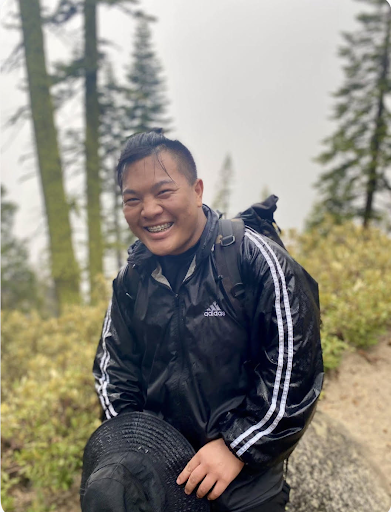
Thomas To, a full-stack AI engineer, believes some of AI’s most meaningful developments are emerging within drug discovery. While public conversations may often focus on chatbots and workplace automation, To sees specialized AI systems trained on scientific data as an important area where technology and biology can work together to support researchers exploring new therapies.
His perspective comes from experience across both scientific and engineering environments. He began as a scientist who needed better computational tools and evolved into an engineer building platforms that support scientific users. His work combines domain knowledge, software development, machine learning infrastructure, and technical communication, allowing him to translate complex scientific concepts into practical systems.
This journey has shaped his view of AI in life sciences. “Technology creates value when it supports scientific decision-making while respecting the complexity of biology,” To shares. His experience building AI systems, data pipelines, and machine learning applications gives him a perspective that connects technical development with real research needs.
A major part of To’s work involves helping bridge the gap between AI capabilities and scientific applications. In his role as an Engineer at a life sciences organization focused on providing researchers with high-quality biological materials, he aims to contribute to systems that support the broader research ecosystem. The organization works with biological samples that can help scientists study diseases, investigate biological processes, and advance research programs.
The broader growth of AI reflects its expanding presence across different fields. According to a 2025 AI index report, AI is becoming increasingly embedded across areas including healthcare. The report noted that the FDA approved 223 AI-enabled medical devices in 2023, compared with six in 2015, reflecting the growing use of AI-supported technologies in healthcare environments.
To emphasizes that AI in drug discovery goes far beyond conversational systems. While public discussion often centers on language models, he notes that other computational approaches, such as tools that analyze biological structures, molecular interactions, and large datasets, play a critical role in identifying potential therapeutic pathways.
He also highlights AI’s potential to streamline the long, complex journey from scientific insight to approved treatments. Drug discovery and development typically require extensive research, testing, and evaluation, and To argues that better computational tools and stronger biological data systems can make parts of this process more efficient, helping researchers move toward regulatory approval more effectively.
“Empirical Biology, however, remains the foundation,” To says. “AI can reveal patterns, organize information, and support analysis, but scientific expertise is essential for interpreting results and understanding biological behavior.” To notes that drug discovery and development depend on intricate relationships among molecules, cells, chemistry, and human health, relationships that demand collaboration between computational methods and human judgment.
He highlights that one of the important challenges in AI-enabled biology involves the quality and availability of training data. “Machine learning systems depend on reliable information, and creating useful biological datasets requires careful experimentation, documentation, and validation,” To emphasizes. His involvement in protein research reflects his interest in strengthening the connection between experimental biology and computational modeling.
Through a project analyzing enzyme mutations, To explored how experimental findings could contribute to improving predictive models for protein behavior. The work represents a broader effort to understand how computational predictions can be informed by laboratory-generated evidence, helping researchers develop stronger scientific models.
This focus on building knowledge and resources also influences To’s educational efforts. He highlights the book Build AI Drug Discovery Pipelines by Noah Flynn as a resource for people interested in computational drug discovery. The book introduces machine learning, deep learning, molecular data analysis, and practical techniques used to build AI systems for scientific applications. It guides readers through examples involving drug screening, protein modeling, and computational methods used to investigate therapeutic possibilities.
To believes educational resources can help more people participate in this evolving field. He states, “Contributors find their way into computational biology from all kinds of backgrounds, from engineering and research to data science. People usually build their expertise by following the areas that genuinely interest them, connecting what they’re already good at with the bigger scientific questions they want to help solve.”
He also encourages hands-on learning through projects involving biological data and computational modeling. Educational workflows that connect protein design experiments with data collection, along with contributions to open scientific software communities focused on biomolecular modeling and prediction, may provide opportunities for people to develop practical experience and contribute to shared scientific progress.
Overall, Thomas To emphasizes that the future of AI-enabled science depends on people who can connect disciplines. His goal is to give back to the biochemical community by helping make advanced tools more understandable, accessible, and useful for researchers. His work reflects a vision of AI as a collaborative technology that supports scientific exploration, bringing together engineering expertise and biological understanding to contribute to the continued development of medicine.













Leave a comment