
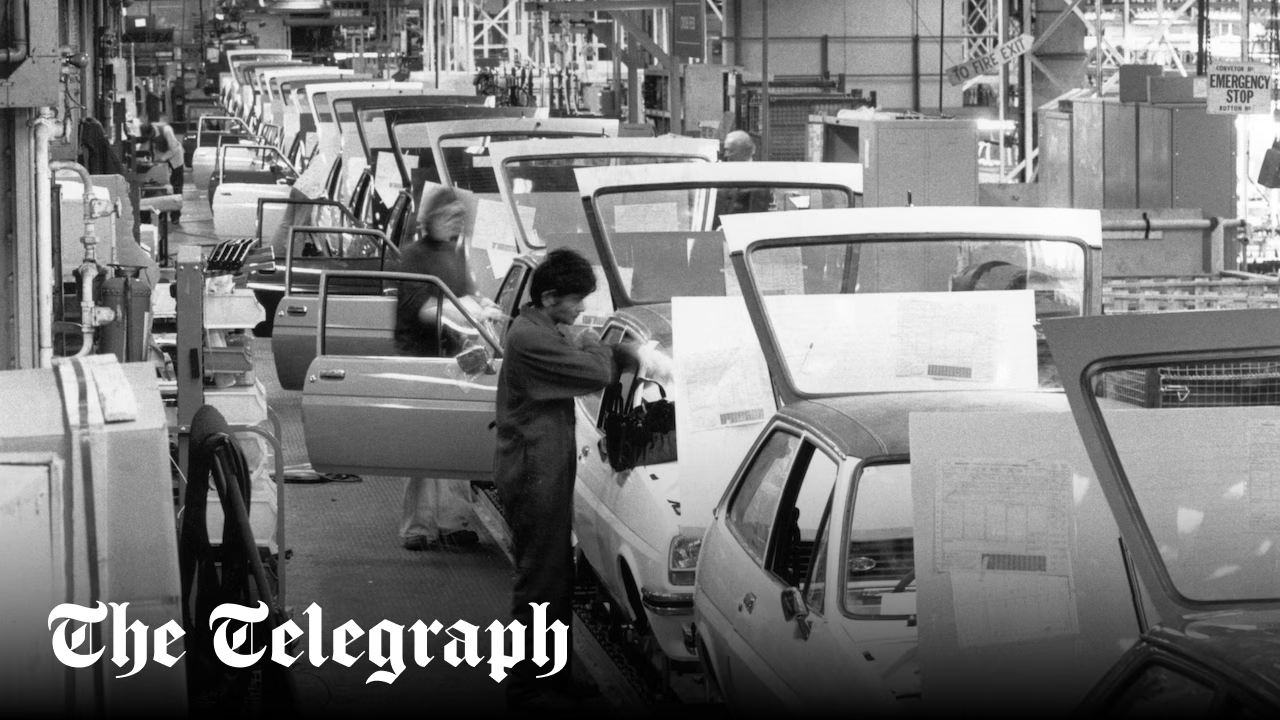
What Britain lacks, Hawes argues, is scale. “We’ve got the engineering excellence. We’ve got the capability. We’ve got the history and the heritage. But what we don’t have is the scale.”
He is referring to the fact that developing a modern family car requires billions of pounds of investment, not only in vehicle development but also engines, batteries, software and production facilities and, increasingly, artificial intelligence.
“If you think of the brands synonymous with volume production,” says Hawes, “they are global brands.”
Without that scale of demand, Britain also lost much of its domestic supply chain. Former Nissan executive Palmer explains that the consequences have been profound. “The supply chain that once ran from foundries in the Black Country to electronics firms across the Midlands has gone because, when the volume manufacturers shrank, the various tiers of firms that sell parts, systems or services to larger suppliers or original equipment manufacturers [OEMs] went with them. Once a forge or foundry closes, it never comes back.”
Professor David Bailey, one of Britain’s leading automotive economists, believes the economic consequences extend far beyond the loss of famous marques.
“We’ve lost far more than a badge,” he says. “A volume manufacturer would anchor thousands of suppliers, sustain engineering capability, drive research and development and create skilled jobs across the country.”
Foreign investment has undoubtedly kept Britain manufacturing cars, he says, but strategic decisions are now made overseas, leaving the UK more vulnerable when global companies reorganise production.
















Leave a comment