
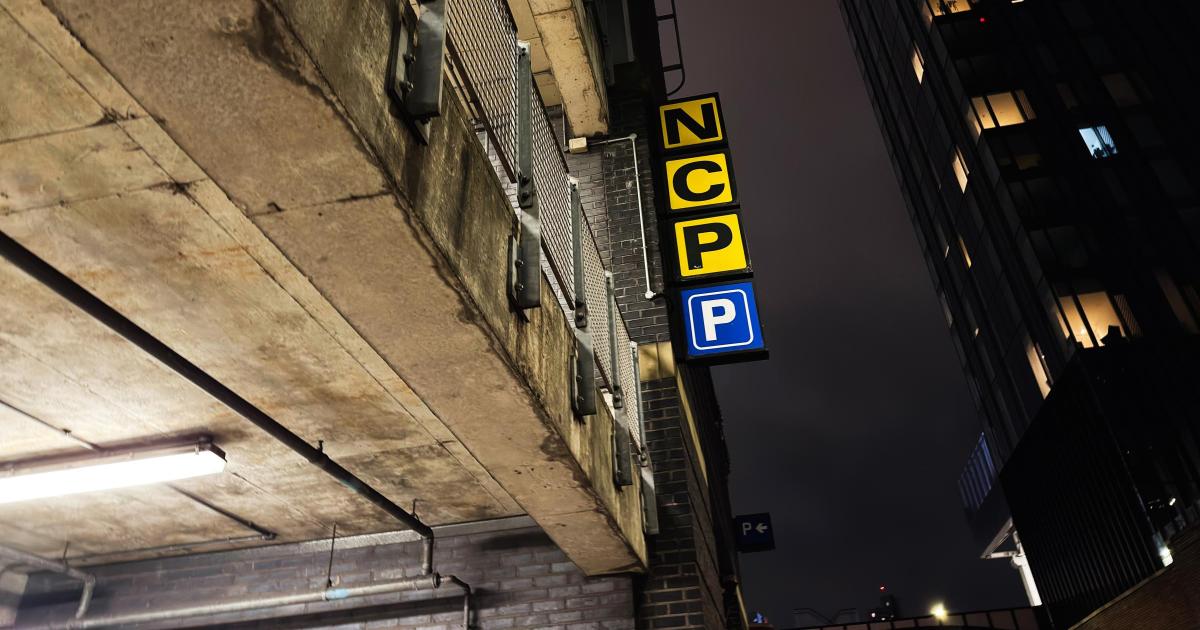
National Car Parks (NCP) announced it had entered administration last week after struggling to adapt to a “challenging trading environment”, putting 682 jobs at risk across the UK.
The company, which launched in 1931 and is owned by Japanese firm Park24, is one of the UK’s biggest operators with around 340 car parks nationwide
Full list of NCP car parks set to shut across the UK this week
NCP has now informed landlords and employees that 22 car parks are “no longer commercially viable to operate” and will close for good at 11.59pm on Friday (March 27).
The full list of NCP car parks set to close today is:
- Ashford County Square
- Ashton-un-Lyne Cotton Street
- Banbury Marlborough Road
- Bexley Royal Oak Road
- Birmingham Gough Street
- Bournemouth Hinton Road
- Bristol Nelson Street
- Bromley Travelodge
- Cardiff Dumfries Place
- Eastbourne Trinity Place
- Exeter Market Street
- Grantham Station 1 – 3
- Hinckley Britannia Shopping Centre
- Ipswich Portman Road
- Leicester Abbey Street
- Leicester East Street
- Leicester Lee Circle
- Leicester Rutland Centre
- London Harley Street
- London Kings Cross St Pancras
- London Knightsbridge
- Luton Regent Street
The remaining 318 NCP car parks will remain open.
An NCP spokesperson said: “On Monday, March 16, 2026, Zelf Hussain, Rachael Wilkinson and Toby Banfield of PwC were appointed as Joint Administrators of National Car Parks Limited.
“Following an initial assessment of operations, the joint administrators have identified 22 sites that are commercially unviable and will therefore be closed to customers from 11:59pm on March 27.
“Regrettably, due to the closure of these sites, 33 employees will be made redundant on March 31.
“They will be supported through the statutory redundancy payments process.
“The other 318 car parks remain open and there are no further sites identified for closure at this time.”
What happens when a company goes into administration?
Put simply, when a company enters administration, it means that it is unable to pay expenses, debts, or other liabilities, according to SquareUp.com.
Companies House adds: “When a company goes into administration, they have entered a legal process (under the Insolvency Act 1986) with the aim of achieving one of the statutory objectives of an administration. This may be to rescue a viable business that is insolvent due to cashflow problems.
“An appointment of an administrator (a licensed insolvency practitioner) will be made by directors, a creditor or the court to fulfil the administration process.”
A statutory moratorium is put in place once a company enters administration, giving it “breathing space” to allow for financial restructuring plans to be drawn up free from creditor enforcement actions.
A company can continue to trade while in administration, but daily management and control is handed over to the administrators.
Companies House continues: “Within 8 weeks it is the administrators’ role to formulate administration proposals.
“Creditors are then asked to vote by a decision procedure to approve the administrators’ proposals.
“If the administration involves a sale of all or part of the company’s business, the proceeds (after the costs of the procedure) will be distributed to creditors in a statutory order of priority.”
Administration will end automatically after 12 months unless the administrator asks the court or creditors for an extension.
Through administration, a company can be:
- Rescued and passed back to the directors
- Enter liquidation
- Be dissolved
Are any of the NCP car parks closing today near you? Let us know how you’re affected in the comments below.
















Leave a comment