
Details of UK’s defence investment plan revealed – as dozens of helicopters axed and Storm Shadow cruise missiles phased out
The UK will scrap some older weapons and kit, including Storm Shadow cruise missiles and a range of military helicopters, under a major investment plan which falls billions of pounds short of what military chiefs say they need.
But it could have been worse.
The Treasury agreed to give the Ministry of Defence an extra £1.5bn in the wake of John Healey resigning as defence secretary earlier in the month in protest at a lack of cash.
This has pushed the total amount of extra money for the defence investment plan to £15bn in “spending power” over four years, but only £11.6bn of that amount is new money, with the rest comprising a reallocation of existing resources.
In a further sign that Sir Keir Starmer belatedly believes even more money is needed to rearm, his investment blueprint does say “funding and plans” behind a goal to push defence spending to 3% of GDP in the next parliament from around 2.3% now would be revealed in the next spending review, expected in 2027, where defence will be the “number one priority”.
Watch: Michael Clarke – Is the defence plan enough?
However, this commitment will only carry weight if endorsed by the next prime minister.
The government finally unveiled its defence investment plan this morning following months of delays because of wrangling over money.
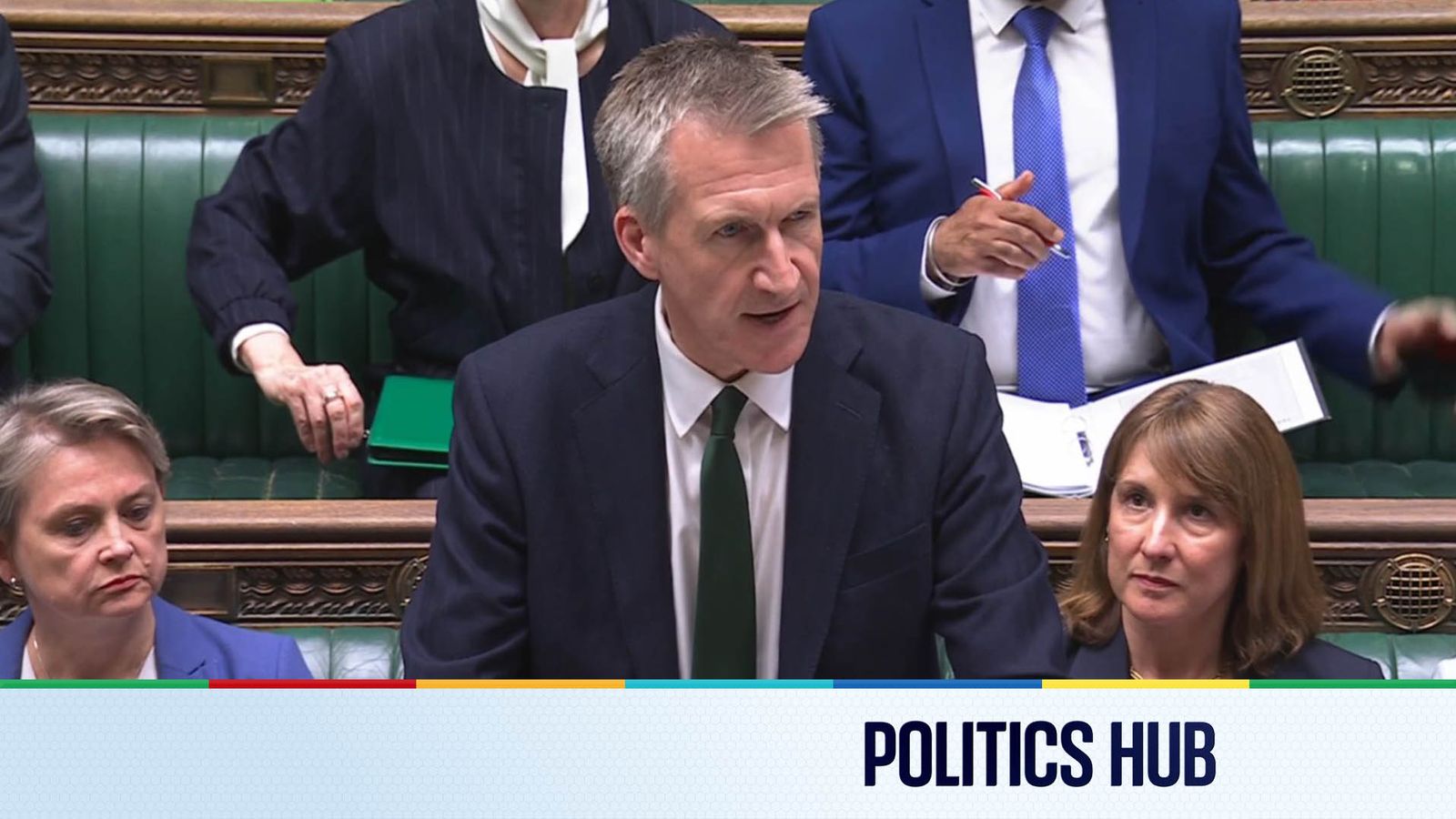
Dan Jarvis, the new defence secretary, warned in the document that “tough choices” have had to be made “to stop doing things which were designed for another age”.
This includes phasing out Storm Shadow cruise missiles, which have been a vital weapon for RAF fighter jets as well as Ukrainian forces in their war with Russia.
“We are now pivoting to the next generation of low-cost cruise missiles,” the plan said.
More than 30 Wildcat helicopters and Chinook helicopters will also be axed, along with plans to upgrade a satellite communications system.
In another bid to save money, an ambition to increase the size of the military cadet force by 30% by 2030 – key for rebuilding national resilience – has been slowed to 2035.
The timeline had been set out in a sweeping review of defence, published a year ago, which the investment plan is meant to fund.
Jarvis stressed the need to focus more on autonomous weapons and artificial intelligence to ensure the army, navy and air force are “fit for the next war, not the last one”.
Beth Rigby: Starmer ‘staking his legacy’ on defence investment plan
Across 80 pages, the investment plan set out how a total of £298bn in funding – which includes the £15bn uplift – would be invested across the whole of defence over the next four years. It included:
- More than £20bn as part of a programme to renew a fleet of four nuclear-armed submarines, the cornerstone of the UK’s ability to deter threats;
- £11.1bn on munitions and weapons to boost stockpiles to enable the army, navy and air force to sustain a fight beyond a few short days. This includes low-cost cruise missiles as well as six new weapons factories;
- £790m to bolster air defences to protect the UK and its overseas bases from enemy missiles and drones – a fraction of the sums of money that experts say would be required for a credible air defence system, like Israel’s “Iron Dome”;
- £330m over an unspecified timespan to improve security around critical underwater oil and gas pipelines and communication cables that are crucial for the economy but are vulnerable to hostile attack from Russia;
- And £1.6bn earmarked for investment in innovative technology, which is changing the way that militaries fight with artificial intelligence, significantly accelerating how decisions by the chain of command are made in planning operations and conducting strikes.
The plan claimed the additional funding would push up total defence spending to 2.7% of GDP by 2030, a rise of 0.1% from a previous level.
Yet this figure also includes expenditure on the intelligence agencies, as opposed to only hard military power, and it is well short of the target of 3% that John Healey, the previous defence secretary, had been pushing for.
He and Al Carns, the armed forces minister, resigned earlier this month after Starmer was unable to secure the additional tens of billions of pounds that would have been required to reach the target within that timeframe.
Military chiefs believe that the money they are being given is insufficient to rearm at the pace necessary to be ready for a possible war with Russia by 2030 – a timeline given by the outgoing prime minister.
However, they are having to do the best they can to rebuild fighting power, rather than wallow at the political reality of a government that has chosen not to make defence a bigger priority.
As well as listing what investments the armed forces would be making, the investment plan also talked about significant savings the MoD aims to make through what it called reform and efficiencies.
The figure over four years of £10.7bn was buried at the back of the plan.
“Defence is committed to delivering reform and efficiencies to ensure every pound spent on defence is used in the best way for our armed forces and taxpayers,” the document said.
Any efficiencies that are made will be used to further invest in frontline capabilities.















Leave a comment