
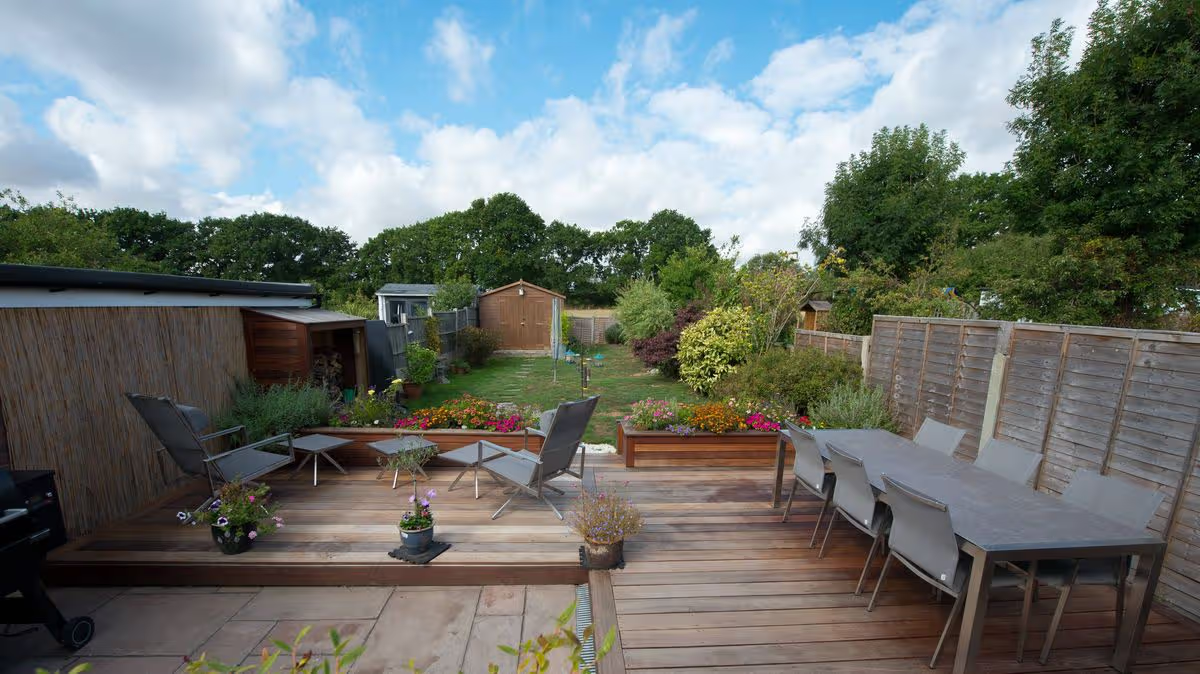
If you’re thinking about putting in garden decking this summer, here are the key rules you need to be aware of before you start

It should be doable without permission(Image: John Keeble via Getty Images)
There’s nothing quite like basking in a warm summer’s evening outdoors, glass in hand, enjoying quality time with loved ones.
With the warmer months upon us, many homeowners may feel inspired to give their outdoor space a fresh new look. Decking remains a firm favourite for those seeking to create an inviting area for relaxation or entertaining guests. If you’re considering taking the leap, the process should be relatively straightforward, providing you stick to a few key guidelines.
According to the Planning Portal — a joint venture between TerraQuest Solutions Limited and the Ministry of Housing, Communities and Local Government (MHCLG) — installing decking or similar raised platforms typically falls under permitted development rights, meaning no planning permission is required.
To meet the criteria, the following conditions must be satisfied:
- The decking must be no higher than 30cm above ground level
- Combined with any other extensions or outbuildings, the decking must not cover more than 50 per cent of the total garden area
- No part of the decking can be positioned on land in front of the main wall of the property
However, the experts noted that certain restrictions do apply. For those residing within a National Park, the Broads, an Area of Outstanding Natural Beauty or a World Heritage Site, the maximum area covered more than 20m away from the house is limited to 10sqm. If the location falls within Article 2(3) designated land, no decking or platform can be installed on either side of the property.
Additionally, decking is prohibited within the grounds of a listed building.
The experts added: “If the decking forms part of a larger piece of work (e.g. an extension with additional decking), then there may be different/further rules which apply to the entire development. These could mean planning permission or prior approval is required.”
These regulations only apply to residential houses, and anyone uncertain about the requirements should consult their local council’s planning department before commencing any work.
If in doubt, homeowners are advised to contact their Local Planning Authority for clarification before beginning any project. The relevant legislation is contained withinSchedule 2, Part 1, Class E of The Town and Country Planning (General Permitted Development) (England) Order 2015 (as amended).
Detailed advice should be read and is available on gov.uk under Permitted development rights for householders: technical guidance.
















Leave a comment