
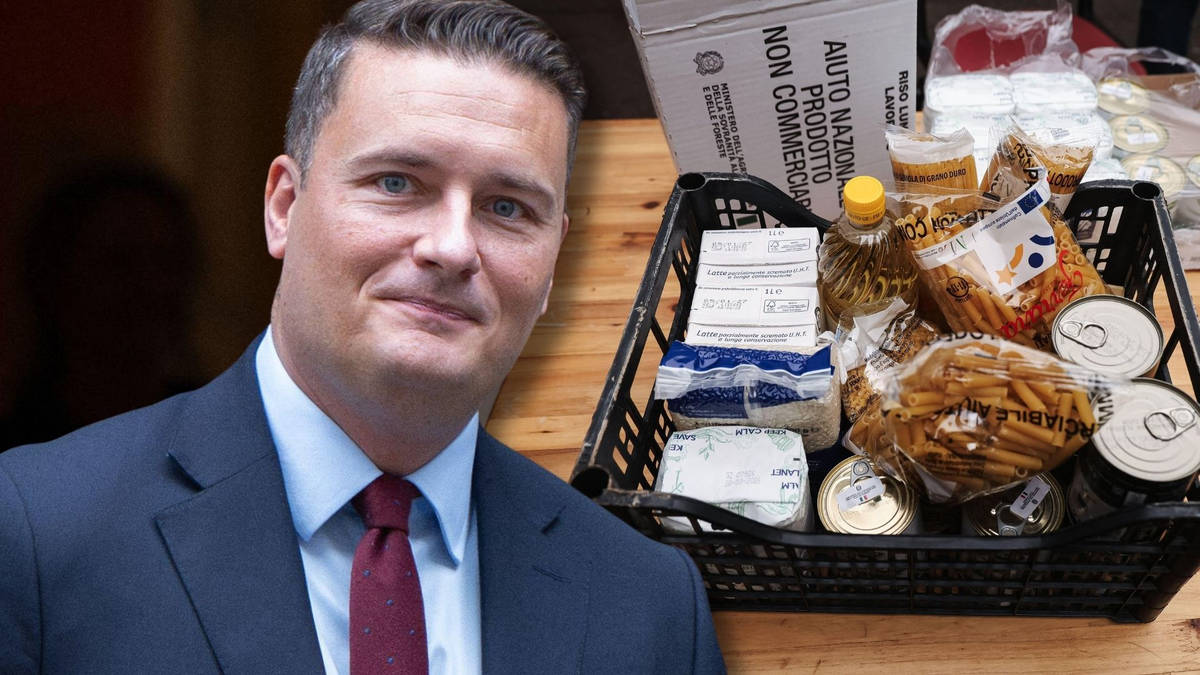
A fresh raft of guidance will encourage the public to be better prepared for emergencies – as dozens of government services were moved offline due to a cybersecurity issue

Picture:
Alamy
Defence Secretary Wes Streeting has called for the public to stockpile days’ worth of food and water for crisis situations in the face of “increasingly sophisticated cyber attacks.”
Speaking on Thursday, Mr Streeting warned the public would need to prepare for crises after it emerged that 32 government services had been moved offline after what was described as the “most severe flaw in software history”.
He also said organisations around the world are scrambling for a fix as such attacks are feared to happen “more and more”.
Under a new Government “be ready” campaign, the Defence Secretary is now urging households to be prepared if everyday services are temporarily disrupted with three days of key supplies.
The push comes after the head of the British Army, General Sir Roly Walker, said politicians would “very soon” begin a “frank conversation” about the dangers facing Britain and what people must be prepared to do to protect it.
“We are asking households and businesses: are they prepared, are they ready and do they know how they will respond in the event of everyday challenges that might manifest themselves,” Mr Streeting said at the opening of a gun barrel manufacturing facility in Telford, Shropshire.
Read more: Streeting insists Trump has not sided with Russia over Ukraine despite Putin praise from US envoy
Read more: Thirty-two Government services offline amid PHP cybersecurity issue

Picture:
PA Images/Alamy
He added: “But we’ll also need to take the country a step further and ask them: are they prepared for increasingly sophisticated cyber attacks on our businesses? Are they prepared for the eventuality that there may be disruptions on essential supply chains caused by hostile state actors or terrorists?
“How would we cope if the payment systems at the local supermarket went down? Those are the sorts of everyday challenges we could face, and it’s right that we ask the country to be ready for those things.”
Streeting has insisted the stockpile warning is not “scaremongering” after he was asked whether this could push people towards panic buying like during the Covid-19 pandemic.
“We did have this debate though, just to reassure… because we want people to be alert but not alarmed, and the truth is we looked around the rest of Europe, ‘what are our friends doing across the continent?’.
“They are way ahead of us on some of this stuff,” he said.
Speaking to LBC’s Tonight with Andrew Marr, former Foreign Secretary David Miliband said Mr Streeting is “absolutely right” to tell UK households to stockpile essential items.
Asked by Andrew whether Mr Streeting is taking the right approach, Mr Miliband said: “I do think that he’s absolutely right to be saying to people this is not just rhetoric, this is not just tabletop exercises.
“Every day there are threats to British infrastructure, and I think it’s very, very important that we take it seriously.”
It comes as 32 government services were moved offline due to a major software issue after criminal hackers attempted to exploit a “critical” security flaw first identified by AI agents.
Around 70% of websites are thought to be impacted by what has been described by OpenAI, the company behind the ChatGPT chat-bot, as “one of the most impactful security issues in recent memory”.
The Rheinmetall UK gun hall will manufacture barrels and breeches for 120mm and 155mm weapons, including for the RCH 155 self-propelled howitzer artillery system.
It marks the return of large-calibre weapon manufacturing to UK soil, amid efforts to bolster the country’s defence sector at a time of growing security threats.
Mr Streeting said on Thursday: “Britain is back in the business of making the weapons that our armed forces need to defend the nation against our adversaries. From an empty site to full production in eight months, this is rapid reindustrialisation in action.
“One hundred skilled jobs in world-class manufacturing and the return of large-calibre weapon production to UK soil for the first time in 20 years – this is what defence as an engine for growth looks like.”
Rheinmetall UK took over the site in autumn last year and has brought it into production in eight months.
British workers were trained at the German defence manufacturer’s plant in Unterluss, Germany, before returning to Telford.
The firm is expected to grow its workforce as production increases and build partnerships with smaller British businesses.
Rheinmetall is already involved in the UK’s Boxer combat vehicle and Challenger 3 battle tank programmes.
Last week, General Sir Roly Walker warned that the country would need its troops and that public support would be essential if they were called upon to fight.
In a blunt address to around 700 soldiers at Catterick Garrison in North Yorkshire, the Chief of the General Staff said Brits would themselves be asked to help defend the country and accept sacrifices to put defence and security first.
“Indeed, very soon, the political leaders of this country will start to have a frank conversation with the citizens of this country about just what is going on and where the risk lies,” he said.
The warning comes as the Government faces questions over when it will deliver a promised national conversation on defence, alongside a campaign to help households prepare for emergencies ranging from floods and droughts to armed conflict.
Andy Burnham inherited the commitment to a national conversation from Sir Keir Starmer, whose pledge was made more than 18 months ago. The household preparedness campaign has also yet to be launched.
















Leave a comment