
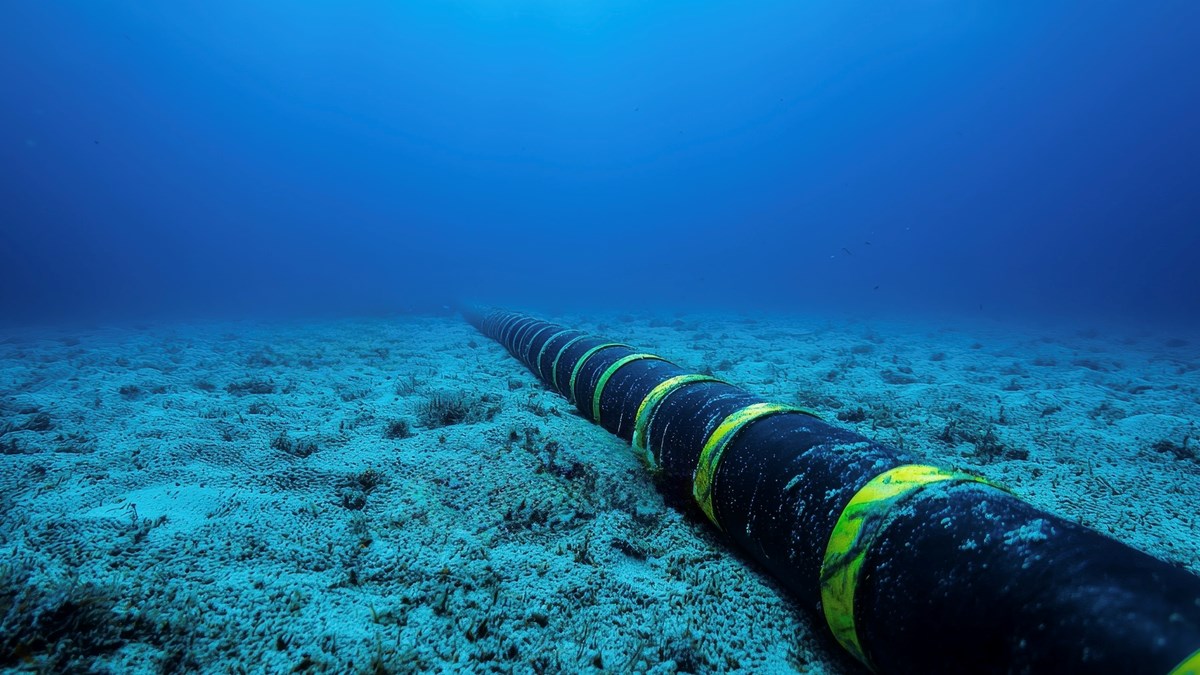
The UK government has announced plans to crack down on saboteurs who damage subsea cable systems. A new whitepaper, published yesterday, sets out powers that would allow the government to introduce lengthier prison sentences and unlimited fines for those who intentionally, recklessly or negligently damage undersea cable systems, as well as pipelines that carry UK gas and electricity supplies.
The whitepaper proposes the introduction of new security and resilience laws that would require subsea telecom operators to better identify and manage risks to their infrastructure. The regulations would replace the 144-year-old Submarine Telegraph Act 1885, and update the existing Telecommunications (Security) Act 2021 and Communications Act 2003.
The move would also see ministers handed powers to order telecom operators to remove or disable services during national security emergencies and grant officials access to cable landing stations, which are usually well guarded.
Companies that refused to comply with the orders could be fined up to £17m or 10% of global turnover. The orders would typically be published but could be made secret on national security grounds, it added.
The new powers would be backed up with prison sentences of up to 14 years for intentional conduct, 10 years for reckless conduct and two years for grossly negligent conduct, alongside unlimited fines.
The UK is a key telecom hub, with more than 64 active subsea cables landing on its shores, 45 of which are international systems linking to other countries and 19 are domestic, connecting to islands around the UK mainland. Subsea telecom cables carry 99% of the UK’s international data traffic, the government said.
The growing importance of undersea infrastructure prompted a parliamentary report last year. In April, the government accused Russian submarines of conducting a covert operation over cables and pipelines in waters north of the UK.
While the stated aim of the legislation is to tackle growing fears of suspicious activity in UK waters, it is worth noting that fishing vessels and ship anchors are responsible for roughly 70% to 80% of all global subsea cable faults, according to data from organisations such as the European Subsea Cables Association (ESCA) and the International Cable Protection Committee.
Telecoms minister Ian Murray said: “Undersea cables are the hidden backbone of modern Britain, carrying the data we rely on every day to message friends and family, do our banking and run our businesses.
“The threats we face have changed dramatically, with suspicious Russian activity around critical undersea infrastructure, yet some of the laws protecting these vital connections date back more than a century. We intend to modernise those laws with tougher penalties, stronger requirements on industry and new powers to protect our national security, making sure the UK’s critical infrastructure is fit for the threats of today and tomorrow,” added Murray.
The publication of the whitepaper marks the start of a 12-week public consultation on the proposals, seeking views from industry, experts and the wider public to help shape the final proposals.
– James Pearce, Editor, TelecomTV













Leave a comment