
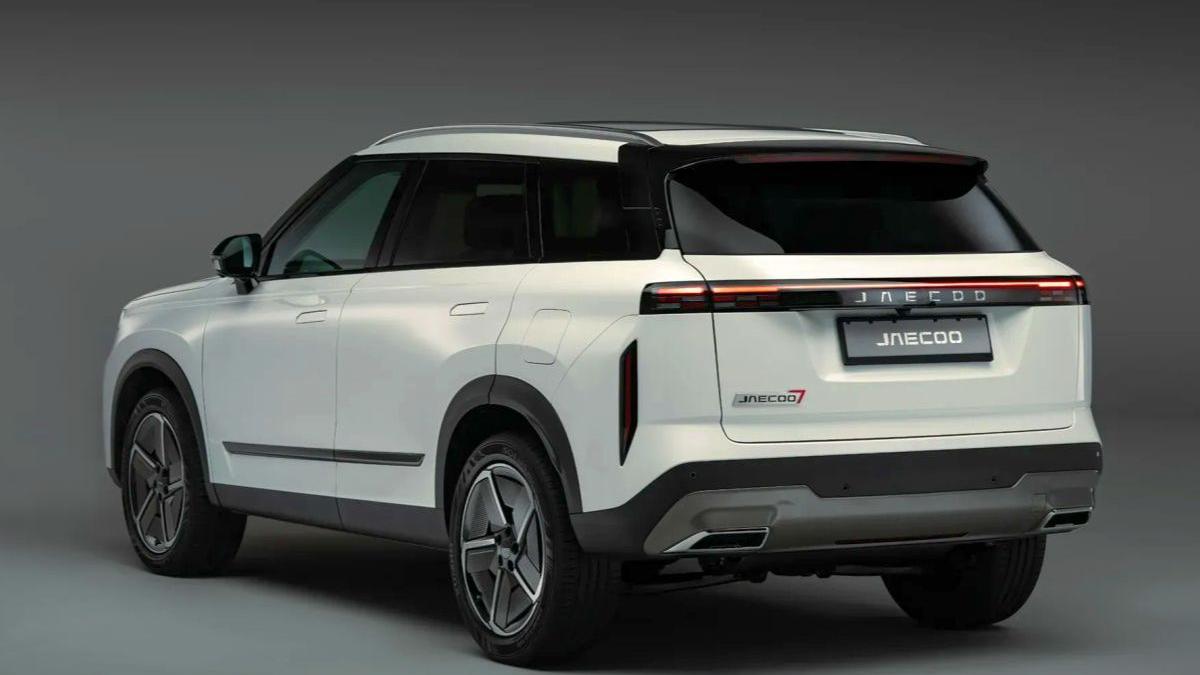
A Chinese Sports Utility Vehicle (SUV) that most British buyers had barely heard of a year ago has become the United Kingdom’s best‑selling new car, underlining how fast mainland manufacturers are moving from budget niches into Europe’s mainstream — and even semi‑premium — segments.
The JAECOO 7, a plug‑in hybrid SUV from Chery Automobile’s Jaecoo sub‑brand, was the UK’s top‑selling new car in March 2026, according to registration data from the Society of Motor Manufacturers and Traders (SMMT), beating regular chart‑toppers like the Ford Puma, Nissan Qashqai and Kia Sportage.
Industry analyses based on the same SMMT dataset show 10,064 Jaecoo 7s registered in March alone, giving the model around 2.5–3 per cent of the monthly market and lifting its cumulative 2026 registrations above 15,000 units, the highest for any new car this year so far.
The car’s rapid ascent has earned it a nickname in parts of the British and international press: the “Temu Range Rover” — a reference to its Range Rover‑style design cues combined with aggressively lower pricing, likened to bargains on Chinese e‑commerce platform Temu.
While Jaecoo executives are said to dislike the label, the comparison has stuck as a shorthand for a model that promises premium looks and technology at a mid‑market price.
Who is Jaecoo, and why this SUV matters?
Jaecoo is one of two export‑focused brands (alongside OMODA) created by Chery Automobile, which has been China’s largest passenger‑vehicle exporter for more than two decades. The Jaecoo 7 was launched in 2023 specifically for overseas markets, with right‑hand‑drive variants engineered from the outset for the UK and other Commonwealth countries.
Chery has backed the push with an unusually fast roll‑out: within roughly a year, Jaecoo says it has built a dealer network of over 100 outlets across the UK, giving it national coverage to support sales, test drives and servicing. Analysts note that Chinese‑owned OEMs now account for more than 10 per cent of UK new‑car registrations, up from just over 6 per cent a year earlier, with a strong skew towards electrified powertrains.
The ‘Temu Range Rover’ proposition: spec and price
The Jaecoo 7’s success rests on a familiar formula: premium‑style design and dense technology at a price that undercuts established rivals. Reviewers note that its squared‑off stance, clamshell bonnet and minimalist interior clearly echo the Range Rover Evoque and Velar more than mass‑market crossovers, fuelling the “Range Rover look‑alike” comparisons.
Under the skin, the model is built on Chery’s SHS hybrid platform. The PHEV variant — which accounts for the bulk of UK sales — pairs a petrol engine with an electric motor and battery pack to deliver a combined claimed range of over 700 miles and an EV‑only range of around 50–60 miles, figures that comfortably exceed many rival plug‑in SUVs on paper.
A self‑charging hybrid version offers fuel economy broadly in line with Japanese and Korean competitors such as the Toyota C‑HR and Hyundai Tucson Hybrid, but at a lower list price, according to motoring press tests.
Standard equipment typically includes a large central touchscreen (around 13–15 inches), wireless Apple CarPlay and Android Auto, a 360‑degree camera system and a full suite of advanced driver‑assistance systems (ADAS).
UK automotive media have repeatedly pointed to this “tech density” as exceptional for the price point. In Britain, the model is pitched around the mid‑£30,000 mark depending on trim, overlapping with better‑specified mainstream SUVs while undercutting premium badges by several thousand pounds.
Chinese brands are climbing the value ladder
For policymakers and incumbent carmakers, the Jaecoo 7’s performance matters beyond one month’s sales table. Until recently, the working assumption in much of Europe was that Chinese brands would compete mainly below £25,000, in small EVs and budget combustion models, and would struggle to cross the “premium threshold” because of brand and trust barriers.
Instead, JAECOO’s mid‑£30,000 plug‑in hybrid is taking share in a space traditionally dominated by European and premium‑leaning Japanese models. Analysts say that, across Europe and the UK, Chinese‑owned brands now command roughly 8–10 per cent of the market, with an even larger slice in battery‑electric and plug‑in hybrid segments.
With domestic demand in China softening and significant overcapacity in EVs and hybrids, exporters are aggressively targeting Europe, the UK and parts of Southeast Asia with high‑spec vehicles priced just under established rivals.
Automotive Logistics’ breakdown of SMMT data shows that Chinese‑owned OEMs represented about 11.1 per cent of new UK registrations in the first quarter of 2026, compared with 6.4 per cent in the same period of 2025, underscoring how quickly they are gaining ground. The Jaecoo 7’s March result is the most visible symbol of that shift, but BYD, MG (now Chinese‑owned) and other brands are following similar playbooks with compact crossovers and EVs.
Concerns and questions ahead
The Jaecoo 7’s meteoric rise is not without controversy. Some commentators have raised questions about long‑term durability, residual values and the robustness of after‑sales support for a new entrant, although the brand counters this with a seven‑year warranty and its rapidly expanding dealer footprint.
Others see the model as a test case for how Europe will handle an influx of competitively priced Chinese cars as Brussels and London weigh potential tariffs and anti‑subsidy measures.
For now, though, the registration numbers are clear: in March 2026, a Chinese‑badged SUV topped the UK new‑car charts, and year‑to‑date it is on course to end 2026 as the country’s best‑selling new model.
In a market long dominated by European, Japanese and Korean manufacturers, the ‘Temu Range Rover’ has become the most visible sign yet that the balance of power in the global car industry is starting to shift.














Leave a comment