

The pound trimmed early gains against the dollar and was last trading down 0.15% at around $1.34. It fell 0.19% against the euro, which traded at around 85.15 pence.
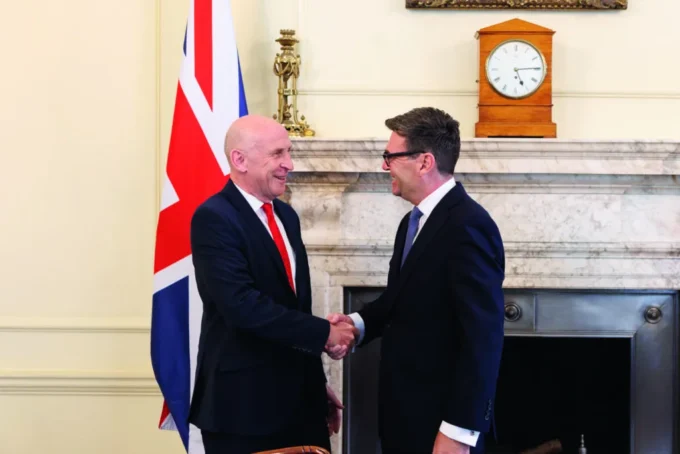
The appointment of Healey, a former defence secretary, was announced after the close of UK markets on Monday. He had not been seen as a leading candidate for the key role.
On Tuesday, Indian government bonds experienced a downturn, attributed to escalating crude oil prices. The pressure was further compounded by higher cut-off yields observed during a state debt auction. Although robust inflows from the Reserve Bank of India’s deposit scheme offered some stability, the potential for rising inflation and an increased import bill due to elevated oil prices remains a concern.
He will now have to find more money to invest in key areas while reducing the welfare bill, all while fulfilling new Prime Minister Andy Burnham’s pledge to stick within the fiscal rules.
“Out of the choices he (Burnham) had, he (Healey) has some experience in Treasury, so I think that’s a big positive,” David Zahn, head of European fixed income at Franklin Templeton, said, adding Healey is not a far-left leaning member of the Labour Party.

“But I still think that the vision is Burnham’s, and so he will have to figure out how to deliver the cash, which I don’t think will be easy because they do want to spend a lot,” he added.
British government bonds, known as gilts, were roughly unchanged with the 10 year bond yield a whisker higher at 5.04%.Gilts had underperformed German Bunds on Monday after Burnham replaced Keir Starmer as prime minister, as his early remarks that he would use any flexibility within the government’s fiscal rules, reignited concerns about a possible loosening of fiscal policy.
Yields on 30-year bonds, more sensitive to fiscal concerns, hit a fresh 2-month high at 5.7621%, up 1.5 bps.
One area of spending in particular focus is defence. Healey resigned in June from Starmer’s government, saying the finance ministry had been “unwilling” to find the money to keep the country safe.
And expectations Healey could find more cash for defence pushed London-listed defence stocks 1.6% higher on Tuesday.
Investors were also digesting the latest UK economic data, which analysts said was positive for the new finance minister as it suggested the Bank of England may have room to ease interest rates over the next year.
British annual wage growth held at 3.4% in the three months to May, matching economists’ forecasts, while UK public borrowing declined to £16 billion ($21.5 billion) in June.
Also on Tuesday, the government announced it would cut taxes on electricity bills, as Burnham attempts to deliver on his promises to ease a cost-of-living crisis.
Though markets took that announcement firmly in their stride.
“The new Chancellor (finance minister) has already announced that the government will abolish VAT on energy bills, but as it was only charged at 5% this will cost little,” Berenberg economist Andrew Wishart said.
“The small scale of the giveaway and Healey’s commitment to meet the existing borrowing rule with a buffer against global uncertainty should comfort bond investors,” he added.















Leave a comment