
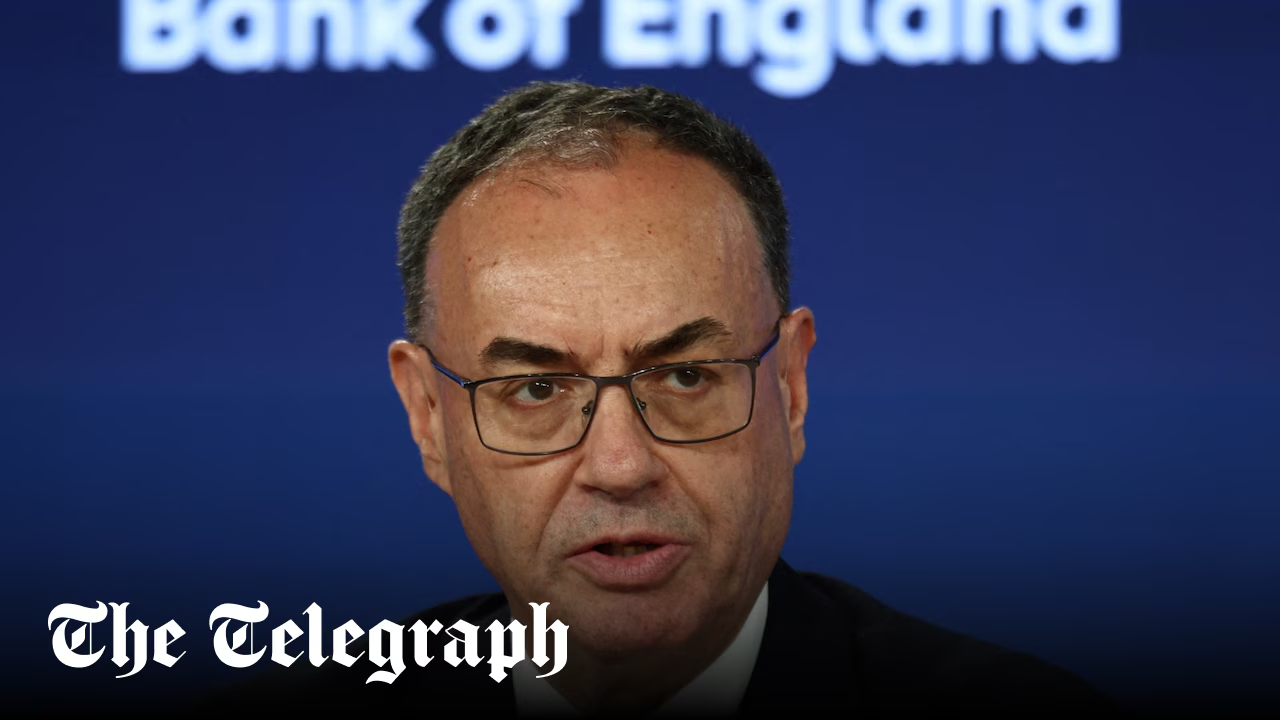
The warning from Mr Bailey comes as questions grow about how Britain will fund a rise in defence spending.
John Healey, the Chancellor, will use next month’s Budget to detail plans to fill a near £5bn gap in the Defence Investment Plan signed off by Sir Keir Starmer.
Mr Healey warned this week that “difficult decisions” would need to be taken to address the gap.
However, he is not expected to commit to spending 3pc of GDP on defence by 2030, despite resigning as Defence Secretary over the issue from Sir Keir’s government.
Filling the existing funding gap marks a far cry from Nato’s target for countries to boost defence spending to 3.5pc of GDP by 2035.
Growing fears about gaps in Britain’s defence spending come after the Army has suspended live-fire drills and major war games in an attempt to save money.
Interest rate policies under fire
The Resolution Foundation, a think tank with close links to Labour, warned that it was “unrealistic” to promise an increase in military spending without broad-based tax increases, including on middle-earners.
Economists at the think tank said in a report published this week that it was “becoming increasingly pressing” to determine who will pay for higher defence spending while Britain grapples with soaring costs from government borrowing.
Mr Bailey also warned that the Bank was facing a challenge from “populist political movements” as interest rate policies come under fire.
The Governor said that economic prosperity was at stake if the independence of central banks were called into question but added that the Bank should “demonstrate how our actions serve the public good”.
Mr Bailey’s comments come at a time of growing scrutiny of interest rate policies.
The Bank has come under scrutiny in recent years over how it reacted to soaring inflation after the pandemic. Meanwhile, Donald Trump called Jerome Powell, the former Federal Reserve chairman, a “numbskull” and a “moron” for refusing to cut interest rates quickly.














Leave a comment