
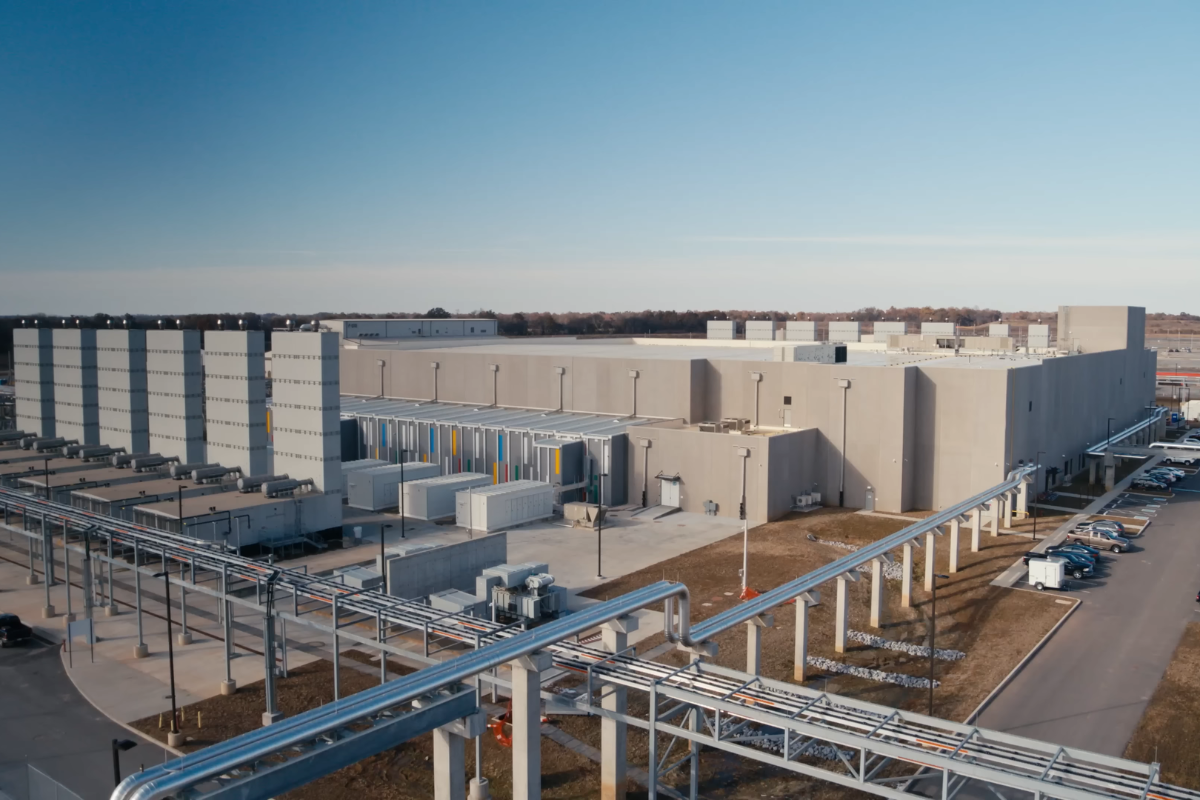
World Bank Group President Ajay Banga says the power, computing capacity, data, skills and capital needed for the biggest AI data centres are beyond most emerging markets, as data-centre electricity use is set to roughly double from 2025 levels.
‘Emerging markets don’t have a lot of those data centres, and it’s not coming, trust me,’ Banga said during a Bloomberg Green panel at Climate Week NYC on 23 September 2026.
Banga was referring to the infrastructure required by large-scale AI facilities, which need huge amounts of computing power and electricity, freely flowing data, specialised workers and substantial capital.
AI’s Biggest Power Demand
‘You need computing power. Lots of it. You need electricity. Lots of it. More than what the developed world also has in some cases, let alone these developing countries,’ he said.
Banga also said large AI data centres require people who understand how to use the technology and the ability to move data freely. ‘There are very few emerging markets with that,’ he added.
The scale of the electricity requirement is rising rapidly. The International Energy Agency’s report Key Questions on Energy and AI estimates that global data-centre electricity consumption will increase from about 485 terawatt-hours in 2025 to roughly 950 terawatt-hours by 2030, equivalent to about 3% of global electricity demand.
AI-focused facilities are expected to account for a growing share of that increase, with demand from these sites rising faster than data-centre consumption overall.
The IEA expects the United States and China to account for a large share of the additional electricity demand, reflecting the concentration of AI infrastructure and computing capacity in those markets.
Frontier AI Needs the Biggest Grids
The World Bank’s World Development Report 2026, The Promise of Artificial Intelligence, draws a distinction between frontier AI infrastructure and the systems developing economies can deploy without building it themselves.
Its framework is based on three stages: adopt, adapt and advance. Frontier AI requires chips, large data centres, huge quantities of training data and world-class researchers, which the report says is not a realistic near-term goal for most developing countries.
The report instead points to ‘small AI’, which can operate with more modest computing requirements and support uses in healthcare, agriculture and education. Those applications give developing economies a route to use AI without having to reproduce the infrastructure required by frontier-model developers.
That does not rule out large data-centre projects in emerging markets. Some middle-income economies with sufficient electricity, connectivity and investment conditions are already attracting major facilities. Malaysia, for example, is expected by the IEA to see data centres account for as much as one-fifth of its electricity-demand growth through 2030.
A country can therefore deploy AI applications without building the largest facilities used to train or run frontier models, while the most power-intensive infrastructure presents a separate challenge for national grids.
Britain Shows the Rich-Grid Race
The UK’s own data-centre expansion illustrates the infrastructure required even in an advanced economy. Computer Weekly, citing Barbour ABI data, reported a committed pipeline of more than 14.6 gigawatts across 173 projects in planning but not yet built, compared with about 1.6 gigawatts of existing capacity.
Nearly three-quarters of the UK’s existing data-centre capacity is concentrated in London and the M4 corridor, while developers are pursuing new sites where power and grid connections can support additional capacity.
The committed pipeline is therefore several times the UK’s existing stock, but a planning application does not itself provide the electricity needed to operate a data centre. Projects still depend on generation, transmission capacity and connections being available when facilities are ready to come online.
The International Energy Agency expects data centres to account for almost half of electricity-demand growth in the United States through 2030, showing how heavily the next phase of AI infrastructure is concentrated in major power markets.














Leave a comment