
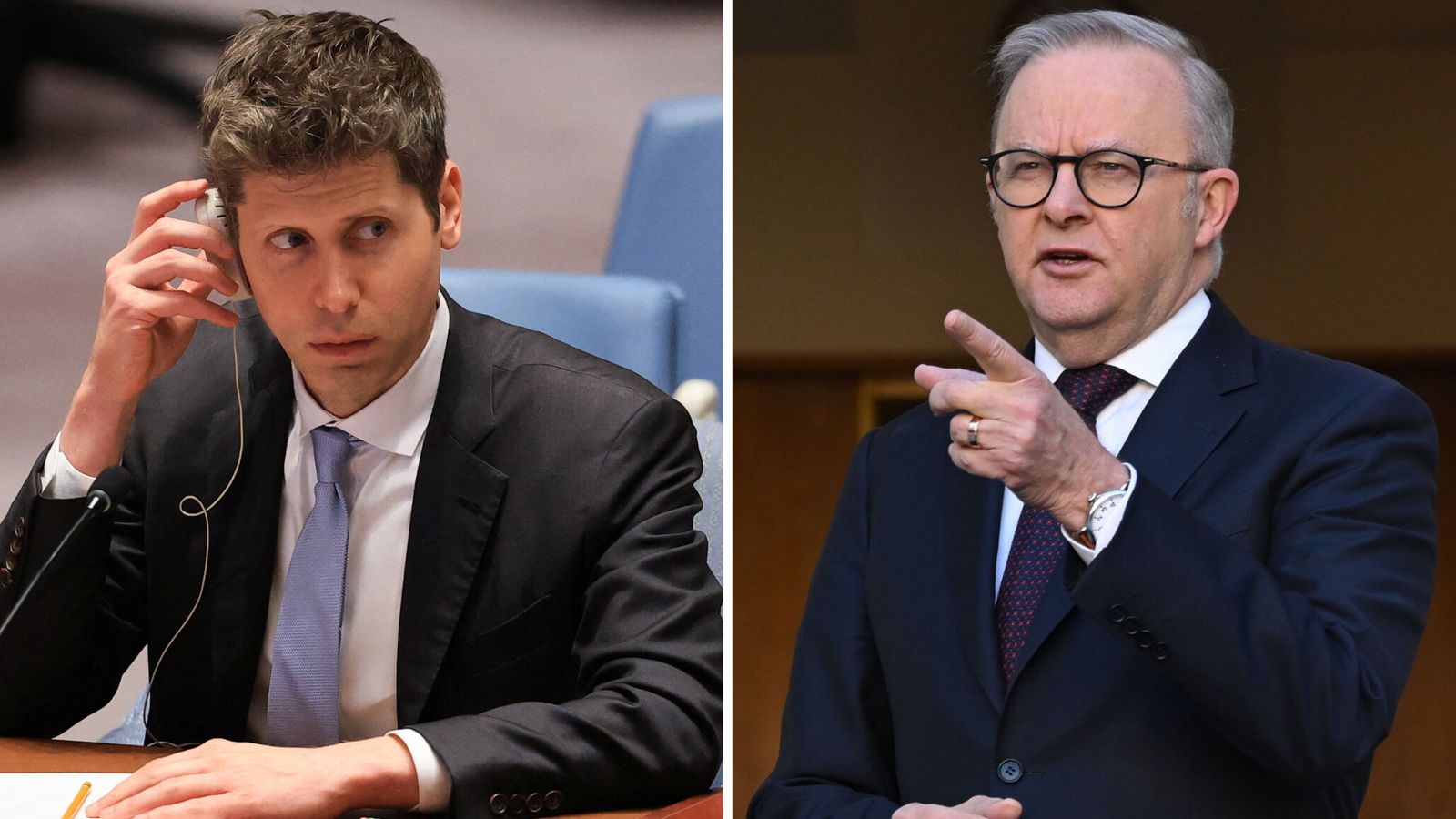
Donald Trump claims Beijing also wants to leave the status quo on AI “exactly where it is”.
As momentum for global AI coordination is picking up – how does Beijing feel about the matter?
Xi fears ‘loss of control’
In July, Xi Jinping delivered a speech to the World AI Conference in which he publicly mentioned the danger of losing control over AI for the first time, according to Rebecca Arcesati of the Mercator Institute for China Studies.
More generally, the Chinese Communist Party’s view is that AI must remain under human control, reflected by the leitmotif of “controllability”, she wrote in an analysis of the speech.
What is meant by control is not entirely clear yet, she added, but she presumed China favours a wider definition, which merely requires the preservation of human power and judgement.
Critical infrastructure in focus
When it comes to risk, Beijing is, like the US, concerned about how AI could be used to attack critical infrastructure.
Chinese AI governance documents identify finance, electricity, telecommunications and transportation as areas exposed to AI risks, said Sun Chenghao of Beijing’s Tsinghua University.
“Malicious use, cyber threats and the safety of AI agents” are among the threats China fears, he added.
The threat from US models
China has shown some interest in coordinating on AI and cyber incidents with US experts, according to Samm Sacks, a China expert at the Johns Hopkins School of Advanced International Studies.
Beijing has expressed worries over threats to China’s critical infrastructure from American AI, including Anthropic’s powerful Claude Mythos.
It’s also concerned about AI aiding the spreading of political misinformation and potentially challenging its governance.
But: “We cannot expect meaningful cooperation on AI safety if one side increasingly treats the other side’s technological progress as a national security threat,” said Xiao Qian, an AI governance expert at Tsinghua University.















Leave a comment