

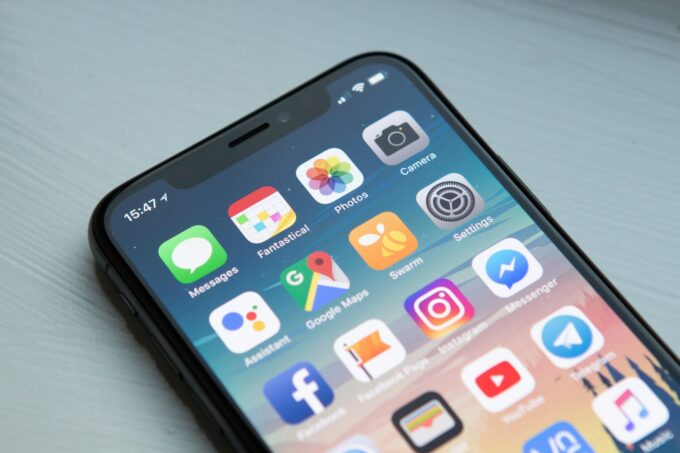
Most of us are concerned – especially if we have children we care about in our lives. Most would also agree that no one needs a smartphone that can create, livestream, or display child sexual abuse. Today, Jess Phillips MP and Lord Nash will call for smartphones, laptops and tablets to use privacy-preserving on-device tools that block child sexual abuse, preventing children from harm in the first place. It is a welcome, much-needed move.
Here’s just one example why – the UK is in the top three global consumers of livestreamed child sexual abuse.
Men in the UK pay to direct the sexual abuse of children in places like the Philippines in real time. They use smartphones and everyday video-calling platforms like WhatsApp and Telegram and nothing stops them. What’s more, men who livestream sexually with children are more likely to abuse a child in person, posing a threat to children everywhere.
This is not a niche issue. Nearly half a million children in the Philippines – one in every hundred – were sexually abused to create livestreams, images, and videos for sale in a single year.
Jess Phillips and Lord Nash will call for the UK government to require the blocking of child sexual abuse material (CSAM) on devices at a parliamentary briefing today. There, International Justice Mission will launch a white paper authored by cross-sector experts ranging from INTERPOL to IWF, demonstrating that AI-driven on-device tools could help stop unambiguous CSAM from being created, viewed or streamed. It could do this whilst keeping personal privacy intact and without sending reports to anyone. It would simply block the abuse.
Perhaps unsurprisingly, more than 80% of British adults support on-device CSAM-blocking technology; only 5% oppose.
If CSAM blocking tools were used, hidden forms of online child abuse – like livestreaming – would dramatically reduce.
While law enforcement does their best to hold offenders accountable, livestreamed abuse is not detected and reported by tech companies as it happens in real-time on end-to-end encrypted platforms.
As a result, most livestreaming victims are never identified and protected. For those who are, it’s usually after years of abuse. For Mark, who was first abused at age eight, his exploitation lasted eight years before police, supported by IJM, protected him.
Far from a single country problem, commercial livestreamed abuse victims were reported in up to 30 countries, according to the Australian Institute of Criminology, including the UK.
Most cases involve hands-on sexual abuse against prepubescent children.
Whilst prevention is not an alternative to law enforcement—it is the only intervention that operates early enough to protect children before abuse starts.
That is why adult devices need to include tools that prevent abuse – to address the ease and scale of this crime. Today, it’s easy to do. Tomorrow, it can be made difficult.
This is what survivors have repeatedly said to IJM: if technology can identify unambiguous child sexual abuse – prepubescent children engaged in a sexual act – then why not use it to stop the abuse at the earliest point? This would be a gamechanger for protecting children globally, including right here in the UK where CSAM is both created and consumed.
Survivors know better than anyone that stopping the ability of devices to display child sexual abuse will protect real children. Criminals who abuse children for profit do so because there is a market that pays. If devices won’t let offenders watch the abuse, that market begins to disappear.
On-device safeguards can keep encryption intact and don’t require monitoring of private conversations by preventing cameras from creating, and screens from showing, unambiguous child sexual abuse. No, it won’t block all CSAM, but we should protect as many kids as we can.
UK survivors of child sexual abuse have shared how they feel fear walking down the street, not knowing who will have seen videos and images of them. This technology could make it harder for anyone to watch existing child abuse images and videos, helping break the never-ending cycle of harm for child and adult survivors whose abuse circulates online.
This is why, while an important first step, the UK government should go further than solely blocking nudity on children’s devices. Adults are creating and consuming child sexual abuse too: 73% of images the IWF assessed in 2025 were not self-generated by children.
Of course, privacy and security matter. That is why any future system should be limited strictly to child sexual abuse material, independently audited, include meaningful transparency, and legally prohibit repurposing for lawful content.
But we should stop saying we must choose either protecting children or protecting privacy. We can do both. It’s a decision.
For the sake of children everywhere, let’s make the right choice.
____________________
John Tanagho is the Executive Director of International Justice Mission’s Center to End Online Sexual Exploitation of Children.
LBC Opinion provides a platform for diverse opinions on current affairs and matters of public interest.
The views expressed are those of the authors and do not necessarily reflect the official LBC position.
To contact us email opinion@lbc.co.uk













Leave a comment