
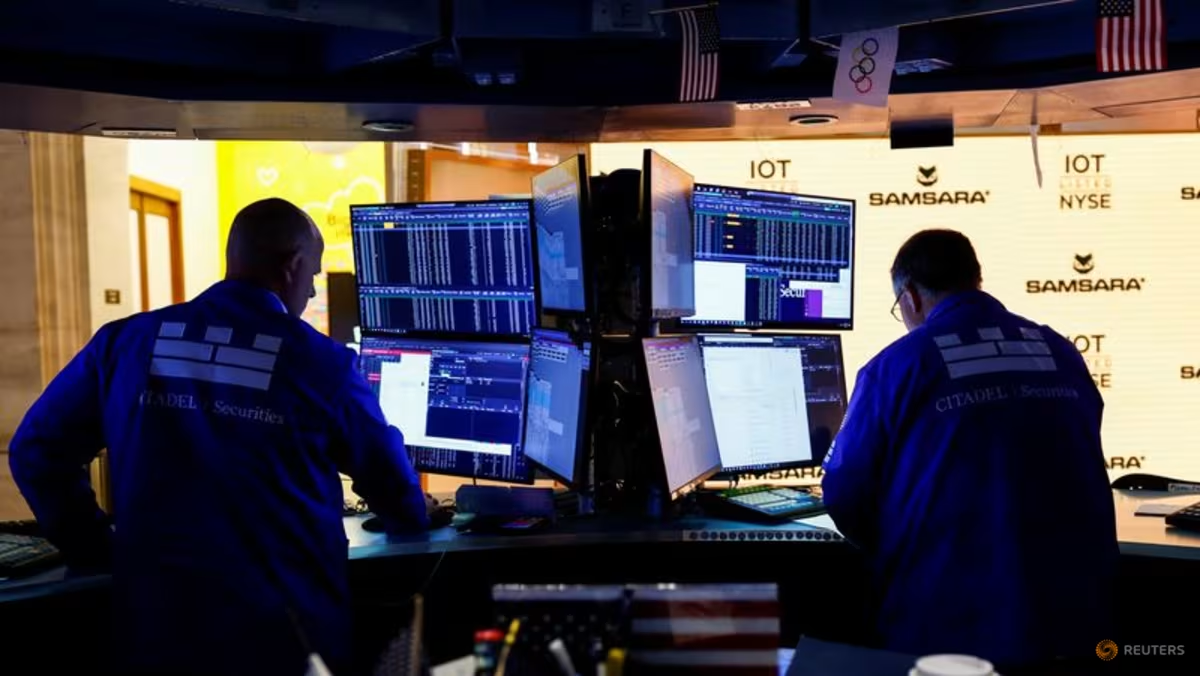
SINGAPORE: Singapore-listed technology stocks tumbled at opening on Friday (Nov 6) before pulling back some losses, as fears of tighter AI regulation under a Democratic-led US Congress triggered a global sell-off.
Semiconductor equipment supplier UMS Integration plunged 15.2 per cent at the open, then rebounded about 12 per cent to close at S$1.69.
Local semiconductor solutions company AEM Holdings fell as much as 13 per cent in early trade, then recovered about 9 per cent to close at S$6.20.
Other tech and AI-related firms saw their stocks dive at open: Frencken Group, which serves semiconductor customers, sank over 8 per cent, while electronics manufacturing service provider Venture Corporation dipped 1.5 per cent.
At closing, Frencken’s was down about 6 per cent and Venture 3 per cent from the previous close.
The global AI rout left Asian markets in the red, with Singapore’s Straits Times Index down by over 2 per cent.
Analysts said the sell-off reflected a correction in AI valuations rather than evidence that the AI investment cycle was over. The intraday recovery also showed that appetite for technology stocks remained, even as the market remains volatile.
“The local tech stocks are indeed being pulled along by the regional AI unwind, with the market reaction being far from uniform,” said OCBC’s head of wealth advisory Chez Anbu, adding that stocks that have delivered the strongest gains this year are likely to be most at risk of further pullbacks.
“Until there is greater clarity on the regulatory and demand environment for AI, companies that have been among the biggest beneficiaries of the investment cycle may continue to experience heightened volatility.”
A VOLATILE MARKET
The sell-off followed the US mid-term elections, which sparked fears that an incoming Democratic Congress would tighten AI regulations and curb the industry’s growth.
Mr Anbu said any eventual rules might differ in scope, implementation and timing from what investors now expect. They would also need the signature of President Donald Trump, who has the power of veto, he added.
“In the meantime, volatility will likely stay high until the US picture clears, and nobody can reliably call a near-term rebound.”
Ms Charu Chanana, chief investment strategist at Saxo, said the initial fall in Singapore tech stocks was largely a spillover from the global rout, but the intraday reversal showed how volatile and sentiment-driven the market had become.
“This suggests that buyers are stepping in after the sharp correction, even as global technology sentiment remains fragile,” she said.
Ms Chanana said volatility would persist as markets distinguish between companies with strong earnings visibility and those whose growth expectations depend on “uninterrupted AI infrastructure spending”.
“The biggest downside risk would be if the market’s concerns about AI investment begin translating into actual reductions in orders, capital expenditure or earnings guidance,” she said.















Leave a comment