Global Palletizing Robots Market: Size, Share and Forecast to 2036
November 26, 20264 Mins read13
Share
Company Logo
Boost palletizing ROI with pre-engineered cobot cells, RaaS financing, AI vision and no-code software – reducing labor, integration time and ownership costs
The global palletizing robots market was valued at USD 2.45 billion in 2025 and is estimated to reach USD 2.66 billion in 2026. The market is projected to expand to USD 6.65 billion by 2036, registering a CAGR of 9.6% during the 2026-2036 forecast period.
The report analyzes palletizing and depalletizing robot installations, robot and gripper technologies, vision systems, pattern and load stability software, safety requirements, load securing standards, total cost of ownership, the value chain, and the competitive landscape. Coverage includes articulated robots, collaborative robots, gantry and Cartesian systems, mobile robots, end-of-arm tooling, vision and software, safety equipment, conveying systems, and integration services. Applications span cartons, sacks, bottles, crates, drums, pails, and mixed SKUs across manufacturing, retail, and logistics operations.
Industrial Automation and Labor Shortages Drive Market Growth
Industrial robot adoption provides a strong foundation for palletizing automation. According to the International Federation of Robotics, factories installed 542,000 industrial robots in 2024, marking the fourth consecutive year in which annual installations exceeded 500,000 units. The global installed base increased 9% to 4,664,000 units.
Labor shortages, aging workforces, rising labor costs, and the need to reduce lifting injuries are among the leading market drivers. Palletizing and depalletizing involve repetitive handling of heavy products, creating demand for automated systems that improve safety, throughput, and operational consistency. Retail and e-commerce distribution are also accelerating investment in mixed-case palletizing, store-specific order preparation, and inbound depalletizing.
Major automation initiatives demonstrate this momentum. Walmart’s January 2025 agreement to sell its advanced systems and robotics unit to Symbotic included a commitment to purchase Symbotic systems. DHL also announced plans in 2025 to deploy more than 1,000 additional Stretch robots from Boston Dynamics for trailer unloading and case movement.
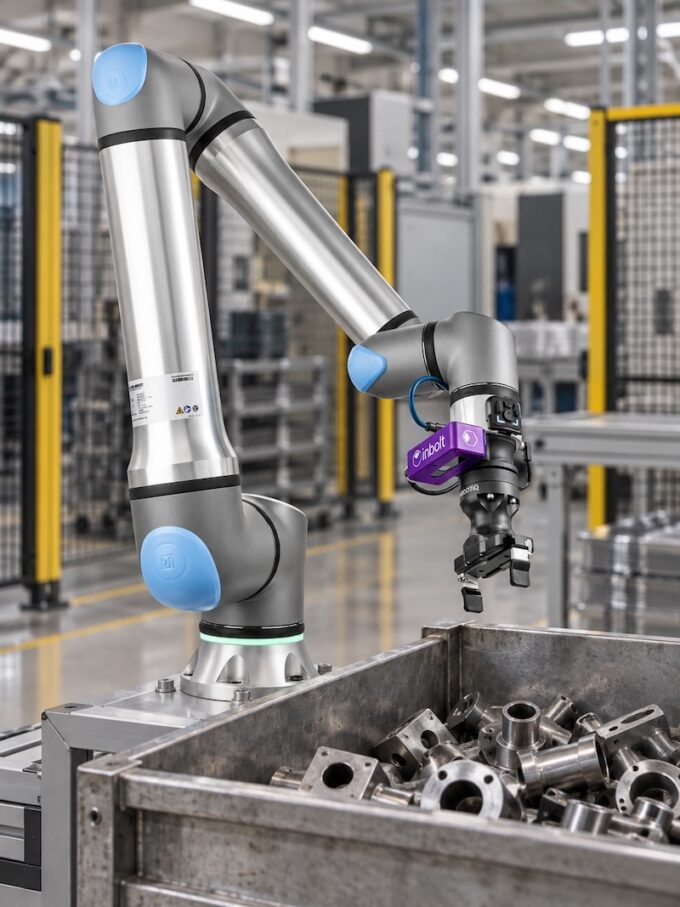
Collaborative palletizers are expanding automation opportunities for smaller manufacturers. Compact footprints, reduced guarding requirements, no-code pattern software, and compliance with standards such as ISO/TS 15066 make these systems suitable for lower-volume production environments.
Integration Costs and Technical Complexity Remain Key Challenges
Market adoption can be limited by the cost and scope of complete palletizing cells, which may include robots, tooling, conveyors, pallet dispensers, guarding, controls, wrapping equipment integration, and warehouse system connectivity. These requirements can extend implementation schedules and lengthen payback periods for smaller companies.
Demand is also affected by cyclical capital spending. Robot installations in the Americas declined 10% to 50,100 units in 2024, while U.S. installations fell 9% to 34,200 units. Additional challenges include handling damaged or irregular products, limited floor space, shortages of integration and maintenance expertise, tariff exposure, and pricing pressure from Chinese robot manufacturers. Suppliers must also support stable pallet loads that comply with cargo securing requirements, including EU directive 2014/47/EU and the EUMOS 40509 rigidity test.
AI-Vision, Mixed-Case Handling, and Flexible Deployment Create Opportunities
Significant opportunities are emerging in depalletizing, trailer unloading, food and beverage production, pharmaceutical packaging, and small and medium-sized enterprises. AI-vision-guided systems from companies such as Mujin and Pickle Robot are improving the handling of unpredictable loads. Pre-engineered cells, flexible financing, and robot-as-a-service offerings are also reducing adoption barriers. The IFR reported that leased robots in professional service fleets increased 31% in 2024.
Key palletizing robots market trends include AI-vision-enabled mixed-case palletizing, collaborative systems, relocatable cells, automated pattern generation, load stability verification, and greater competition from Chinese suppliers. Chinese manufacturers captured 57% of robot sales in China during 2024, approximately double their share from ten years earlier.
Segment and End User Outlook
Robot type: Articulated robots are expected to hold the largest market share in 2026 because of their speed, reach, and payload capabilities. Collaborative robots are projected to record the highest CAGR, supported by compact installations and simplified programming.
Function: Palletizing is expected to remain the largest function, while mixed-case palletizing is forecast to grow fastest as 3D vision and AI grasp planning improve.
Payload capacity: The 50-300 kg category is expected to lead in 2026, while systems handling up to 50 kg are projected to achieve the highest CAGR.
Component: Robot arms are expected to represent the largest share. Vision and software are forecast to grow fastest as mixed-product handling and automated load planning become more important.
Product handled: Cases and cartons remain the most common loads. Mixed SKUs represent a high-growth category connected to retail, e-commerce, and contract logistics.
End user: Food and beverage is expected to lead the market in 2026. E-commerce, retail and 3PL are projected to grow at the highest CAGR, while pharmaceuticals and healthcare offer additional potential for precise and traceable automation.
Regional Market Outlook
Asia-Pacific is expected to account for the largest palletizing robots market share in 2026. The region represented 74% of global robot installations in 2024, with China installing a record 295,000 units, equal to 54% of the worldwide total. Japan installed 44,500 robots and remains home to major suppliers including FANUC, Yaskawa, Kawasaki, Okura Yusoki, and Fuji Yusoki Kogyo.
North America is forecast to register the highest CAGR through 2036, driven by labor constraints, high operating costs, and investment in retail and logistics automation. Europe maintains a significant position, supported by established suppliers, manufacturing activity, and workforce shortages. Latin America is benefiting from nearshoring and automation in food, agriculture, and building materials, while the Middle East & Africa offer emerging opportunities in food manufacturing, logistics, petrochemicals, beverages, and consumer goods.
Competitive Landscape
Competition includes industrial robot manufacturers, palletizing system specialists, packaging line suppliers, collaborative robot vendors, warehouse automation companies, AI handling providers, and Chinese robot manufacturers. Buyers assess suppliers based on throughput, payload, uptime, programming, gripper flexibility, vision capabilities, footprint, service coverage, and lifetime cost.
Companies profiled include FANUC Corporation, ABB Ltd., KUKA AG, Yaskawa Electric Corporation, Kawasaki Heavy Industries, Universal Robots, Okura Yusoki, Fuji Yusoki Kogyo, Columbia Machine, Premier Tech, Krones, Sidel, Brenton, Symbotic, Mujin, Boston Dynamics, Estun Automation, and Siasun Robot & Automation.
The report provides market forecasts through 2036, segment and regional analysis, competitive benchmarking, company profiles, SWOT analyses, and assessments of acquisitions, partnerships, and product launches. It supports strategic planning for robot manufacturers, system integrators, packaging companies, warehouse operators, end users, and investors evaluating opportunities in palletizing automation.
About ResearchAndMarkets.com ResearchAndMarkets.com is the world’s leading source for international market research reports and market data. We provide you with the latest data on international and regional markets, key industries, the top companies, new products and the latest trends.


















Leave a comment