
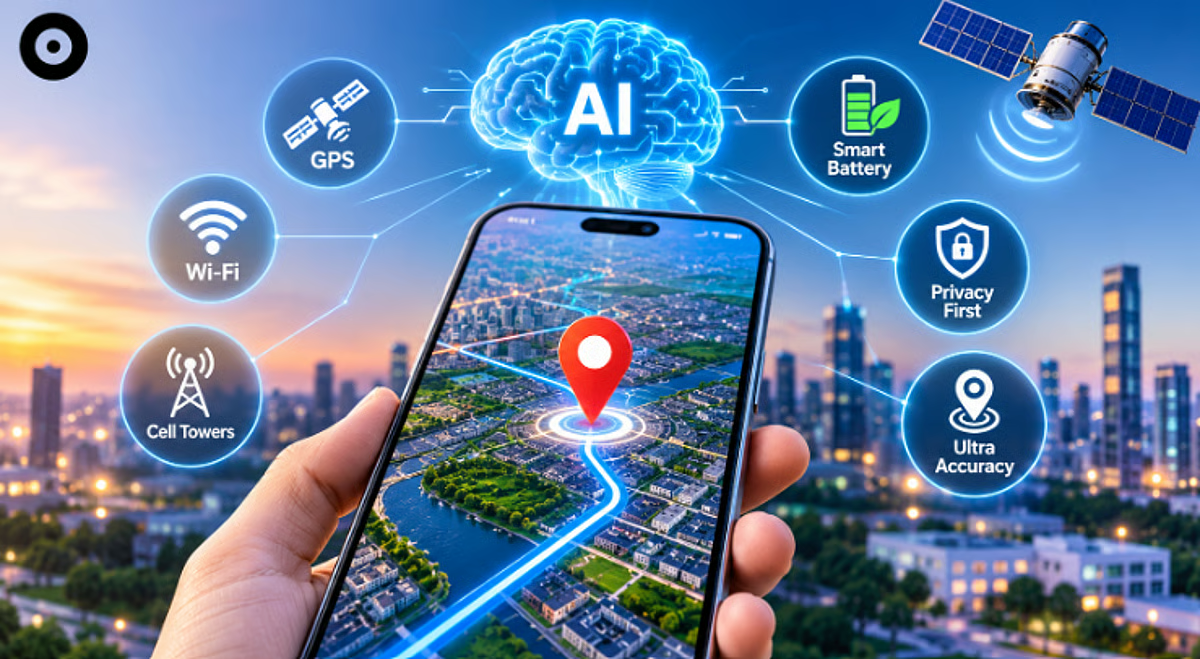
Three trends are worth watching over the next 12 to 18 months.
First, indoor positioning at scale. Wi-Fi Round-Trip Time (RTT) and Ultra-Wideband (UWB) are enabling sub-meter indoor positioning in supported venues (malls, airports, hospitals). ML models that fuse RTT, UWB, Bluetooth, and inertial data will bring indoor accuracy close to what GPS provides outdoors.
Second, satellite-based messaging. The integration of satellite connectivity into consumer phones (Apple’s Emergency SOS, Qualcomm’s Snapdragon Satellite) means that location can be determined and transmitted even in areas with zero cellular coverage. This has implications for hiking, rural safety, and disaster response.
Third, regulatory standardisation. As more jurisdictions enact location-data-specific regulations, the industry will converge on a standard architecture: on-device processing, differential privacy for aggregated data, explicit consent flows, and automatic deletion policies. Companies that build this architecture now will have a structural advantage as regulations tighten.
The underlying physics of location tracking have not changed. Phones still triangulate signals from satellites, cell towers, and Wi-Fi access points. What has changed is the intelligence applied to those signals, and that intelligence is making every application that depends on knowing where a device is meaningfully better at its job.













Leave a comment