

The decision reverses a recent restriction on British officials examining American AI systems before launch, easing tensions over international oversight. The move comes as the UK prepares new cyber security measures and seeks closer cooperation with Washington, despite President Donald Trump’s longstanding opposition to binding controls on AI development.
The United Kingdom will regain access to advanced American artificial intelligence models before their public release, following a reversal by the White House that removes a recent obstacle to transatlantic cooperation on AI safety.
According to The Telegraph, the US administration has withdrawn its request for leading developers to withhold unreleased systems from Britain’s AI Security Institute (AISI). The change is expected to allow British officials to examine models developed by OpenAI, Anthropic and Google DeepMind before they become publicly available.
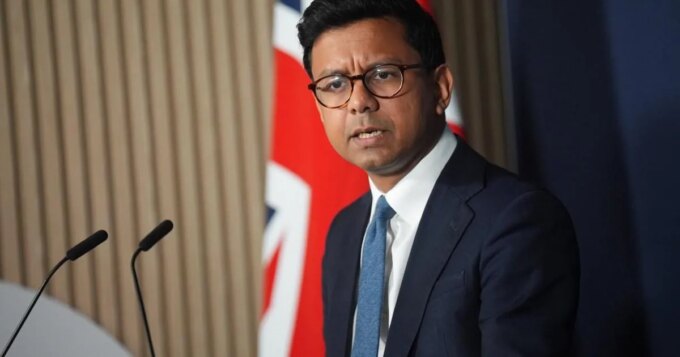
The decision follows lobbying by British ministers, including AI minister Kanishka Narayan, after Washington’s earlier intervention disrupted the UK’s testing arrangements.
The reversal comes amid a broader debate over how governments should assess increasingly capable AI systems without unnecessarily restricting their development. It also offers a potential opening for renewed cooperation between Washington and London, whose approaches to AI regulation have not always aligned.
Access restored as Britain presses for international cooperation
The AISI was established following the 2023 AI Safety Summit, hosted by the UK, to examine the capabilities of advanced AI systems and investigate the potential for harmful use. Its work includes evaluating risks that may emerge before a model reaches the wider market.
 More from Tech
Early access is particularly important because it allows researchers to test systems under controlled conditions before their capabilities become widely available. Such assessments can help identify vulnerabilities and potential misuse, although they cannot guarantee that every risk will be detected.
The dispute emerged last month, when the White House reportedly instructed major American AI companies to stop providing the institute with access to new models ahead of release. Anthropic subsequently restricted British officials from examining its Claude Mythos 5.1 model, according to The Telegraph.
The restoration of access is therefore a reversal of a policy that threatened to limit the institute’s ability to evaluate some of the most advanced systems being developed in the United States.
The episode also highlights the difficulty of establishing common international approaches to AI oversight when governments differ over the balance between innovation and regulation.
President Donald Trump has repeatedly argued against imposing binding safety requirements on AI developers. Addressing the United Nations General Assembly last month, he said he wanted to “encourage” AI rather than “rein it in”.
British officials, meanwhile, have advocated greater international coordination. The UK intends to use its presidency of the G20 next year to promote discussions on shared principles and standards for advanced AI, with ministers seeking to bring governments and technology companies into closer dialogue.
New cyber security measures planned
The renewed access comes as ministers prepare a series of measures intended to strengthen Britain’s defences against threats involving AI.
In a speech scheduled for Monday, Narayan is expected to argue that technology companies should not be left solely responsible for managing the risks associated with their own systems. Planned changes to Labour’s Cyber Security and Resilience Bill would strengthen reporting obligations for organisations involved in critical national infrastructure when AI-related security incidents occur.
The Government is also considering wider use of advanced AI tools to help protect Whitehall departments against cyber attacks. Additional resources are expected for officials at the National Cyber Security Centre, the Cabinet Office and the Department for Culture, Media and Sport to investigate incidents and improve responses.
The measures follow reported warnings from the heads of MI6, MI5 and GCHQ that AI could give hostile states and terrorist groups new ways to target sensitive infrastructure or obtain confidential information.
The challenge facing ministers is twofold. Developing safeguards against the misuse of AI while ensuring the UK can use the technology to strengthen its own security.
Britain has sought to establish itself as a leading voice in international AI governance, with the AISI serving as a central part of that effort. Restored access to American models would support its testing work, but the longer-term effectiveness of international cooperation will depend on continued access, transparency and agreement between governments.
For now, the White House’s reported reversal suggests that cooperation with British safety researchers remains possible, even as Washington continues to resist more restrictive approaches to AI regulation.













Leave a comment