
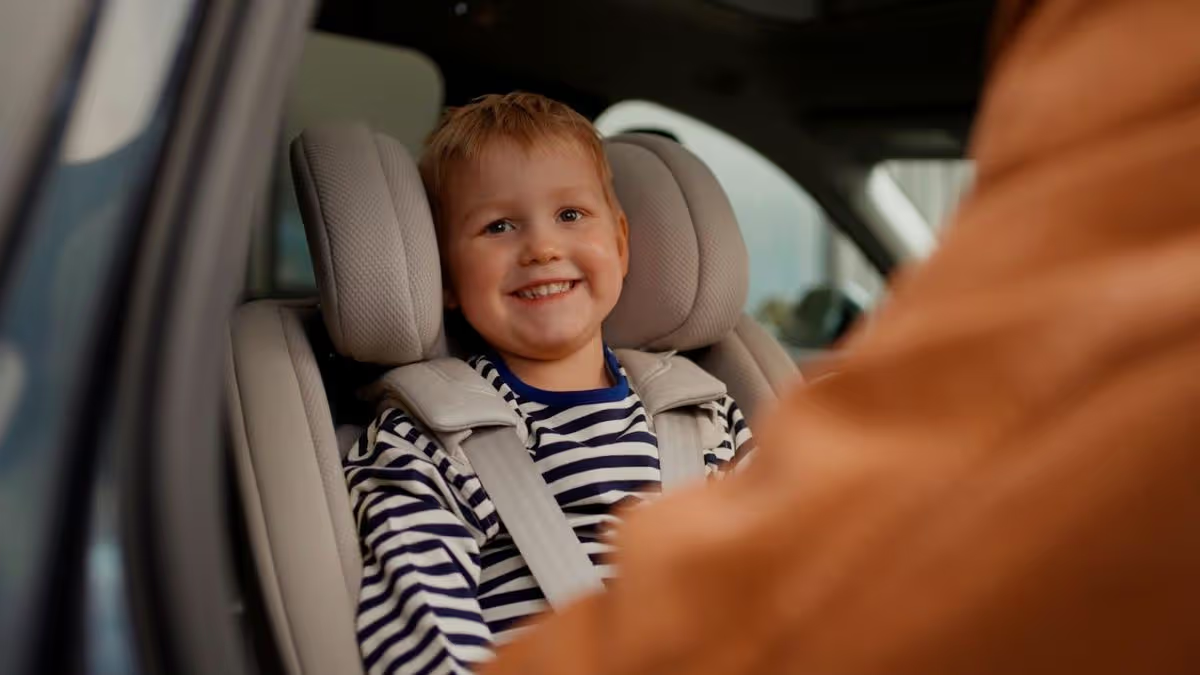
Kat Gemmell has 16 years of experience when it comes to child car seat safety, and is urging parents to do five things to keep their kids safe
A car seat safety expert has shared five things all parents should do to keep their children safe when travelling. There are a lot of rules and regulations around car seats in the UK, which helps put parent‘s minds at ease that their children are safe.
But it doesn’t matter what car seat you have in your vehicle, as there are several other factors that could mean your child is unsafe while travelling.
Kat Gemmell, who oversees car seat development at Silver Cross, has 16 years’ experience in child car seat safety. She collaborates closely with the design and development teams, upholding rigorous crash‑test standards, delivering product training and ensuring each car seat meets real customer needs.
She has shared five things that parents must do to ensure their children are safe when travelling in a car seat. Current UK legislation says that all children must have a car seat until they are either twelve years old or one hundred and thirty-five centimetres tall, whichever comes first.
If parents are unsure if their child still needs a car seat, Kat has shared a five-step test to help parents understand.
Kat said: “First of all, they should be over 135cm tall, their back and bottom should fully be against the backrest, and their knees should be able to bend fully over the seat edge. If they don’t, they will slouch, and this could lead to submarining under the seat belt in an accident.
“The lap belt should also sit at the pelvis, and the shoulder belt should go across the collarbone. If your child meets these steps, then they no longer need to use a car seat.”
Another topic that can cause a lot of controversy with parents is children rear-facing versus forward facing. In the UK, all children are legally required to be in a rear-facing car seat until they are at least fifteen months old.
Once a child reaches that age, it is up to the parent to decide whether the child is switched from a rear-facing car seat to a forward-facing car seat.
Kat said: “However, it is encouraged that children remain in a rear-facing car seat for as long as possible, and this is safer in the event of a car accident.
“Rear-facing car seats are incredibly popular in Sweden, and many aim to pass the Swedish Plus Test. The Swedish Plus Test is one of the hardest car seat safety tests to pass in the world, and is entirely voluntary.
“It can only be undertaken by rear facing toddler car seats due to the high speed and short braking distances that are used in the test.
“The test ensures that the car seat is strong enough to prevent severe or life-threatening injuries. In the UK we’re seeing an increasing demand for parents looking for Swedish Plus Test approved car seats.”
Kat also said she would urge people not to buy second-hand car seats due to their being no way to know if the seat has been involved in a car accident.
She said: “If the car seat has already been damaged in an accident, then its effectiveness will be limited and could risk the safety of your child. So, it is best to avoid purchasing a second-hand car seat.
“You also don’t receive instructions on how to correctly install or use a second-hand car seat, so you don’t know if something important is missing. Likewise, UK regulations for car-seat safety are frequently updated, so a second hand car seat may not be to current standards.”
Kat also explained that there are two simple mistakes some parents make when putting their children into a car seat that could have catastrophic consequences if they’re involved in a car accident.
She said: “One of the most common mistakes that parents and family members make when placing a child in a car seat is leaving their coat on. Wearing bulky puffy coats in the car prevents you from tightening the harness properly. If you are involved in an accident, then the stuffing in the coat may compress, increasing the risk of your child being ejected from their car seat and sustaining serious injuries.
“Similarly, another common mistake that parents and family members make is not ensuring the harness is tightened enough. An easy solution to see whether the harness is tightened properly is the pinch test.
“All you need to do is strap the child into their car seat, make sure the harness is not twisted, then pull the adjuster strap to tighten the harness, and then attempt to pinch the straps of the harness. If you can pinch the webbing, then the harness is too loose and needs to be tightened even more.”
Finally she spoke about how long newborn babies should be in car seats for before having a break.
She said: “As a general rule, newborns should take a break from their car seat every two hours, but it’s worth noting that this is simply guidance and minimal research has been conducted on this.
“If doing a longer car journey, take regular breaks, especially if you’re a parent to a newborn and dealing with sleep deprivation. It’s also unlikely your newborn baby will sit happily in a car seat for two hours without needing a feed or nappy change, as well as some cuddles.
“The Highway Code also recommends drivers stop for at least 15 minutes every 2 hours.”
















Leave a comment