Global Data Center Colocation Market, Competitive and Investment Landscape 2026-2031
October 1, 20264 Mins read10
Share
Company Logo
AI-ready capacity, liquid cooling, renewable power and resilient infrastructure help operators cut costs, improve efficiency and capture hyperscale demand
The global data center colocation market was valued at USD 88.91 billion in 2025 and is projected to reach USD 216.37 billion by 2031, expanding at a CAGR of 15.98%. Market growth is being driven by artificial intelligence, cloud computing, edge computing, enterprise digitalization, and rising demand for high-density infrastructure capable of supporting advanced workloads.
Artificial Intelligence Reshapes Data Center Colocation Demand
AI adoption is increasing the scale and capacity requirements of hyperscale and colocation data centers. Capacity dedicated to AI workloads is expected to almost triple over the next five to six years as operators develop GPU-ready facilities with higher rack densities, advanced cooling systems, and expanded power infrastructure.
Europe is experiencing strong demand as enterprises adopt AI, cloud, and data-driven technologies. Germany, the UK, and Italy benefit from high digital connectivity and widespread technology adoption. Germany reports that 93% of organizations prioritize AI and digital technologies, while internet penetration has reached 97.8% in the UK and 90% in Italy.
Latin America is also emerging as an important AI infrastructure market. Brazil’s $4 billion National AI Plan, Colombia’s $116 million National AI Policy, and Mexico’s planned NVIDIA-powered HPC and AI center in Nuevo Leon are supporting demand for hyperscale, cloud-enabled, and high-density colocation capacity.
Sustainability and Renewable Energy Investment
Growing AI and cloud workloads are increasing electricity consumption, making sustainability central to data center development. Operators are securing long-term power purchase agreements, investing in on-site solar and wind projects, deploying battery storage, and adopting cleaner backup power systems. These measures address carbon emissions, operating costs, grid stability, water use, and community concerns.
Latin America offers favorable conditions for sustainable data center projects due to renewable energy growth and supportive policies. Argentina, Chile, Colombia, and Mexico have established clean energy targets. Colombia released more than 5GW of grid connection capacity in 2025 to accelerate solar and wind projects, while Argentina’s proposed OpenAI-Sur Energy Stargate project connects AI infrastructure development with renewable power generation.
The Nordic region continues to attract hyperscale investment through access to low-carbon electricity. Equinix’s Stockholm facilities operate on 100% renewable energy, EcoDataCenter’s Falun campus uses wind and hydropower, and Amazon’s Finnish wind power agreements total 472 MW, raising its contracted renewable capacity in Finland to 772 MW.
In the Middle East, the UAE is targeting zero carbon emissions by 2050, while Dubai plans to reduce carbon emissions by 50% by 2030. The UAE Energy Strategy 2050 seeks to increase renewable energy’s contribution to the national energy mix from 25% to 50%.
AI infrastructure is also changing sustainability standards by increasing acceptable power density limits, accelerating liquid cooling adoption, tightening water management expectations, promoting carbon-free energy sourcing, encouraging waste heat reuse, and expanding performance measurement beyond Power Usage Effectiveness.
Data Center Infrastructure and Segmentation Insights
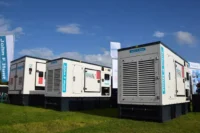
Operators are deploying high-capacity UPS systems above 750 kVA with N+1, N+N, and 2N configurations to support operational resilience. Smaller facilities and hyperscale deployments also use systems below 500 kVA and in-rack solutions. Generators remain essential where grid reliability is limited, although operators are prioritizing more efficient and lower-emission backup technologies.
Cooling infrastructure is evolving in line with ASHRAE guidelines and Uptime Institute Tier standards. Facilities increasingly use water-cooled systems, CRAH units, AHUs, cooling towers, chillers, direct evaporative cooling, and hot/cold aisle containment. Liquid-based cooling is gaining importance as AI workloads increase rack-level heat output.
The market is segmented by colocation type into retail colocation and wholesale colocation. Infrastructure categories include electrical infrastructure, mechanical infrastructure, and general construction. Key subsegments cover UPS systems, generators, transfer switches & switchgear, PDUs, cooling systems, racks, core & shell development, installation & commissioning services, engineering & building design, fire detection & suppression, physical security, and DCIM/BMS solutions. Facilities are also assessed across Tier I & II, Tier III, and Tier IV standards.
Regional Data Center Colocation Market Outlook
North America: US data center investment nearly doubled compared with 2024, supported by colocation and hyperscale construction. Virginia, Georgia, and North Carolina remain leading investment destinations. Canada continues to expand through its proximity to the US, established infrastructure, and government support.
Europe: The UK and Germany accounted for approximately 19.81% and 19.04% of European data center colocation investment, respectively, in 2025. Norway and Finland are among the fastest-growing Nordic markets due to cloud adoption, digital platforms, AI, IoT, big data, and renewable power availability.
APAC: Data center colocation investment increased by approximately 40.13% in 2025 compared with 2024. China represented around 37% of regional investment, while Southeast Asia contributed approximately 21.22%.
Latin America: Brazil holds a significant regional share, supported by digital transformation policies and the adoption of IoT and big data. Mexico, Chile, Colombia, and Argentina are also attracting new infrastructure investment.
Middle East and Africa: Cloud adoption, government digital strategies, AI investment, and improvements in connectivity are creating opportunities across the UAE, Saudi Arabia, South Africa, Kenya, Nigeria, and Egypt.
Competitive and Investment Landscape
Leading global data center colocation investors include AirTrunk, Aligned Data Centers, CDC Data Centres, CloudHQ, Compass Datacenters, CyrusOne, DataBank, Digital Realty, EdgeConneX, Equinix, GDS Holdings, Global Switch, Gulf Data Hub, Iron Mountain, NTT DATA, QTS Realty Trust, STACK Infrastructure, ST Telemedia Global Data Centres, Switch, and Vantage Data Centers.
Major sustainability-linked financing transactions are supporting market expansion. AirTrunk secured approximately $10.37 billion in August 2025 for sustainable data center development across Australia, Hong Kong, Malaysia, and Singapore. AtlasEdge obtained $294.8 million in October 2025 to develop its Lisbon campus, including LIS001 and LIS002. In September 2025, ODATA, part of Aligned Data Centers, secured $1.02 billion in green financing for projects across Brazil, Mexico, Chile, and Colombia.
The competitive landscape also includes established regional operators and a growing number of new entrants seeking opportunities in AI infrastructure, renewable-powered campuses, edge computing, and hyperscale development. Continued capital deployment, land acquisitions, power procurement, and advanced cooling investment are expected to shape competition through 2031.
Report Coverage
The global data center colocation market analysis covers market size, CAGR, AI and sustainability trends, infrastructure investment, retail and wholesale colocation, electrical and mechanical systems, cooling techniques, Tier standards, competitive positioning, and geographic opportunities. It also evaluates the projected market footprint and expected power capacity through 2031 across North America, Latin America, Western Europe, the Nordics, Central & Eastern Europe, the Middle East, Africa, APAC, and Southeast Asia.
About ResearchAndMarkets.com ResearchAndMarkets.com is the world’s leading source for international market research reports and market data. We provide you with the latest data on international and regional markets, key industries, the top companies, new products and the latest trends.


















Leave a comment