

Author – Richard Price, Managing Director, Tickd
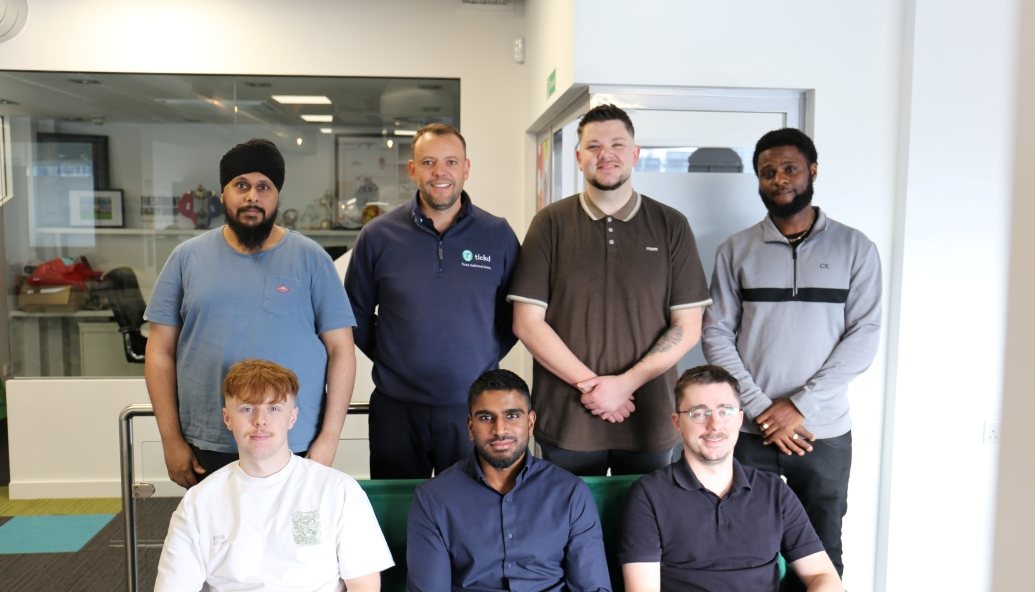
For a 10-person technology team based around Birmingham, Tickd has built a large national, and soon to be international, footprint.
The company’s switching map shows businesses using its platform from the northernmost parts of Scotland to the southern tip of Cornwall, a striking illustration of how a compact regional team can create infrastructure with UK-wide reach.
That reach hasn’t come from building a large call centre or layers of back-office administration. It has come from automating the repetitive parts of business-energy switching and giving energy brokers, consultants, suppliers and customers a clearer digital journey. The result is a growth story about operational leverage, how a lean Midlands technology company can support thousands of contracts without its headcount rising at the same rate.
Why did the small-business energy market need a different approach?
For many small and medium-sized businesses, changing energy supplier has historically felt harder than it should. The market is essential, but the process can involve unfamiliar terminology, fragmented systems and repeated exchanges between customer, broker and supplier.
Faced with that friction, many businesses simply stay with the same supplier. Others turn to an energy broker for support, but the systems behind the broker can still depend on people re-entering information, chasing updates, checking documents and sending completed contracts manually.
Traditional energy brokers have often been strong at sales and personal relationships, but the technology connecting them with suppliers hasn’t always kept pace. Every manual hand-off introduces more time, cost and opportunity for error, and growing contract volumes then require more administrators, making lower-usage customers difficult to serve economically.
Tickd was launched in September 2020 with the aim of making business-energy switching simpler. The technology originally developed for small businesses went on to attract interest from brokers and suppliers who wanted to use the same system under their own brands.
How did Tickd become a platform for energy brokers and suppliers?
The original business plan focused on enabling smaller companies to switch supplier themselves. As the market evolved, Tickd recognised that the underlying problem was bigger than a single direct-to-business service.
Energy brokers needed a practical way to digitise the smaller contracts that were expensive to process manually. Suppliers needed cleaner registrations and better-connected data. Tickd broadened its model and began offering its technology as a customisable, white-label platform.
Its energy broker platform can display live supplier prices, carry out pre-credit checks, populate agreements, capture signatures and provide partners with reporting on each switching journey. The customer remains within the broker’s branded experience, while more of the work underneath is handled automatically.
The technology is supported by API integrations with services including supplier pricing systems, DocuSign, ElectraLink, Companies House and Experian, reducing the need to move information manually between separate systems.
Automation doesn’t remove the need for people. The platform must be maintained, supplier connections supported and regulatory changes translated into working processes. The difference is that an improvement made by an engineer can benefit every future transaction, rather than an administrator repeating the same task contract by contract.
What does a small team look like at national scale?
Tickd operates with a team of around 10 people, including colleagues in Australia, a new venture for the company in 2026. Its UK developers are recruited from within roughly an hour of Birmingham, while a remote-first structure allows it to draw on specialist skills without requiring everyone to be in one office every day.
Team members typically meet in the Birmingham office twice a month, creating space for collaboration and a shared company culture while retaining the flexibility of remote working.
The structure matters because it’s closely connected to the product. Tickd hasn’t built technology around the edges of a conventional, headcount-heavy operation, it has designed the operation itself around software, using a compact engineering-led team to support partners across the country. It also shows how Birmingham’s technology sector can generate national impact without every customer or employee being located in the West Midlands.
How far has the platform already grown?
Tickd has facilitated more than 10,000 energy switches through its white-label platform, with more than £40 million worth of annual energy contracts switched through the platform in 2024.
The switching map makes those figures tangible. Each location represents a business whose energy journey was supported by technology developed by a small team based around Birmingham, together demonstrating that digital infrastructure can remove geography as a barrier to growth.
More than 91% of meters switching through the Tickd platform go live on the requested start date, with a customer onboarding journey that can be completed in around 90 seconds, helping partners serve smaller contracts without the administrative cost of a call-centre process.
Why does the human element still matter?
Operational leverage can sound like a purely technical idea, but Tickd’s starting point was human: smaller businesses were often not receiving the attention they deserved.
Technology alone cannot replace responsible advice or a broker who understands a customer’s circumstances. It can, however, take away avoidable administration, giving brokers more time to support customers, develop relationships and apply their expertise where it adds the most value.
This balance also allows newer and independent brokers to compete. A small brokerage can offer a professional digital journey without first building its own software team or back-office operation, while more established brokers can use the same infrastructure to improve efficiency and reach customers who may previously have been uneconomic to serve.
What comes next for Tickd?
The next phase will be measured not only by contract volumes, but by the number and range of partners using the platform, the retention of those relationships and the value of energy transactions processed.
Continued growth will also require Tickd to keep adapting as energy regulation, supplier requirements and customer expectations change. That ongoing work is what turns a switching tool into durable market infrastructure.
What is already clear is that national reach no longer demands a national-sized workforce. From Birmingham, a lean but highly capable technology team is showing how automation, remote working and a tightly defined market problem can combine to support businesses from one end of the UK to the other.














Leave a comment