
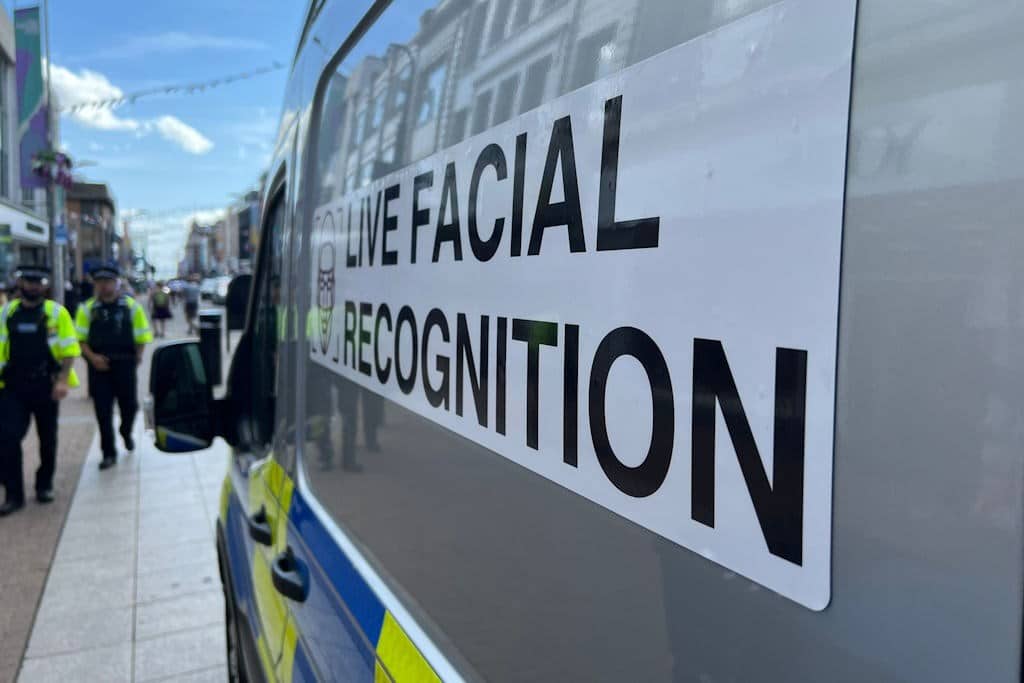
Parliament’s Home Affairs Committee has launched a new inquiry to address several key questions around technology in policing. In particular, the committee is looking into the concerns raised in a Police Reform White Paper published by the government that law enforcement bodies are not effectively adopting or harnessing the potential of new technologies, including live facial recognition.
The UK government’s plan to centralize procurement of live facial recognition could have significant implications for what the expanded use of the technology means in practice and for different areas of England and Wales. The plan could save the government money, introduce capabilities to police forces that cannot otherwise afford them, and usher in common requirements for technology evaluations, accuracy, data handling and oversight.
The paper proposes a centralized procurement model for such advanced technologies under the proposed National Police Service (NPS) for England and Wales. The white paper, “From local to national: a new model for policing,” was released in January. As part of a broad expansion of the use of facial recognition, the government commits in the paper to spending more than £26 million (approximately US$34 million) on developing and delivering a national facial recognition system, along with £11.6 million ($15.2 million) on procuring and nationally coordinating live facial recognition capabilities.
The committee is seeking feedback on how effectively police use technology and what barriers prevent forces from adopting it. The committee also asks what safeguards are needed to ensure data security and system resilience and what governance mechanisms are needed to ensure technology use is proportionate and maintains public confidence.
The committee also asks how helpful the measures recommended in the Police Reform White Paper will be in enabling police forces to use technology more effectively. It breaks down into a question about balancing national strategic direction and local flexibility, and two that relate to procurement: What can be learned from past national-level procurements? And will the government’s technology and data plans save money?
National procurement and local oversight
The white paper argued that the UK is “wasting money by procuring technology and equipment 43 different ways” and leaving smaller forces without the necessary tools. Centralized procurement can realize savings through economies of scale, and the government projects its Police Efficiency and Collaboration Programme (PECP) to save around £350 million by the end of the current parliament in 2029.
The white paper also proposes a national forensics service under the NPS.
A new National Data Integration and Exploitation Service will procure solutions to help forces integrate national data, as well as helping support local forces in their procurements for the same purpose. The Service will also provide guidance to local forces.
Former UK Biometrics and Surveillance Camera Commissioner Fraser Sampson highlighted the central role of live facial recognition in the government’s police reform plans in a February column for Biometric Update. He returned to the theme in September to point out the need for clear senior oversight roles, accountability and staff training as police forces around the UK expand their use of the technology.
Submissions of evidence to the committee are due by February 3, 2027.
Article Topics
facial recognition | law enforcement | live facial recognition | procurement | UK
















Leave a comment