
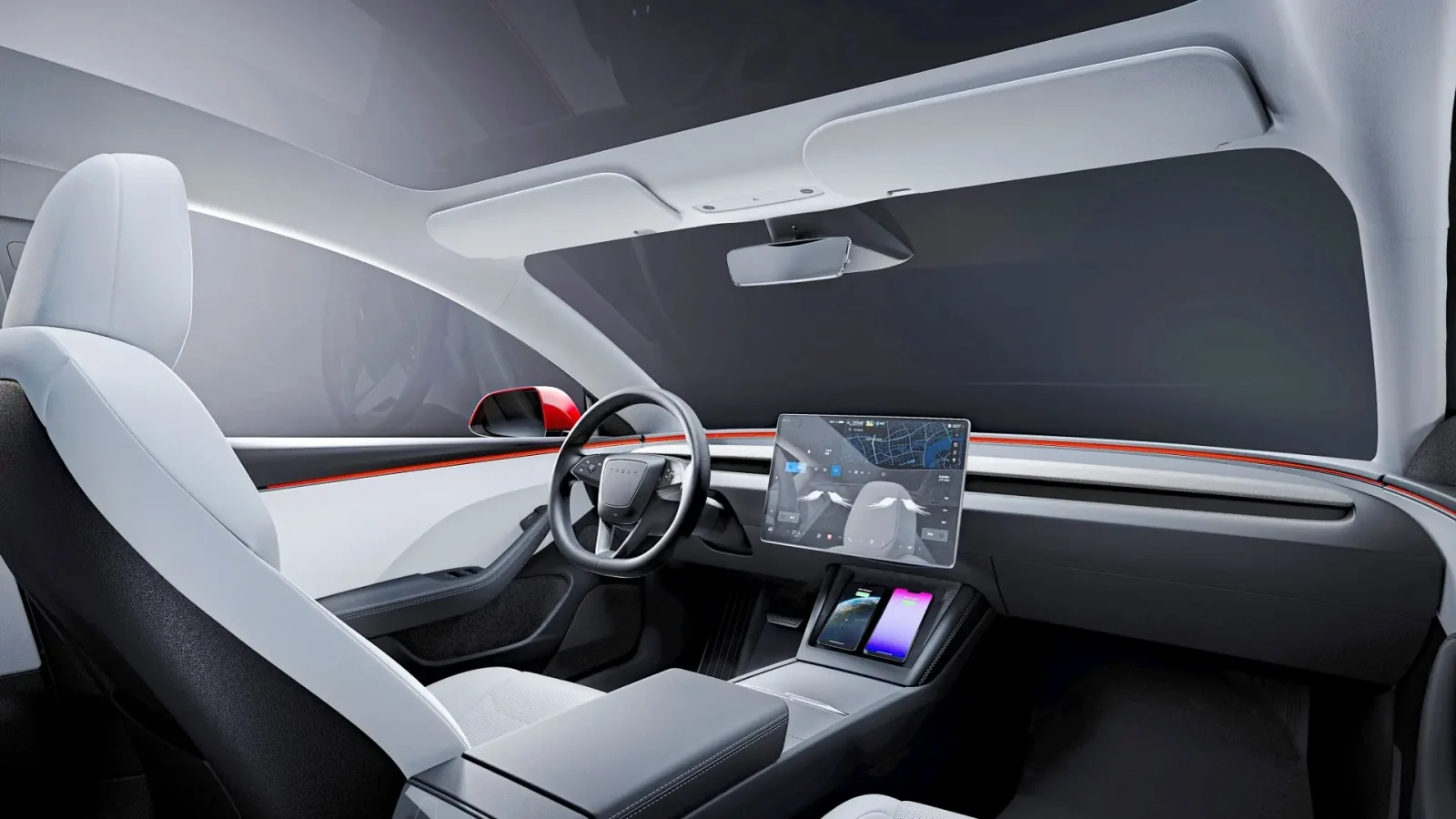
► Why the touchscreen has invaded the car interior
► And why the button may well be back in fashion
► Car makers find the balance
Touchscreens have changed the world. You probably have one within arm’s reach as you read this. They’re limpid dark pools that explode into colour and movement with the caress of a finger to help you unlock the mysteries of modern life. Or order a pizza.
Car makers love touchscreens because they save money and add value. It costs a lot less to have software geeks create a glitzy user interface than designing, making and assembling physical dials, buttons and switches. And because they can deliver more perceived value at marginal cost, with no impact on vehicle weight, engineers and marketers like touchscreens too. But touchscreens are a poor user interface for a machine that moves.
Like this? Get more CAR delivered to your browser! Click here to add CAR Magazine as a preferred source on Google.
In 2017, the USS John S McCain, a US Navy destroyer, collided with a civilian tanker in the Singapore Strait, killing 10 sailors. After an investigation, the US National Transportation Safety Board said a complex touchscreen system that sailors had been poorly trained to use had contributed to a loss of control of the ship. The US Navy subsequently began working to remove touchscreen helm controls on its destroyers.
‘Just because you can doesn’t mean you should,’ observed Rear Admiral Bill Galinis of the US Navy after the McCain incident. It’s sound advice for automotive user-interface designers. But almost every car maker’s touchscreen interface has a different layout and logic path. Couple that with the fact that most of us only give an owner’s manual a cursory read, and the potential for distraction and error is obvious.
There are many examples of complex and poorly designed car touchscreens. The multiple onscreen actions required to adjust the direction of the airflow from the vents in the cabin of a Tesla, the automotive touchscreen absolutist, is one of the more extreme.
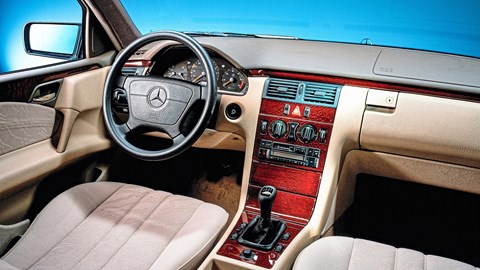
Dr Raluca Budiu, director of research at user interface specialist Nielsen Norman Group, says that in the analogue world, we can learn the location of a physical button and then find it without directing much attention to it. That’s how people play the piano while reading music, or touch-type on a real keyboard. Locating a button on a screen, however, requires visually confirming its position. When more buttons are hidden under menus, selecting them involves multiple touchscreen interactions, requiring even more time and attention.
Indeed, research suggests drivers can take two to four times longer to complete basic tasks using touchscreens rather than physical controls. A 2020 study by the Transport Research Laboratory found drivers interacting on touchscreens with Apple CarPlay or Android Auto had their eyes off the road for at least 12 seconds, and the impairment to their reaction times was greater than that caused by alcohol consumption (to the legal limit) and cannabis use. A lot can happen in 12 seconds. At 70mph, you’ll cover a quarter of a mile. And when you look back at the road, you quickly need to refocus and recalibrate your situational awareness.
‘I hate touchscreens with a vengeance in a high-performance car,’ says Gordon Murray, creator of the McLaren F1 and GMA T.50. ‘When I was designing Formula 1 cars, I had a rule that the driver’s eyeline shouldn’t deflect more than 3º to look at the instruments, so they didn’t have to refocus.’ Regulators are beginning to pay attention to the inherent safety issues of touchscreens in cars. Euro NCAP has just revised its testing protocols to evaluate the placement, clarity and ease of use of essential controls, including the availability of physical buttons for commonly used functions, to reduce distraction. But safety isn’t the only reason the button is coming back.
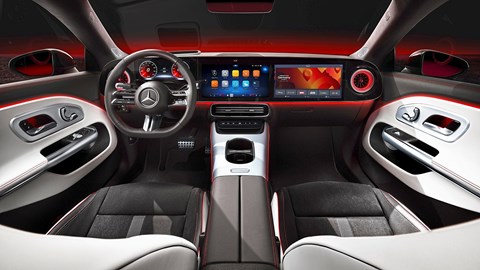
In an era when touchscreens are commodities, buttons, rollers and switches that can deliver a tactile interaction with a car are being seen as sign of quality and luxury. ‘We are about the senses,’ says Aston Martin director of design Miles Nurnberger, explaining why the latest generation of Astons has physical controllers for functions such as mode selection and heating.
Other car makers are bringing back some buttons, most notably Ferrari with the electric Luce. ‘We got ahead of ourselves,’ admitted Merc boss Ola Källenius when the company announced it was bringing back roller controls on its steering wheels after complaints about touch controls. ‘It’s not a phone: it’s a car,’ says VW design chief Andreas Mindt. Future VWs will have physical buttons on the dash for audio volume, heating and cooling, fans and hazard lights, and buttons on the steering wheel.
Touchscreens aren’t going away, though. They remain important, especially for the Chinese market, and future generations of car owners brought up on digital interfaces and riding in increasingly autonomous vehicles may not care so much about the physical interactivity of driving. Against that background, it’s perhaps not surprising Mercedes research has suggested the cockpits of the future will have functionalities activated by a blend of hard controls, head-up displays, big screens, and speech recognition. Yes, the button is back. Sort of.












Leave a comment