
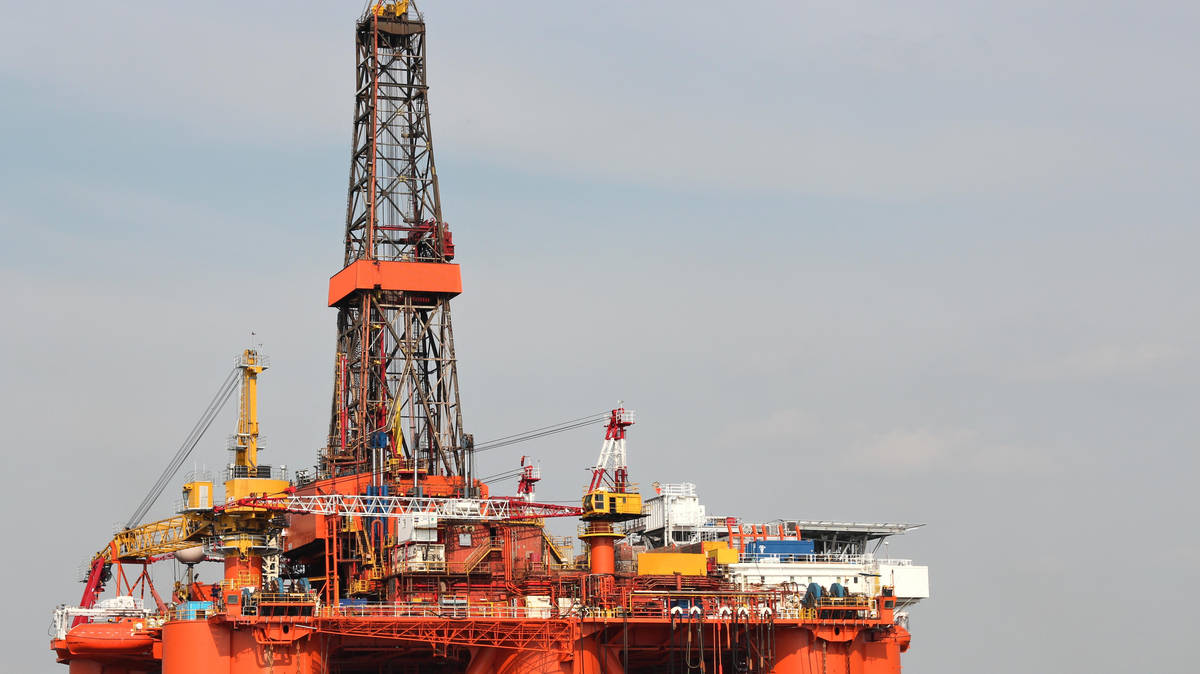
Andy Burnham and Energy Secretary Miatta Fahnbulleh are considering whether to approve drilling in Rosebank, the biggest undeveloped oil and gas field in the UK.
The project appears to be back on the table after consent was withdrawn in 2025 for extraction of fossil fuels in the Rosebank and Jackdaw sites in the North Sea, off the Scottish coast.
Protesters are now lobbying Labour to “not break their manifesto,” and campaigners from Fossil Free London gathered outside the Department for Energy, Security & Net Zero on Wednesday.
Protesters, dressed as firefighters in front of a banner reading “world on fire”, held placards reading “heat kills, Rosebank fuels it”, “Miatta stop Rosebank” and “2,700 dead in first two heatwaves”.
The Department for Energy, Security & Net Zero has said: “The North Sea remains a vital national asset, supporting jobs, growth and the UK’s energy security.
“We are clear that oil and gas will continue to play an important role in our energy system for decades to come, alongside renewables, nuclear and other low-carbon technologies.
“Our focus is on providing stability and ensuring the North Sea continues to make a strong contribution to the UK’s economy and energy security.”
Read also: Energy boss calls for ‘timely consent’ for Rosebank and Jackdaw projects

Picture:
Alamy
What is Rosebank?
Rosebank is an oil and gas field around 80 miles north-west of the Shetland Islands, said to contain up to 300 million barrels of oil.
It is co-owned by Norwegian firm Equinor and British company Ithaca Energy, and drilling could be a significant safeguard for UK oil supplies amid the Middle East and Russia-Ukraine crises.
But the environmental impact of drilling has alarmed protestors and it might not bring down the average bill price for UK consumers.
Equinor said it will be sold at world market prices back to UK consumers after entering an international marketplace, with no special deal in place.

Picture:
Alamy
What has happened so far?
The Rosebank project was deemed illegal in 2025 after Labour’s 2024 election manifesto pledged not to issue any new oil and gas licences.
However, the Jackdaw gas field off Aberdeen and the Rosebank oil field north west of Shetland already had licences granted in 2022 and 2023.
Environmental campaigners launched a legal challenge over the approvals, off the back of a 2024 Supreme Court ruling that emissions created by burning fossil fuels should be considered when granting planning permission for new drilling sites.
This challenge was upheld at the Court of Session in Edinburgh in January last year.
While Sir Keir Starmer’s government had left the project, there have been suggestions that Mr Burnham could return to it.

Picture:
Alamy
What have campaigners said?
Protesters from Fossil Free London claimed on Wednesday that approving drilling in the two fields would break the “value of their word” in the manifesto promise.
Fossil Free London’s director Robin Wells, 33, told the Press Association during the protest: “It’s pointless to have a manifesto commitment to stop oil and gas and then say, ‘we’re just going to approve the largest new fields’. It doesn’t make any sense.
“We’re here because Andy Burnham gave the British public a massive slap in the face when he announced his new policy, or at least it was rumoured in the press, that they were going to expand North Sea oil and gas drilling.
“It’s really concerning. Andy Burnham’s obviously been put under a huge amount of pressure, very, very quickly, to announce this policy.”
Miss Wells, who led protests outside Downing Street as Mr Burnham gave his first speech as Prime Minister on Monday, said they had already had a response to their campaigning.
She said: “What’s really positive is when a huge amount of pushback came out from our movement and people were absolutely appalled, (the Government) said ‘Oh no, this is just something that’s been written. We’re going to stick to our manifesto commitment, no new oil and gas licences’.
“So that’s really positive, and we hope that they understand that saying no new oil and gas means saying no to Rosebank, means saying no to Jackdaw, means saying no to Cambo.
“So we’re hoping that they will stick to the value of their word and stop Rosebank, stop Jackdaw, and defend our lives.”
Miss Wells added: “We know that no living person in the UK has ever before experienced a June like the one we saw this year.
“It could not be giving us more of a message that we need to stop the cause of this problem, which is oil and gas. A responsible, pragmatic, security-driven Government should be saying, ‘for our peace, for our well-being, and for our health, we have to stop the oil corporations making billions off the backs of our suffering’.”













Leave a comment