
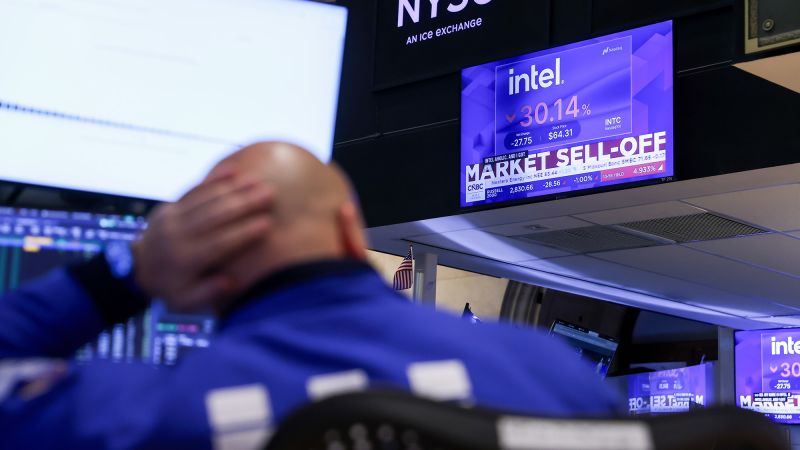
The stock market is turning its back on Big Tech.
Google just had its worst day ever. Intel tumbled more than any day since the Nixon administration. Amazon and Meta both had significant declines this week, too. The Nasdaq tumbled and is just over a percentage point away from a correction (a 10% decline from its all-time high).
The common thread: Building the infrastructure to power AI is really, really expensive – and Big Tech profits aren’t yet justifying that massive expense. AI companies are increasingly doling out more cash for data centers than their businesses are able to generate.
But if the stock market is supposed be to delivering some kind of message, Big Tech isn’t hearing it.
Spending on AI has reached $1.6 trillion since 2023 and is expected to hit $1 trillion every single year for the next decade or so, according to JPMorgan. None of that changed this week.
That’s because the market that’s financing all of this – the bond market – is mostly shrugging its shoulders while the stock market is in the midst of a mild freakout. Lenders have been lining up to take on Big Tech’s debt to pay for the technology that’s reshaping the global economy.
That means the questions the market seems to be asking about AI – will Big Tech keep growing its spending? (it most certainly will) and will AI will turn a profit anytime soon? (doesn’t look like it) – are the wrong ones.
The real question we should be asking about AI is: How much longer will the bond market sustain the nonstop spending spree?
That will ultimately dictate whether AI turns into a success or a bust.
The way AI math works is like this: Spend a lot of money upfront on the infrastructure needed to support AI (data centers, servers, chips, power, labor, building materials, etc.). Then, once the data center is switched on, AI companies can monetize that investment … somewhere between three months to two years later, according to Goldman Sachs.
With profit arriving that far down the road, hyperscalers (the Big Tech guys like Google, Amazon, Microsoft and Meta) need to borrow a ton of money upfront and pay back investors down the road.
“A ton” doesn’t really do it justice. Those four hyperscalers alone have been collectively responsible for more than a third of all capital expenditures from the S&P 500 over the past 12 months, notes John Higgins, chief economic adviser at Capital Economics.
That’s why a third of Big Tech’s capital expenditures this year are expected to be financed with debt – something like $250 billion worth of bonds from hyperscalers alone, according to Goldman Sachs. That’s expected to peak next year at around 35% of hyperscalers’ spending.

But bond market investors don’t have infinite money to spend. And there’s a ton of competition for lending right now – especially from US Treasuries as the government is trying to pay for Social Security, Medicare and an expensive war, all at the same time.
That raises an obvious question: Exactly how much money are investors willing to lend AI companies?
It’s more than you might think.
The hypothetical maximum amount of debt the market can absorb is unknowable, but Goldman Sachs did the math anyway and came up with $510 billion of available investment-grade (top-tier) debt for the biggest hyperscalers. That’s more than double what they’re currently expected to be borrowing by the end of the year.
In other words: The biggest AI companies have a lot of runway left to borrow.
The question isn’t how much; the question is how much longer.
The answer depends on two parts: Who is paying and who is receiving.
“We are not concerned about access to capital,” said Amanda Lynam, chief credit strategist for Goldman Sachs on a recent company podcast. “We are just expecting there to be a more nuanced conversation about where to issue and at what price.”
Private investment funds, venture funds and private equity are ready to do the heavy lifting to support the AI buildout, Lynam said, with trillions more dollars of “dry powder” to finance it.
But hyperscalers aren’t the only game in town. Other companies, including nanoclouds, are playing in the space too. They’re highly indebted companies that rent out computing to other businesses, and their credit situation is starting to look iffy. Their non-investment-grade bonds deliver high yields that investors willing to take on more risk are willing to gamble on, in exchange for potentially massive rewards..
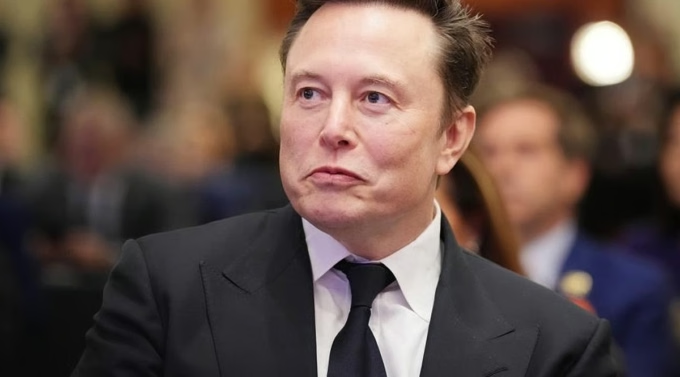
That’s the market in which CoreWeave plays, with its bond yields surging to 15% this month as losses piled up. Elon Musk said the nanocloud industry, which includes CoreWeave, is due for a massive shakeout (he called it “guppy-level death.”)

Every new technology has winners and losers, and Musk may be right about nanoclouds. We’ll see.
Hyperscalers, by contrast, look like winners. Their cloud revenue (a stat Wall Street uses to measure AI demand) grew 50% in the second quarter. They have huge contract backlogs and the capacity to absorb higher borrowing costs.
Those bottlenecks can support high prices, which helped hyperscaler revenue surge 19% over the past 12 months, according to Higgins.
And the advent of agentic AI has sent demand exploding: requests from agents consume 15 times as many tokens as human-initiated requests, according to OpenRouter.
“The outlook for these things doesn’t look obviously bleak, given that AI is gradually being used more and more in the economy,” Higgins said.
The concern is that the cost of borrowing could get unwieldy. And that could change the economics that are still working for AI.
Negative sentiment that’s pervasive in the stock market could start to bleed out into the bond market, sending bond yields higher and raising borrowing costs for AI companies.
The bond market works best when there’s an end in sight, Lyman noted. Every AI investor believes there’s a light at the end of the tunnel. We just have no idea how long this tunnel is.
The uncertainty about when companies will ultimately start turning a profit and making money off all their massive AI investments could give the bond market pause, she said.
In the meantime, the outlook for the technology and the big companies’ finances looks quite strong, said Stephanie Aliaga, a global market strategist with JPMorgan, in a recent note to investors.
Warning signs would include a downshift in businesses’ AI usage, cheaper pricing or fewer customer commitments.
We’re not seeing any of those yet.













Leave a comment