
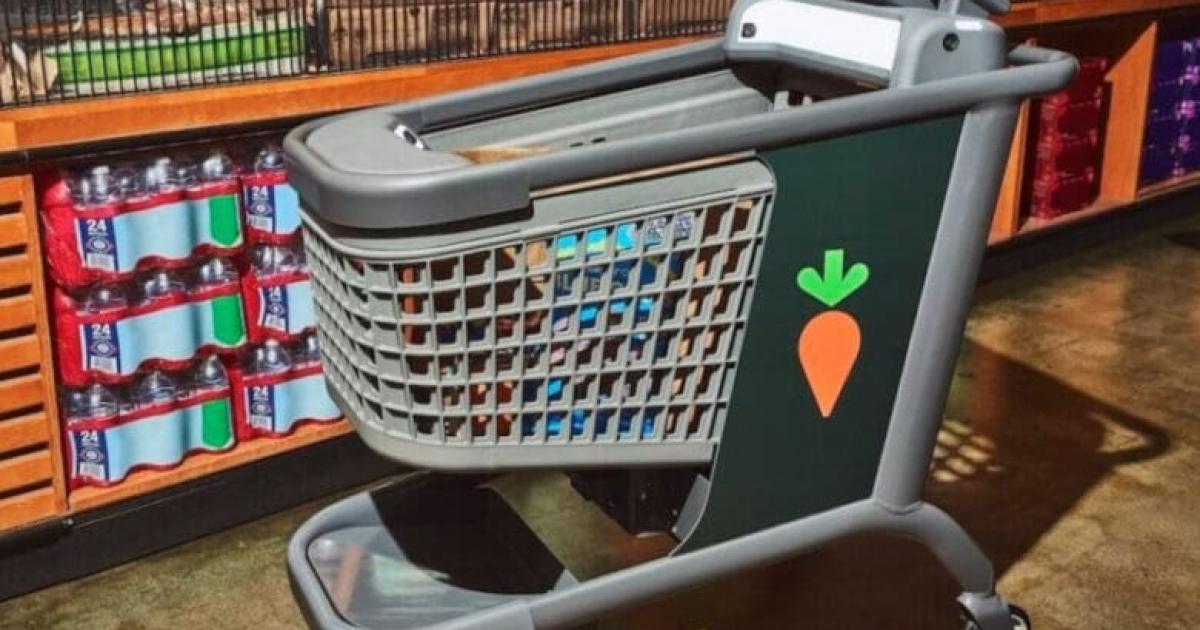
New research from Bayes Business School shows that customers using smart trolleys, which are currently being trialled in major UK supermarkets, spend up to 32 per cent more than those using traditional trolleys.
The study found that shoppers using the high-tech trolleys bought 25 per cent more items and spent 23 per cent longer in store.
Morrisons began trialling the technology earlier this year at its Preston store, following Waitrose, which started its own pilot in Bracknell late last year.
Dr Sabrina Gottschalk, lead author of the study and a lecturer in marketing at Bayes Business School, said: “In recent times, major UK supermarket chains Waitrose and Morrisons have been trialling digital trolleys of their own, while Tesco shoppers can now use its app to guide them around a store.
“Retailers are increasingly using technology to enhance the shopping experience for consumers, and our findings suggest there may be significant revenue gains from doing so effectively.
“As well as guiding customers towards new products and special offers, digitalisation induces increased engagement and additional advertising platforms.
“Although technology should in theory improve shopping experiences, consumers should be wary of relying solely on devices and remain conscious of how digital prompts and recommendations shape their purchase decisions.”
The smart trolleys can be linked to a customer’s Morrisons More card so discounts and offers can still be applied in store, and are fitted with a tablet to allow shoppers to digitalise their shopping lists, receive personalised recommendations and free in-store navigation.
Payments can be made straight from the trolley, eliminating the need to queue at the checkout.
The research was based on an analysis of 12,418 shopping sessions over a month in a German supermarket chain, with 9,422 customers using the smart trolleys.
Data collected included basket value, size, time spent shopping, and session timestamps.
The study found purchases were higher in the afternoons and evenings, and that shoppers interacting with the screens more than 20 times tended to buy more items and stay longer in the store—but did not necessarily spend more money overall.
Bayes Business School suggested that these users may be “hedonic shoppers” enjoying the experience rather than shopping out of necessity.
Dr Yusuf Oc, co-author of the study and senior lecturer in marketing at Bayes Business School, said: “Our research shows clear spikes in consumption and spending for those deciding to use in-store digital assistance, suggesting that retailers should offer this technology and entice customers to use it – perhaps with a promise of loyalty points of prizes.
“The increase in afternoon and weekend activity from our findings should prompt supermarkets to promote higher-end items at these times to cash in on profligate customers, with offers on new items reserved for evening shoppers.
“However, figures also suggest that over-reliance on smart trolleys in a single session can actually diminish returns and distract customers, leading to lower spending and basket sizes.
“One way that supermarkets might tackle this issue is to offer more experiential or limited-time deals to keep customers interested in purchasing as well as trying out new technology.”

At the start of its Preston trial, Morrisons’ productivity director Gordon Macpherson said the supermarket was “constantly looking for ways to bring innovation to the weekly shop.”
Mr Macpherson said: “We are excited about bringing the first fully-integrated AI-powered trolleys in the UK to a first store soon, and look forward to testing customer response and building understanding of how the technology works within the Morrisons store estate.”
Both Waitrose and Morrisons have been approached for comment.
The study suggests that as AI-powered devices become more common in retail, shoppers may need to consider how digital tools and prompts shape their decisions and influence how much they spend.















Leave a comment