
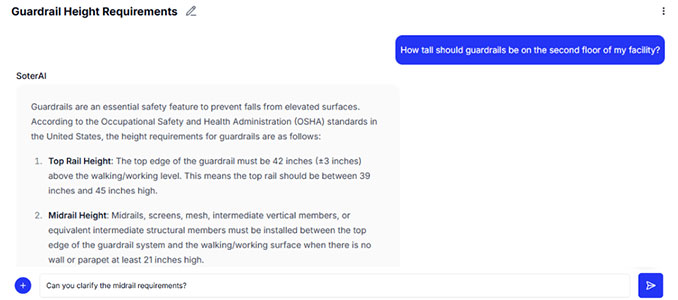

Beyond the Hype: Why Specialized Vertical AI is the Future for EHS Transformation
Artificial Intelligence (AI) is no longer a futuristic buzzword – it’s increasingly woven into the fabric of our professional lives. For EHS leaders, the promise of AI to revolutionize risk management, streamline compliance, and ultimately, save lives is compelling. However, as AI tools become more accessible, a crucial understanding is often missed: not all AI is created equal. The distinction between general-purpose AI models and specialized, industry-specific “Vertical AI Agents” is paramount for EHS professionals looking to make informed decisions and truly harness the power of this technology.

The current AI landscape, dominated by impressive Large Language Models (LLMs) like ChatGPT and Gemini, offers a glimpse into AI’s capabilities. These general AI models are incredibly versatile, capable of drafting emails, summarizing documents, and even generating creative content. An EHS manager might use an LLM to get a head start on a toolbox talk outline or to summarize a lengthy regulatory update. These are useful applications, certainly, but they often only scratch the surface of what AI can achieve when deeply tailored to the unique complexities of the EHS domain.
The real transformative power for EHS lies in understanding and leveraging Vertical AI Agents – AI systems meticulously designed, trained, and optimized for the specific challenges, workflows, and data nuances inherent to environmental, health, and safety management.
Defining the Divide: General Purpose vs. Industry Focus
To appreciate the significance of Vertical AI, let’s first clarify the two main approaches: General AI Models and Vertical AI Agents.
General AI Models: General-purpose AI models, particularly foundational LLMs, are like highly educated individuals with a vast breadth of knowledge across countless subjects. Their design philosophy is “broad and shallow,” aiming for versatility across many domains by training on enormous, diverse datasets from public web pages and general knowledge sources. While they possess impressive general knowledge and adaptability, they lack deep, specialized expertise in any single niche like EHS. To perform specialized tasks effectively, they require considerable effort from the user, such as sophisticated prompt engineering or fine-tuning.
Think of a general AI model as a brilliant recent graduate with a general science degree. They can understand basic safety principles and research OSHA guidelines if prompted, but they wouldn’t inherently know your facility’s specific lockout/tagout procedure or the nuances of your state’s hazardous waste reporting without being explicitly taught every detail for each specific query. Their strength is their adaptability, but they require significant guidance for domain-specific application.












Leave a comment