
England and Wales common law is well placed to cope with claims for damage caused by chatbots, self-driving cars and other AI-powered innovations, according to a government-sponsored expert report. However ’liability gaps’ may emerge over the problem of proving causation when decisions are made by autonomous systems, the report’s authors said this week.
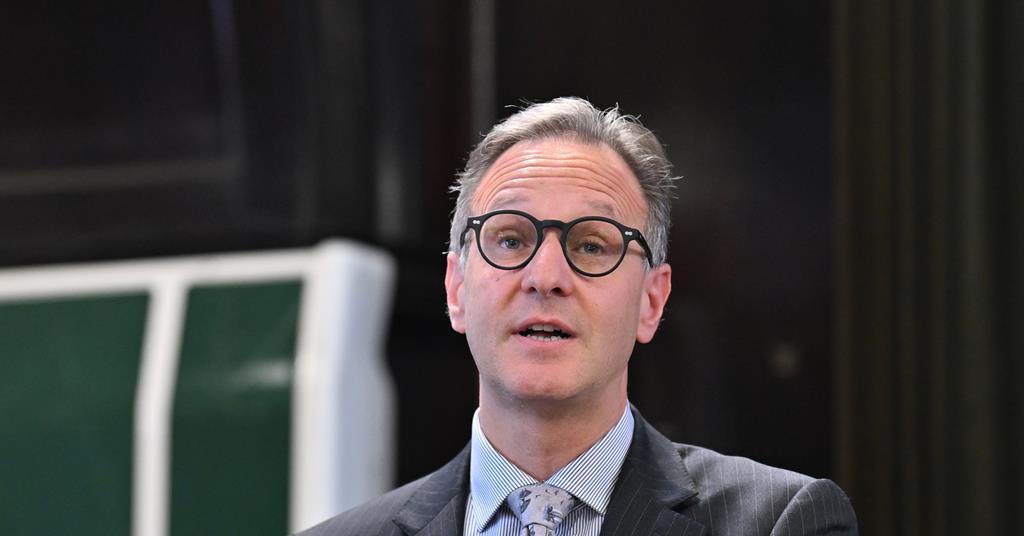
The Legal Statement on Liability for AI Harms is the latest such statement from the UK Jurisdiction Taskforce, set up in 2020 under the chairmanship of the master of the rolls to promote the UK’s jurisdictions for technology and digital innovation. Unveiling the statement this week, Sir Geoffrey Vos said commentators had expressed ‘genuine uncertainty about how common law concepts can be applied in the AI age.’ The legal statement, he said, would provide ‘much needed certainty and predictability in an area where few cases have reached the courts’.
The 130-page statement focuses on the question of whether parties such as developers, system providers and users can be held liable in law for harms resulting from the use of AI (defined simply as ‘technology that is autonomous’). In a finding likely to attract attention in the legal profession, it notes the possibility that a lawyer could be liable for failing to use AI for a task ‘when a professional exercising reasonable care and skill would have done so’.
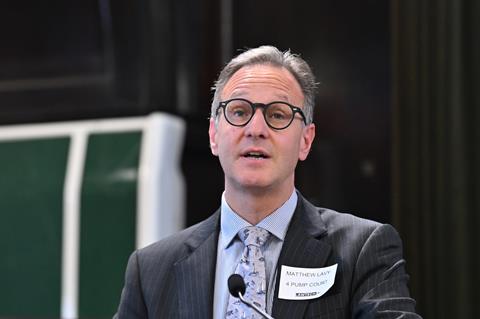
Matthew Lavy of 4 Pump Court, who led the drafting team, stressed that the report sets out the current state of the law. ‘We deliberately avoided expressing an opinion of what the law should be.’
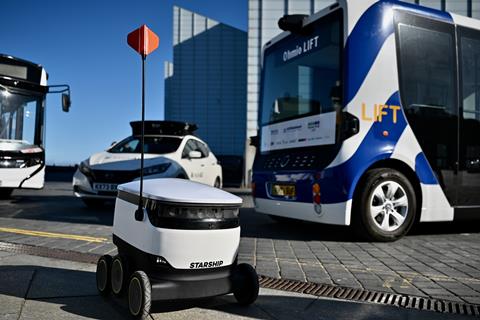
Although autonomous technology can pose theoretical problems of liability for harms, he said in practice people or organisations could be liable. ‘In the real world there’s a user, someone who has decided to deploy AI for the purpose. It’s the use of AI, or sometimes the decision not to use it, which in most real examples is the cause of harm.’
While the law of negligence can be applied in such cases, he said a consultation on the statement had attracted questions on ‘liability gaps’.
One, he said, is there harm results even when deployment was reasonable and not negligent. He noted that strict liability under the Consumer Protection Act does not apply to pure software. Another issue is the problem of proving causation. ‘This is an area where absolute certainty might await the outcome of cases,’ he said. But the gap is more theoretical than real, he added, noting that courts have found ways of dealing with difficult cases of causation, for example in mesothelioma claims.
The statement concludes that the law of negligence has evolved and adapted over the years to suit changing societal expectations and circumstances. ‘Consequently there is no conceptual reason why its principles cannot be applied to harms caused by AI failures even though it does not appear to have been so applied to date.’
Law Society vice president Brett Dixon welcomed the report. ‘This represents an important step in recognising the interaction between AI systems and liability in private law. It also demonstrates that the law of England and Wales can respond to important AI developments around consumer protection, transparency and the value of regulated professions.’
He added that the statement also provides ‘much needed clarity for our members on the circumstances in which a professional can be liable for using, or failing to use, AI in the provision of their services.’
















Leave a comment