
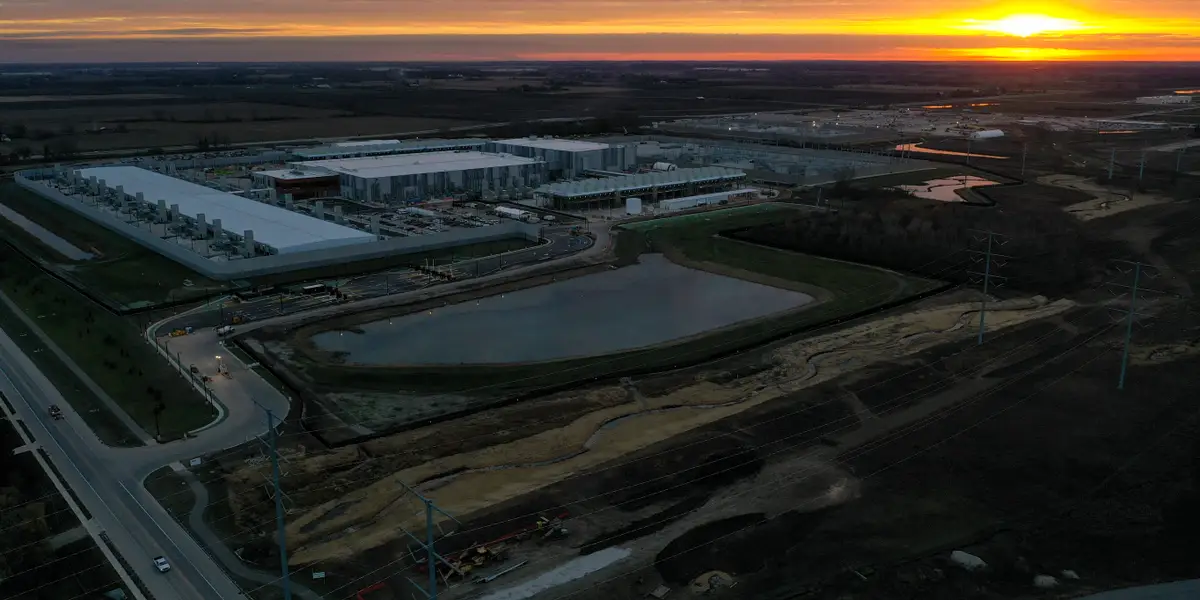
The backlash against AI data centers delivered a stunning political upset in Tuesday’s midterm elections. But the biggest winners may turn out to be the tech giants that have already built many of these
Voters across the US sent a clear message Tuesday: They want to slow or stop the construction of new data centers. That could make it much harder for the AI industry to keep up with soaring demand.
Goldman warned the election results could lead to restrictions affecting roughly 45% of planned US data center expansion.
The biggest shock came in Texas, where Democrat Gina Hinojosa defeated Republican Gov. Greg Abbott. Hinojosa has promised to immediately pause data center development in a state that’s home to some of America’s largest AI projects.
That sounds like terrible news for Amazon, Microsoft, and Google, the world’s biggest data center operators.
Yet their shares jumped on Wednesday, while smaller AI cloud providers, including CoreWeave and Nebius, were hammered.
The divergence highlights an important consequence of the election results: Making new data centers harder to build could strengthen the biggest tech companies while crushing some of their smaller rivals.
Amazon, Google, and Microsoft already operate enormous networks of data centers packed with expensive Nvidia chips that power AI services, including those offered by OpenAI and Anthropic.
Smaller competitors are racing to catch up, investing billions of dollars in new facilities and computing equipment.
But if newer projects are delayed or canceled, these challengers could be stuck with expensive expansion plans while their larger rivals continue to make money from facilities already operating.
That would mean less competition for Amazon, Google, and Microsoft.
It could also mean higher prices.
With demand for AI computing power still booming, restrictions on new data centers could make existing capacity more valuable. That would mean even bigger profits for Amazon, Microsoft, and Google.
Paul Golding, a Macquarie analyst, highlighted this dynamic in a note to investors on Wednesday.
“Approved, permitted pipeline becomes far more valuable,” he wrote, predicting that demand for increasingly scarce data center capacity could drive prices higher.
There’s already evidence of this supply-demand phenomenon. Silicon Data, which tracks the cost of renting Nvidia GPUs through cloud services, has recorded steadily rising prices this year for several popular chips.
“If demand keeps growing and protests delay new capacity, that could certainly help support GPU rental pricing,” Brad Gastwirth, global head of research at Circular Technology, told me.
The irony is striking.
Voters trying to rein in the AI data center boom may have just handed Amazon, Google, and Microsoft an even stronger grip on the industry.
Sign up for the AI Insider newsletter here. Reach out to me via email at abarr@businessinsider.com















Leave a comment