
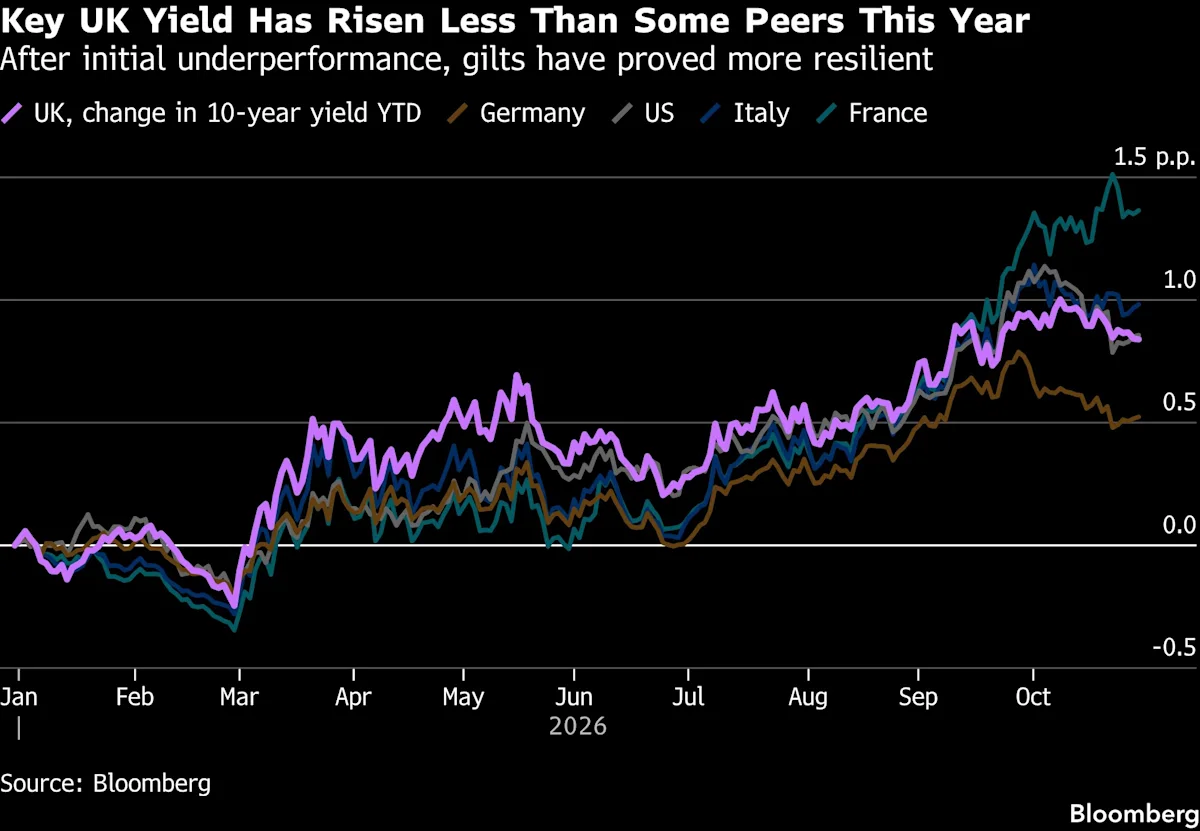
(Bloomberg) — The rehabilitation of the UK bond market took another step forward as Prime Minister Andy Burnham’s debut budget reassured investors this week, sending yields to a five-week low.
Most Read from Bloomberg
Its notable restraint hit the right notes, even as investors agreed that much-needed structural reforms had been pushed down the road for now. The 10-year gilt yield fell as low as 5.25% on Thursday and is set for the biggest monthly drop since May.
“The UK is starting to look like the adult in the room when it comes to fiscal discipline,” said Chris Jeffery, chief investment strategist for Legal & General, Britain’s largest asset manager. “There may be more tightening needed in future but this budget achieved its aim of maintaining credibility.”
The positive market reception is a boon for the UK, which still suffers from an image problem with debt investors. That damage was mainly done by the 2016 vote to leave the European Union and former Prime Minister Liz Truss’ 2022 mini-budget, which sparked a market rout the Bank of England had to step in to contain.
To be sure, the UK’s public finances remain highly precarious. But the country has won plaudits from the International Monetary Fund for its efforts to correct course, an approach that sets it apart from the likes of France and the US.
The data accompanying Wednesday’s budget was cautiously reassuring. Borrowing plans for the rest of the fiscal year ticked up only slightly to £250.6 billion ($334 billion), in line with expectations. And the budget deficit is projected to fall to 3.4% in 2027-2028, albeit declining at a slower pace than anticipated.
Do No Harm
Since replacing Keir Starmer in July, Burnham has repeatedly stressed his commitment to fiscal responsibility. That contrasts with comments last year before he swept to power, when he said Britain shouldn’t be “in hock” to bond markets. At the time, investors worried it might herald a pivot toward more borrowing and spending.
But capped by this week’s do-no-harm budget, his message of financial rectitude has helped gilts weather the broader turbulence in global bond markets triggered by the US-Iran war. French debt in particular has been pummeled as the government tries to push its budget through a divided parliament, with elections looming next year and mounting signs of social unrest.















Leave a comment