
There are other signs out there too. In March, ChatGPT maker OpenAI shut down Sora, a social media app for AI content, and cancelled a $1bn (about £747m) content partnership to with Disney.
Then again, there is some kind of audience for AI slop. As we talked about on a recent episode of the BBC’s podcast The Interface, tens of millions of people watched a social media series called Fruit Love Island over the last few weeks, where sexualised AI fruit people fall in love and cheat on each in a reality TV parody. Was this just a meme? Were people hate watching it? Or does this kind of AI content have real staying power? It remains to be seen.
Even proponents of AI are sceptical. “As a consumer, I don’t find these wholly AI-generated things compelling. There’s something hollow in it,” says Jacob Schneider, an intellectual property and technology specialist and partner at the law firm Holland & Knight in the US. “But AI can be incredibly helpful in creative work to be a soundboard and develop ideas. I think it works best as a collaborator, and I hope that’s where things go.”
There’s still one big legal question here though. If no-one can own work that was entirely created by an AI, what about work where there’s an equal level of involvement with a human being?
Drawing the lines
The US isn’t the only country grappling with these issues. In the UK, the law has taken a different approach, allowing copyright for some fully machine-generated works by assigning authorship to the person who made the “arrangements” for their creation. That means a AI-generated image or text can still be owned, even without a human author in the traditional sense. But even there, the rules are under pressure. Lawmakers are now reconsidering whether that framework still makes sense in the age of generative AI.
Abbott has another lawsuit in the works which could provide a final answer for the US. In 2022, a man named Jason Allen won the Colorado State Art Fair in the US with an image titled Théâtre D’opéra Spatial he generated with the AI tool Midjourney. Allen says he had to prompt the AI 624 times and edited the image with Photoshop.
Now the courts must decide where to draw the line. How much human involvement and intervention is necessary before the law determines a person owns the work? The answer is certainly coming, but we don’t have it yet.
More like this:
• I hacked ChatGPT and Google in 20 minutes
• Your phone’s blue light isn’t ruining your sleep
• Need to prove you’re not an AI deepfake? Good luck
For you, all this means that anything you create, from photos to drawings and writing, carries a special legal protection that machines can’t claim. In a world of endless AI output, your creativity counts as something distinct. When AI helps you along the way, the rules aren’t clear.
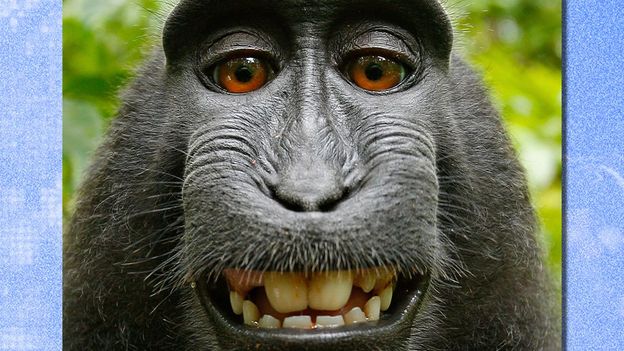
These cases will keep coming, and the conversation will shift along with them. But the work you love still needs to be made by a person for now, and in part, you can thank an Indonesian monkey with a perfect smile.
—
For timely, trusted tech news from global correspondents to your inbox, sign up to the Tech Decoded newsletter, while The Essential List delivers a handpicked selection of features and insights twice a week.
For more science, technology, environment and health stories from the BBC, follow us on Facebook and Instagram.









Leave a comment