
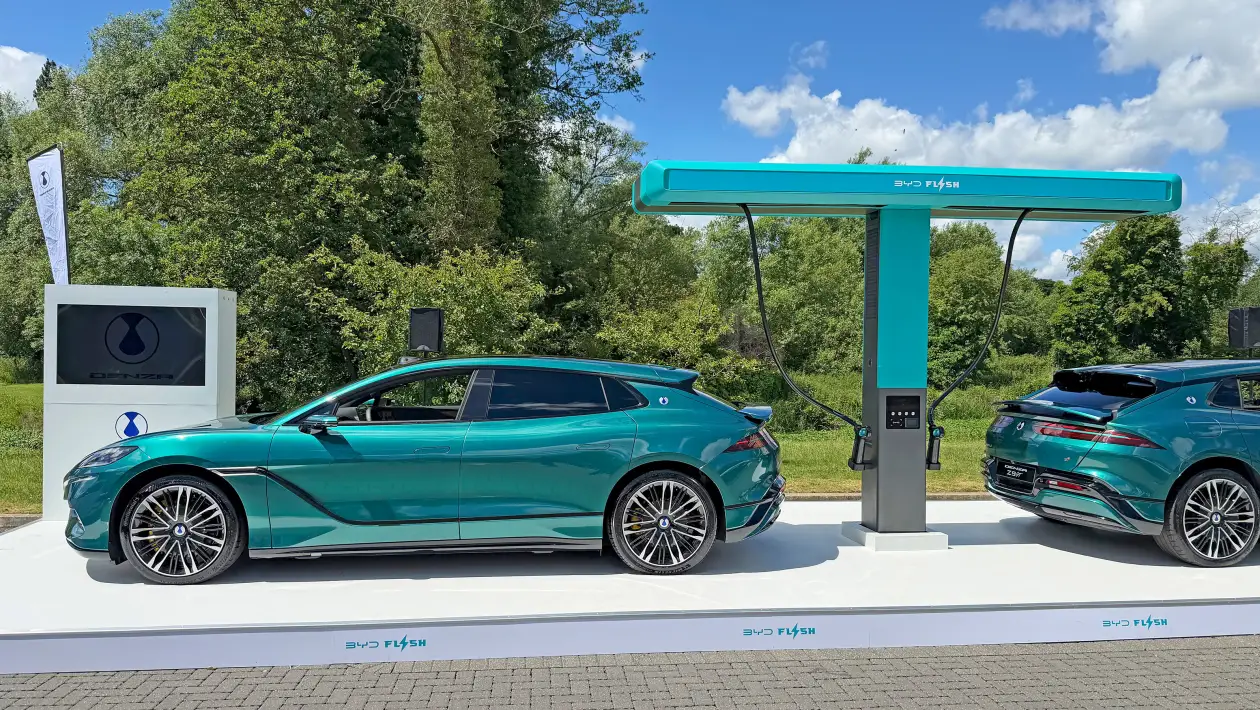
BYD is also in discussion with chargepoint operators, to form partnerships where it can upgrade obsolete charger connections. But Ge admitted it’s “a challenge to get a commercial agreement with the CPOs”.
“If we set up the charger on their site, they charge 79p and I charge 50p, they will kill me, right? We will probably offer a special rate for the BYD customers, then we need to match their price for the non-BYD customers.”
Pareschi said BYD was looking at multiple arrangements, including paying rent. But CPOs, who are struggling to make money with their massive investment costs, may like the idea of Flash Chargers attracting EV drivers to their sites – and picking up the overflow if the T-chargers are busy. BYD will definitely look to muscle its way into motorway services, which will necessitate doing a deal with Gridserve.
The third location target is retail, such as supermarkets. InstaVolt has nurtured its network by partnering with the likes of McDonalds and Starbucks – and BYD is set to follow suit.
BYD knows relying on new grid connections would be a massive bottleneck. “We will try to keep [those] to as few as possible, because it could easily add two years,” Pareschi told us. “We will focus on existing grid connections and upgrading them, and an alternative is to put in more [battery] storage.”
So what’s the budget for the roll-out of 3,000 charging stations across Europe? “It’s a really significant amount of money, the biggest investment in charging infrastructure ever done in Europe,” replied the Italian engineer, who spearheaded charger development at tech company ABB before joining BYD. Bono Ge estimates each charger install will cost from £500,000 to £1-million, depending on the scope of individual projects.
The first of Europe’s 3,000 Flash Chargers is due to kick off the roll-out in Italy in mid-June.
Making the switch to the EV world? Our dealer network has 1,000s of great value new cars in stock and available now right across the UK. Find your new car…















Leave a comment