
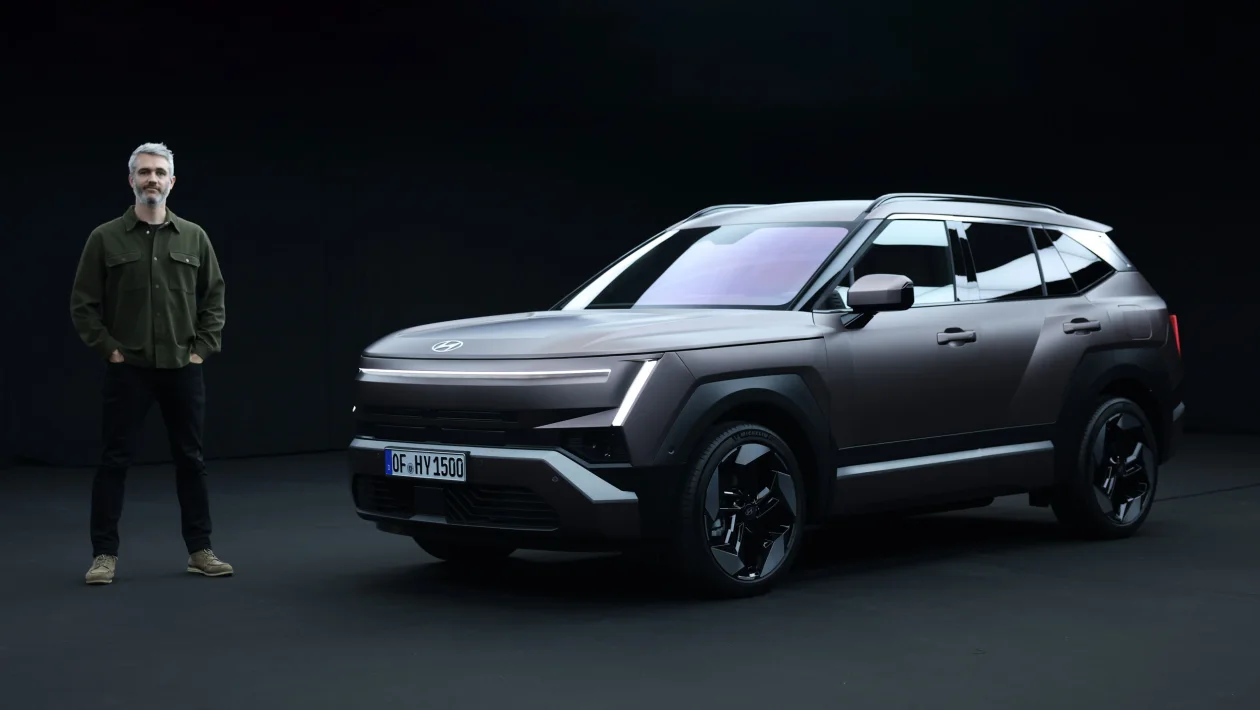
Also improved is the car’s head, leg and shoulder room, with plenty of space to stretch out in the back. The rear seats recline, and on certain models slide back and forth. The seatbacks fold in a 40:20:40 formation, increasing boot space from an already generous 695 litres, to a maximum 1,910 litres all in.
What about the interior design and tech?
Up front, Hyundai claims the Tucson offers a “furniture-inspired comfort” and “intuitive controls” for its occupants – something we can vouch for having experienced the car in a closed studio ahead of the world premiere. Soft cushioning features on the dashboard, and a bank of physical switches sits beneath the huge central screen.
That screen – available in two sizes: 12.9 inches or 17 inches – runs Hyundai’s new Android-based Pleos Connect infotainment software, with AI-enhanced voice recognition and access to third-party apps and connected services. Other tech highlights include four 100-watt USB-C ports, a 15-watt wireless charging pad, a smartphone-operated digital key, and a 12-speaker Bang & Olufsen stereo, plus “interactive” ambient lighting that spans from the dashboard to the doors.
Complementing the main display is a slimline 9.9-inch instrument cluster, viewed over the steering wheel rather than through it. Unlike with Peugeot’s polarising i-Cockpit layout, you don’t need to lower the wheel into your lap to see key driving information, so ergonomics are unaffected.
Ahead of the driver, you’ll find the Tucson’s most unassuming but intriguing feature: a 13.5v metal-coated, heated windscreen. Hyundai says it offers “15-minute full de-icing capability for harsh winter conditions”, while in the summer, it allegedly keeps the cabin two degrees cooler than conventional glass – lessening strain on the climate control, and reducing fuel consumption.












Leave a comment