
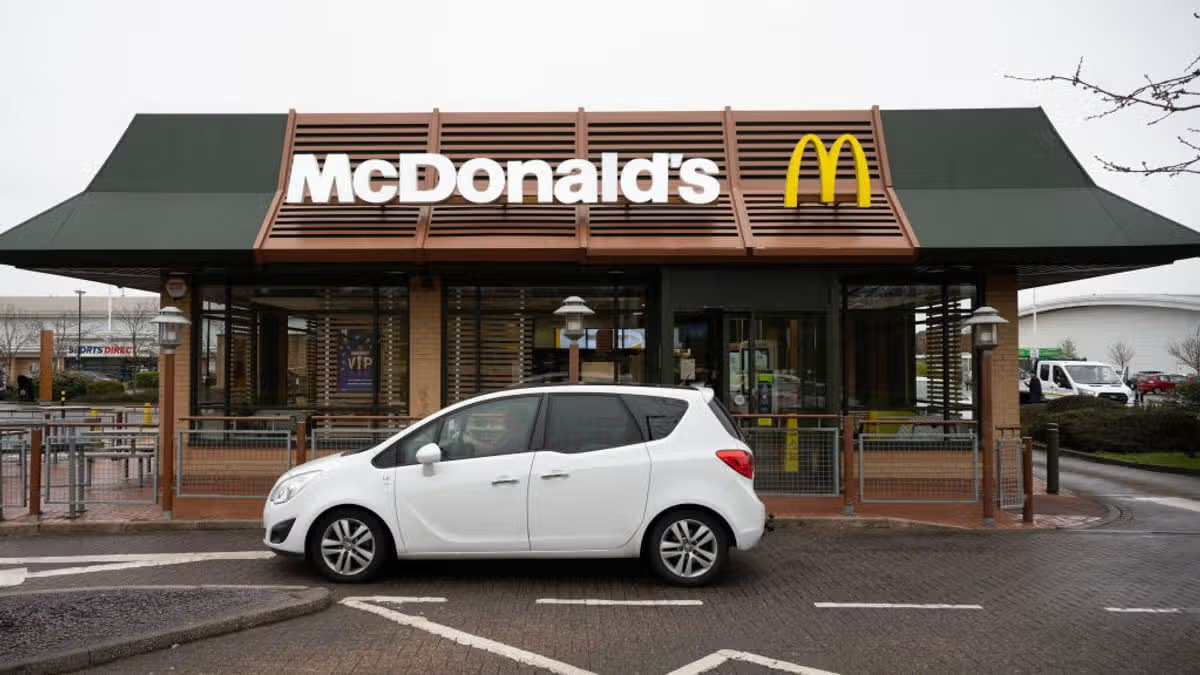
Motoring experts have weighed in on the rules around using a mobile phone while queuing at fast-food drive-thrus

Can you legally use your phone to pay at a drive-thru while your engine is running? (stock image)(Image: Getty)
Countless drivers routinely reach for their mobile phones while waiting in queues at fast-food drive-thrus or toll booths. However, motoring experts are warning that using a mobile phone while queuing could land you in serious trouble under UK road law — but does this also apply when paying by phone? Experts have now had their say on the matter.
Under UK traffic regulations, anyone behind the wheel of a motor vehicle is strictly prohibited from using a mobile phone in the vast majority of driving situations. This rule applies whether you are actively driving along a road, sitting idle, or queuing in traffic.
According to UK Road Traffic law, the moment a drive-thru is open to the public, it is legally classified as both a public place and a road. This means that the stringent mobile phone laws enforced by the Department for Transport apply in exactly the same way as they would at a red light or in a traffic jam.
Even if your vehicle is travelling at a very low speed or is completely stationary in a queue, standard driving laws remain fully in force. Drivers caught illegally using their phone face serious consequences, including a £200 fine and up to six points on their driving licence, reports Wales Online.
Anam Barkan, founder at HireGo Minibuses, explained that motorists put themselves at considerable risk if they use their mobile while stationary to check their online banking app to see whether they have sufficient funds before reaching the terminal. They will also be breaking the law if they open a digital coupon, restaurant app, or loyalty QR code while moving or waiting in the queue, or if they scroll through social media, text, or take photos while waiting for their food.
While the contactless payment itself is permitted, using your phone for any other reason while queuing in the drive-thru with the engine running remains completely illegal.
What are the main exemptions for mobile phone use?
Under the official UK mobile phone driving regulations, there is a specific, limited defence built into the legislation to accommodate modern digital wallets such as Apple Pay and Google Pay. To lawfully use a handheld device to pay at a drive-thru, certain conditions must be satisfied at the same time.
- The vehicle must be completely stationary.
- The transaction must be a contactless payment using an electronic terminal.
- The goods or services being paid for must be provided at the same time or immediately after the payment, such as collecting your food or coffee at the window.
According to Alicia Hempsted, car insurance expert at MoneySuperMarket, there are particular exemptions that permit drivers to use their phones while seated in the driver’s seat. Firstly, she says you may use a mobile phone if it is correctly held in a dashboard mount.
The device must not block your view of the road, and you are not allowed to pick it up at any point while driving. She also points out that you are permitted to hold and use your phone solely to make a contactless payment. This exemption applies to situations such as paying for food at a drive-thru window or settling a charge at a toll booth.
Alicia said: “Under UK road law, anyone operating a vehicle is strictly banned from using a mobile phone in most driving situations – whether they’re actively driving, idling, or queueing in traffic. Doing so can result in a £200 fine and up to 6 points on your driving licence.
“However, there are specific exemptions that allow drivers to use their phones while in a driver’s seat, one being when the phone is properly held in a dashboard mount without obstructing your view of the road, not to be picked up at any time, and another being to make a contactless payment using your phone.”
She added: “Drive-throughs and toll booths are accessible to the general public, so standard road traffic laws apply just as they would on a main road, even if you’re traveling at low speed or sitting at a stop in a queue.
“Therefore, it is illegal to use your phone for general activities at a drive-through. The only time you can legally use your phone in these situations is to make a contactless payment, provided your vehicle is at a complete stop. As soon as you have finished tapping, drivers are required to put their phone down completely until they are parked in a safe location and the vehicle has been turned off.”
How to stay legal at a drive-thru:
While paying with your phone is legally permitted, stringent conditions apply:
- Completely stop
- Do not use phone in general
- Put your phone away
Police officers recommend that to ensure you retain proper control of the vehicle, the safest approach is to make certain the car is in neutral or park with the handbrake securely applied before picking up the phone to tap the reader. After the payment is completed, the phone must be returned immediately to a mount or pocket before releasing the handbrake.
Can driving slowly still risk car repairs?
Matt Clamp, automotive and car scrappage expert at Scrap Car Comparison, said: “Once you’ve paid, put your phone away before moving off. There’s often a tight turn between the payment and collection windows, with high kerbs, bollards and very little room between cars. If you’re still looking at your screen, it’s easy to miss the driver ahead stopping.
“Even at walking pace, a bump can leave you with an expensive repair. A bumper might look like it just needs touching up, but the brackets behind it could be broken or a parking sensor damaged. Once you add parts, paint and labour, you could be looking at hundreds of pounds, sometimes more than £1,000, depending on the car and the damage.
“If you’ve hit the car in front, there’s their damage to consider too. For an older car, that bill could be enough to take it off the road. If yours is worth £1,500 and the repairs come back at £1,000, your insurer may decide to write it off, even if it still drives.”













Leave a comment