
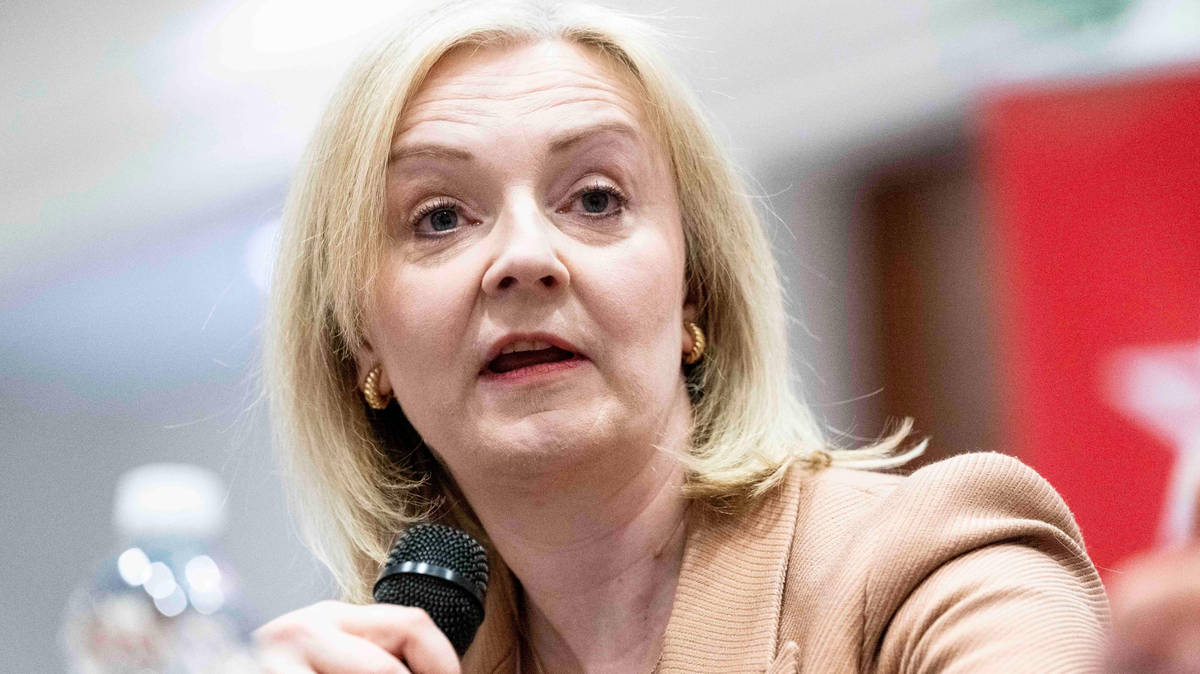
Liz Truss’s mini-budget triggered a bond market crisis in 2022, and global banks are being warned there could be fresh instability on the way.

Picture:
Alamy
Global governments are facing fresh warnings that their borrowing could become more expensive very quickly if confidence in bond markets weakens.
Countries with high levels of debt are more exposed to sudden swings in the market for government borrowing, according to the Bank for International Settlements (BIS) in their annual report.
Government debt is money borrowed by the state to cover spending, and bonds are the IOUs sold to investors by the government in return for lending the money.
The BIS, often described as the central banks’ central bank, warned that these markets can look calm for long periods, but can turn sharply if a bulk of investors lose confidence in the government’s ability to repay their bond debts and decide to sell at the same time.
The warning recalls the UK’s experience in 2022, when Liz Truss’s mini-budget led to a sudden sell-off in government bonds and a surge in borrowing costs.
That episode forced the Bank of England to step in with emergency bond purchases to stop parts of the pension system from coming under pressure. The crisis is estimated to have cost UK markets £500 billion, and to have led to Liz Truss’s resignation 26 days later.
Read more: Andy Burnham to argue London and the south ‘paying the price’ for north’s economic failure

Picture:
Alamy
Potential Prime Minister in waiting Andy Burnham has previously said that governments are “too in hock to the bond markets” and suggested that Westminster is too concerned about trying to keep investors happy.
He later said that his comments had been taken out of context and insisted he does not think governments can ignore the bond markets.
The BIS said hedge funds and other private investors now play a bigger role in government bond markets, which can make price movements more severe. It recommended greater regulation of this to reduce risks.
It also said central banks can calm markets in a crisis, but repeated intervention may encourage investors to take more risks because they expect to be rescued.

Picture:
Alamy
A sharp sell-off can push up the cost of borrowing for governments, meaning they have to pay more interest when they borrow money in future.
There is also broader concern about the scale of government debt itself. The UK’s debt is currently around £2.9 trillion and is higher than at any point since the years after the Second World War. The cost of the interest alone is roughly 3 times larger than the annual budget for the whole Ministry of Defence.
That matters because higher debt can leave governments more vulnerable if bond markets demand higher returns. In simple terms, the more worried investors are, the more expensive it becomes for governments to borrow.
Taken together, the message from the BIS is that governments cannot assume borrowing will stay cheap or stable, especially when debt is high and markets are already nervous.
















Leave a comment