
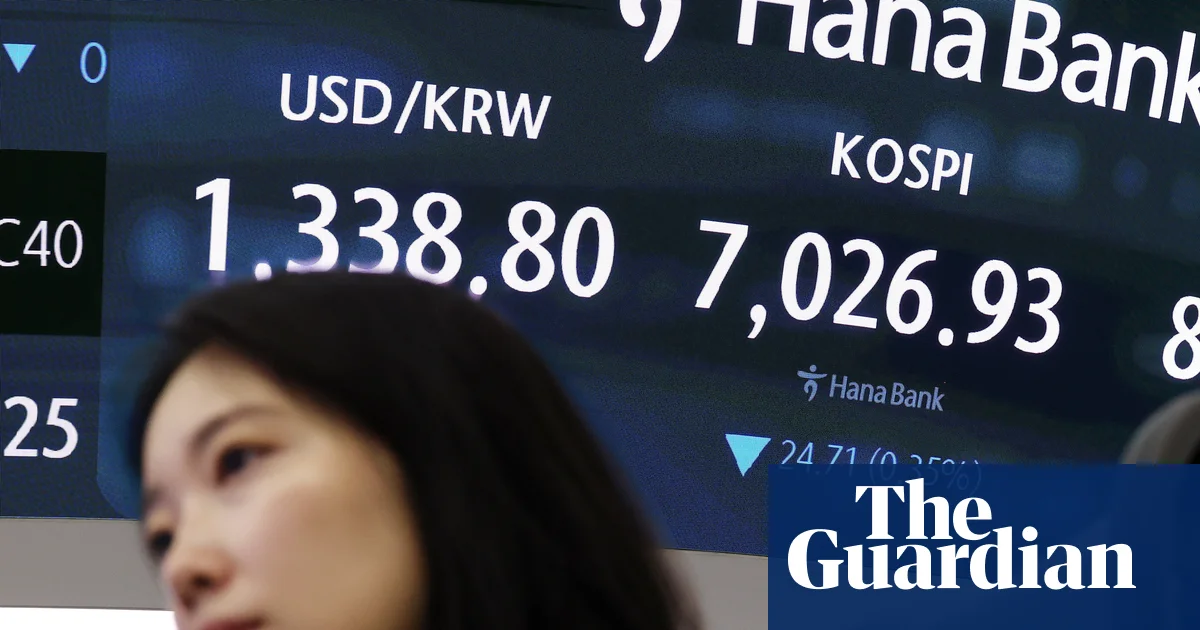
Nervous investors across big economies have been dumping government bonds, driving up the cost of borrowing, as surging oil prices amplified fears about rising inflation.
The cost of a barrel of oil jumped 6% to above $107 on Thursday amid concerns that advances by Houthi rebels along the Red Sea coast in Yemen could choke off Saudi crude exports.
The global bond sell-off that has rocked markets in recent weeks resumed in response to the news from the Middle East – which came against a backdrop of escalating concern about out-of-control government borrowing.
Higher oil prices, which had already climbed since hostilities resumed in the Iran war, are expected to drive up inflation, prompting central banks to raise interest rates and putting the brakes on economic growth.
Donald Trump suggested on Wednesday that the conflict with Iran could continue until “immediately after” November’s US midterm elections, at which point he claimed oil prices would be “tumbling downward”.
The European Central Bank (ECB) raised its main interest rate to 2.5% on Thursday, with its president, Christine Lagarde, saying: “We believe inflation will be longer lasting than we had anticipated.”
“The conflict in the Middle East continues to generate inflation pressures, and inflation is set to remain well above target for an extended period,” she added.
As Thursday’s sell-off gathered pace in London, the yield, or interest rate, on 10-year UK government bonds surged above 5.37% – the highest cost of borrowing since 2007 – creating a fresh headache for the new chancellor, John Healey.
With less than seven weeks to go until Healey’s first budget on 28 October, higher interest rates on the UK’s debt-pile will raise the cost of future investment projects and eat into the Treasury’s fiscal headroom.
At the same time, the prospect of higher energy bills as oil and gas prices rise is likely to intensify pressure on the government to help consumers to weather the winter.
Unleaded petrol prices have already risen by 6p a litre since the start of September, according to the motoring organisation the RAC, while the prospect of higher inflation has prompted some banks to raise their mortgage rates.
Healey has promised to provide a “breathing space” for UK households while also addressing the cost of doing business.
In a speech on Monday, however, he also sought to tame bond market fears by committing himself to “controlling borrowing to bear down on inflation, and reducing long-term pressures on our public finances”.
after newsletter promotion
In the US, where Trump has promised to write a $5,000 (£3,700) cheque for every adult citizen if the Republicans win the midterms, Thursday’s sell-off pushed up the yield on 10-year borrowing to 4.92% – the highest since 2023.
The cost of longer-term borrowing also continued to surge, with 30-year yields hitting the highest level since 2007, despite the US treasury secretary, Scott Bessent, intervening directly in debt markets on Wednesday.
Bessent hoped to bring down yields by buying back $6bn worth of government debt; but investors appeared to respond by deepening the sell-off.
Kyle Rodda, a senior financial market analyst at the broker Capital.com, said: “Ultimately, a sustained drop in long-end yields can only be achieved by genuine shifts in macroeconomic policy: either the US government pulling back on spending or the Fed lifting rates.”
Policymakers at the Federal Reserve, the US central bank, will meet under its new chair, Kevin Warsh, to set interest rates next week.
Markets are expecting a rise – potentially enraging Trump, who has repeatedly demanded rate cuts. In a TruthSocial post last week, the president said: “The Fed Board, with its great new leader, must get smart – BE PATRIOTS for a change.”
A plethora of UK data to be published over the next week, including on inflation, jobs and growth, will give an updated snapshot of how resilient the British economy has been in the face of the Iran war.
In the first six months of the year, UK growth was the strongest among the G7 economies. This was despite higher-than-expected oil prices and the absence of hoped-for rate cuts.
Bank of England policymakers will also meet next week, but are expected to leave the UK’s key interest rate on hold at 3.75% for the time being as they continue to monitor the impact of higher oil prices.










Leave a comment