
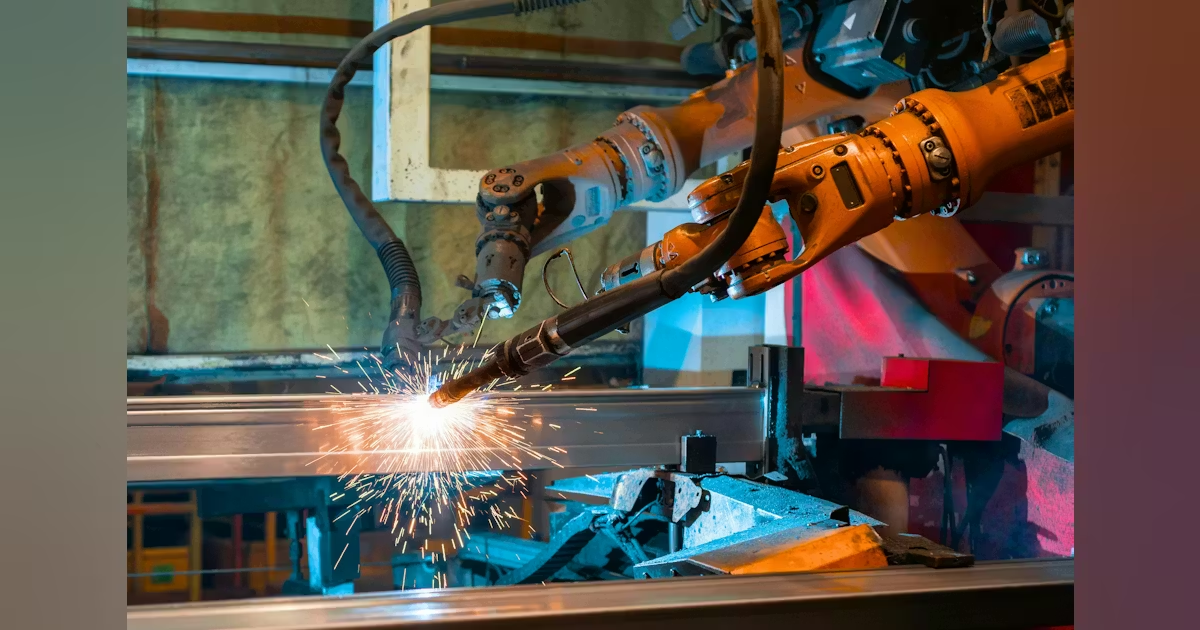
Your business is hitting a plateau because it’s harder than ever to meet the demand and quality expectations, and you are looking at robotic welding cells. While robotic welding can transform your business, the cell requires more than just a robot arm.
Every robotic welding cell component, including the power source and software, can affect the success of welding automation. Successful, long-term automation requires proper integration and deployment from day one.
That’s why it’s critical to understand how robotic welding cells are organized, the types of robotics and cell types.
What is a robot welding cell
A robotic welding cell is an integrated automation system that combines a robotic arm, welding equipment, safety infrastructure and control software to perform welding operations with minimal human intervention.
The cell creates a controlled environment where the robot can repeatedly execute programmed weld paths while other components manage everything from arc control to operator safety. While the robot arm is a critical component, its automation capabilities fully depend on every other system component.















Leave a comment