
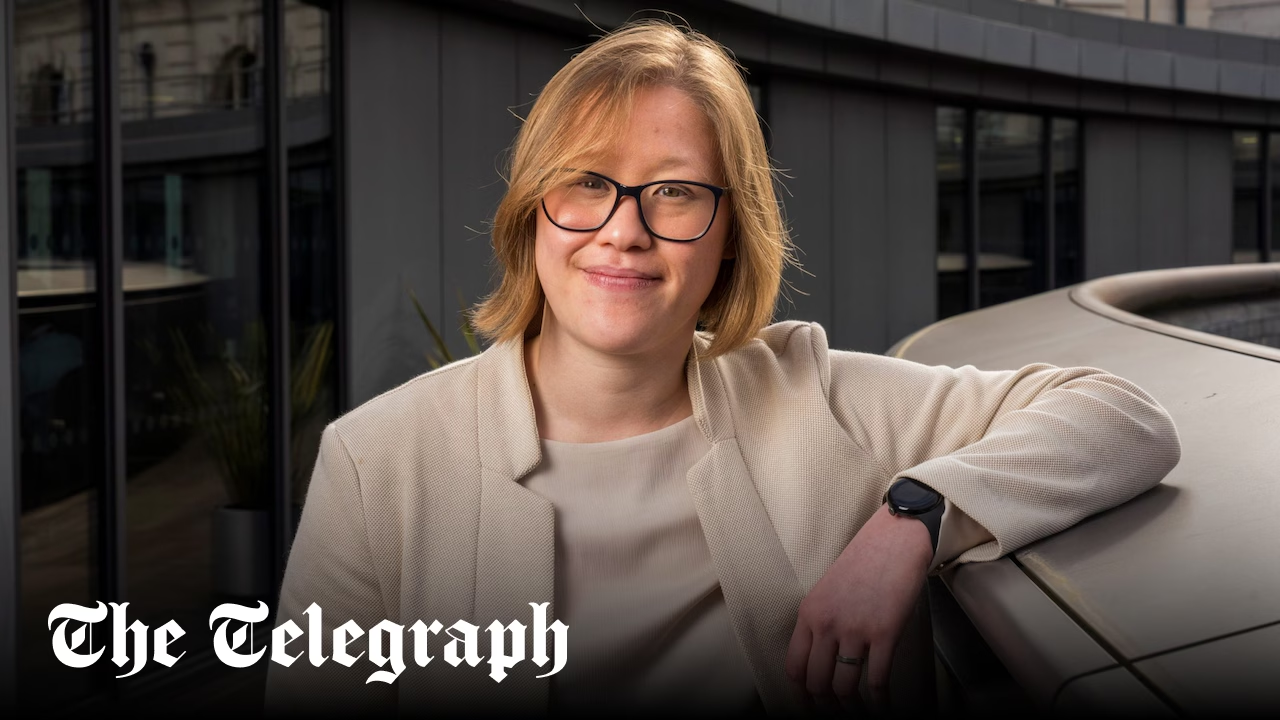
Leung, who is married to Markus Anderljung, director of policy and research at the Centre for the Governance of AI, acknowledges that “if you look away for a second in this field, you end up losing track”. Indeed, it is this frenzied pace of change that “really stresses me out”, she admits. “Governments are not famous for moving fast. Society generally is not famous for moving fast – it took us like a decade to really clock what was going on on social media, for example. And this stuff is happening very, very, very, very fast.”
In around seven years, AI models have progressed from “things that toddlers could do” to surpassing PhD-level intelligence. “That is a really tiny amount of time,” she says. “And so the thing that I think is going to catch us all off [guard] is while we’re preparing for something that was yesterday, this thing is just going to take off, and it’s going to keep going.”
Moving at the pace required – especially in the public sector – is no small challenge. “Government sucks in, like, a lot of different ways,” she laughs. “We can always be moving faster because I think that’s always true. But relative to other governments, I think we’re actually moving quite fast.”
This technology also threatens to unpick our social fabric. Senior figures at the likes of Amazon, Ford and JPMorgan Chase have said that jobs at their firms will become obsolete as a result of the implementation of AI.
The technology is also eradicating human relationships. According to AISI research, a third of Britons have used AI models for emotional purposes in the past year. Some have “married” their chatbots, while there have been multiple reports of people taking their lives after being “told” to do so by AI. If these systems can rule life, love and death – and ultimately negate procreation – doesn’t that raise questions about the future of humanity itself?
“I don’t know,” Leung says. “The usage rates, and the prevalence of AI relationships, companionships and friendships are way higher than I would have expected.”
No wonder, then, that she believes “this is going to be the most consequential technology of our time”, even if political and public appetites appear to be lagging behind systems’ rapidly accelerating capabilities. “That distance is probably just going to increase if we don’t get our act together on it, and that’s just not good. So we should probably catch up.”















Leave a comment